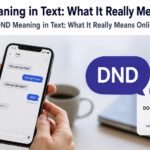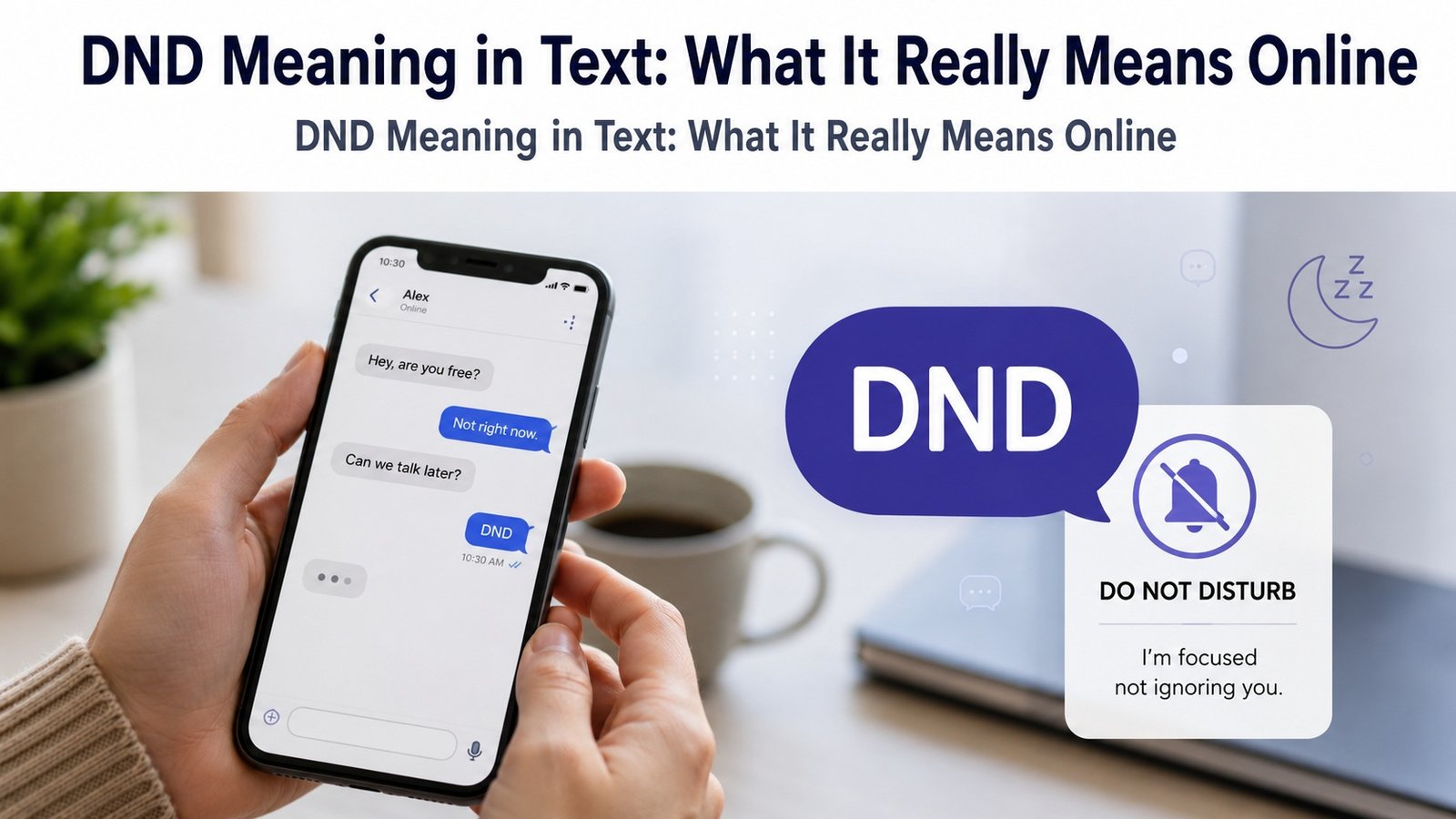
DND is one of those abbreviations that appears everywhere online. You might see it in a text message, a social media profile, a gaming chat, or a status update. While it seems simple, the term carries a deeper meaning about communication, privacy, and personal boundaries in modern life.
In the United States, DND has evolved beyond a basic abbreviation. Today, it often signals a person’s availability, mindset, and expectations for interaction. Because digital communication is constant, people increasingly use DND to manage interruptions and protect their attention.
The meaning of DND can also vary depending on context. In some situations, it refers to a phone setting. In others, it may indicate someone’s social status, gaming activity, or desire for personal space. Understanding these meanings helps avoid confusion and improves online communication.
Quick Answer
DND Meaning in Text usually stands for “Do Not Disturb.” In the United States, it commonly signals that someone doesn’t want interruptions, messages, calls, or notifications at that moment. More broadly, it symbolizes personal boundaries, focus, privacy, and control over communication.
TL;DR
• DND usually means “Do Not Disturb.”
• It signals temporary unavailability.
• The term became popular through smartphones.
• Gamers also use DND to avoid interruptions.
• It represents modern digital boundaries.
• Its meaning depends on the communication context.
What Is DND Meaning in Text?
Understanding the Basic Definition
DND most commonly stands for “Do Not Disturb.” It is used to tell others that a person does not want to receive interruptions for a period of time.
In texting, DND often serves as a quick explanation for delayed responses. Instead of writing a long message, users simply indicate they are in DND mode.
Common Places You See DND
The abbreviation appears across many digital environments.
• Text messages
• Social media profiles
• Messaging apps
• Gaming platforms
• Workplace communication tools
• Smartphone status indicators
Today, many Americans instantly recognize DND as a request for temporary privacy.
The Origins of Do Not Disturb
Before Smartphones
The phrase “Do Not Disturb” existed long before texting. Hotels commonly displayed signs on guest room doors requesting privacy. Offices also used similar signs to prevent interruptions during meetings or focused work.
These physical signs carried the same symbolic message seen today: respect someone’s space.
Digital Adoption
As technology evolved, software developers adopted the phrase for electronic devices. Early computers and office phones included features that reduced interruptions.
Eventually, smartphone manufacturers introduced dedicated Do Not Disturb settings. This transformed DND into a widely recognized digital abbreviation.
How the Meaning Expanded
Originally, the phrase referred to physical privacy. However, modern communication expanded its meaning to include mental focus, emotional boundaries, and digital wellness.
Why DND Became Popular in American Culture
The Rise of Constant Connectivity
Americans receive notifications throughout the day. Emails, texts, calls, and social media alerts compete for attention.
Because of this constant communication, people increasingly value uninterrupted time.
A Symbol of Personal Control
DND represents something larger than a technical setting. It symbolizes a person’s ability to decide when and how they engage with others.
Many people view it as a healthy response to information overload.
Cultural Shift Toward Boundaries
In recent years, discussions about work-life balance and mental health have become more common in the United States.
DND reflects this shift by encouraging people to establish clear communication boundaries.
Symbolic Meaning of DND
Protection of Personal Space
At its core, DND symbolizes protection. It creates a temporary barrier between an individual and incoming demands.
People often activate DND when they need uninterrupted focus or rest.
Focus and Concentration
Another important meaning is concentration.
• Deep work sessions
• Studying
• Creative projects
• Important meetings
• Reading or learning
• Meditation and reflection
The abbreviation tells others that attention is currently directed elsewhere.
Self-Care and Well-Being
Many people associate DND with healthy self-management. Instead of being constantly available, they intentionally create periods of quiet.
This gives the abbreviation a positive psychological meaning.
DND Meaning in American Digital Culture
More Than a Phone Setting
In the United States, DND has become part of everyday language.
Someone might say:
• “I’m on DND.”
• “My phone is in DND.”
• “Sorry, I was DND all afternoon.”
In these examples, the abbreviation functions almost like a lifestyle choice rather than a technology feature.
Social Expectations
DND also influences communication norms.
Many people understand that delayed responses are acceptable when someone is using DND. This helps reduce pressure to reply instantly.
Digital Respect
The widespread use of DND has encouraged greater respect for personal time and attention.
DND Across Different Platforms
Text Messaging
In texting, DND usually means the person isn’t actively checking messages.
The intention is often temporary rather than permanent.
Social Media
Many users include DND in their status or bio.
This signals limited availability while remaining connected to the platform.
Gaming Communities
Gamers frequently use DND to avoid interruptions during gameplay.
In gaming culture, DND may indicate:
• Competitive matches
• Team coordination
• Live streaming
• Practice sessions
• Tournament participation
• Focus-intensive gameplay
Workplace Communication
Professional platforms also use DND indicators.
Employees often activate DND during meetings or concentrated work periods.
Read More: M Meaning in Text: What It Means and How People Use It
DND Meanings by Context
Context Comparison Table
| Context | Meaning in the USA | Common Associations | Notes |
| Text Messages | Do Not Disturb | Delayed responses | Temporary status |
| Smartphones | Notification control | Focus and privacy | Built-in feature |
| Social Media | Limited availability | Personal boundaries | Status indicator |
| Gaming | Avoid interruptions | Competitive focus | Community shorthand |
| Workplace Apps | Busy or unavailable | Productivity | Professional use |
Understanding context is important because the abbreviation may communicate slightly different intentions.
Psychological Meaning of DND
The Need for Boundaries
Psychologists often discuss the importance of healthy boundaries. DND serves as a practical tool for establishing those limits.
It allows people to control when they engage socially.
Reducing Cognitive Overload
Constant notifications can fragment attention.
By enabling DND, individuals reduce distractions and preserve mental energy.
Emotional Associations
Many people associate DND with feelings such as:
• Calmness
• Focus
• Relief
• Independence
• Control
• Privacy
These emotions contribute to the term’s positive reputation.
DND and Modern Identity
A Statement About Priorities
Sometimes DND communicates personal values.
For example, a person who frequently uses DND may prioritize concentration, family time, or self-care.
Digital Minimalism
The abbreviation aligns with growing interest in digital minimalism.
Many people seek healthier relationships with technology and use DND as part of that effort.
Generational Perspectives
Younger users often see DND as normal and expected. Older generations may still associate immediate responsiveness with courtesy.
These differing expectations can occasionally create misunderstandings.
DND in Social Media and Popular Culture
Influencer and Creator Usage
Content creators frequently mention DND when discussing productivity and wellness.
The abbreviation has become part of conversations about attention management.
Memes and Online Humor
DND sometimes appears in humorous posts.
Examples often involve:
• Avoiding responsibilities
• Ignoring group chats
• Escaping notifications
• Protecting weekend relaxation
• Surviving busy workdays
• Avoiding unnecessary drama
These jokes reinforce the cultural recognition of the term.
Everyday Language
Over time, DND has moved beyond technology and entered ordinary speech.
Common Misunderstandings About DND
It Doesn’t Always Mean Ignoring Someone
One common misconception is that DND indicates rejection.
In reality, most users simply want temporary quiet or focus.
Not a Permanent Status
DND is generally short-term.
People usually reactivate notifications once their task or activity ends.
Context Matters
Sometimes users assume DND means the same thing everywhere.
However, texting, gaming, and workplace environments may interpret the abbreviation differently.
Has the Meaning of DND Changed Over Time?
Early Meaning
Initially, Do Not Disturb focused on physical privacy. Examples included hotel doors, offices, and meeting rooms.
Technology Era
The rise of mobile devices shifted the concept into digital spaces.
The phrase became a built-in communication tool.
Modern Meaning
Today, DND represents much more than notification management.
It often symbolizes:
• Healthy boundaries
• Digital wellness
• Focused productivity
• Personal autonomy
• Mindful communication
• Respect for attention
This evolution reflects broader changes in how society interacts with technology.
Future Meaning of DND
Growing Importance
As communication tools continue expanding, DND may become even more significant.
People increasingly value uninterrupted time.
Smarter Technology
Future systems may automatically activate DND based on schedules, locations, or activities.
Continued Cultural Relevance
The symbolic meaning of DND will likely remain connected to personal control and intentional communication.
FAQs
What does DND mean in text messages?
DND usually means “Do Not Disturb.” It indicates that someone does not want interruptions or may respond later.
Is DND rude to use?
No. Most people view DND as a respectful way to communicate temporary unavailability. It helps set clear expectations.
Does DND mean someone is ignoring me?
Not necessarily. In most cases, the person is simply focusing on another activity and plans to respond later.
What does DND mean in gaming?
In gaming, DND generally signals that a player does not want interruptions during gameplay, streaming, or competitive matches.
Why do people use DND so often now?
Modern life involves constant notifications. DND helps people manage attention, reduce distractions, and maintain balance.
Is DND only used on phones?
No. The abbreviation appears on messaging apps, gaming platforms, social media profiles, and workplace communication tools.
Conclusion
DND Meaning in Text is most commonly understood as “Do Not Disturb,” but its significance extends far beyond a simple abbreviation. In today’s American digital culture, it symbolizes privacy, focus, personal boundaries, and intentional communication.
The phrase evolved from physical signs requesting quiet into a powerful digital signal used across phones, social media, gaming communities, and workplaces. As technology continues shaping daily life, DND remains an important reminder that constant availability isn’t always necessary.
Understanding DND Meaning in Text helps people communicate more clearly while respecting the growing need for balance, attention, and personal space in an increasingly connected world.