In today’s digital world, short messages shape how people connect, react, and share information instantly. One of the most common terms you’ll see is SMS Meaning in Text, which often appears in chats, notifications, and online discussions. While many people use it daily, not everyone understands where it comes from or what it truly represents.
SMS has become a quiet backbone of communication in the United States and across the world. It powers everything from personal conversations to banking alerts. However, its meaning goes far beyond just “texting.” It reflects a shift in how humans adapted language to mobile technology.
Understanding SMS helps you see how simple messages carry deep cultural and technological meaning in modern life.
Quick Answer
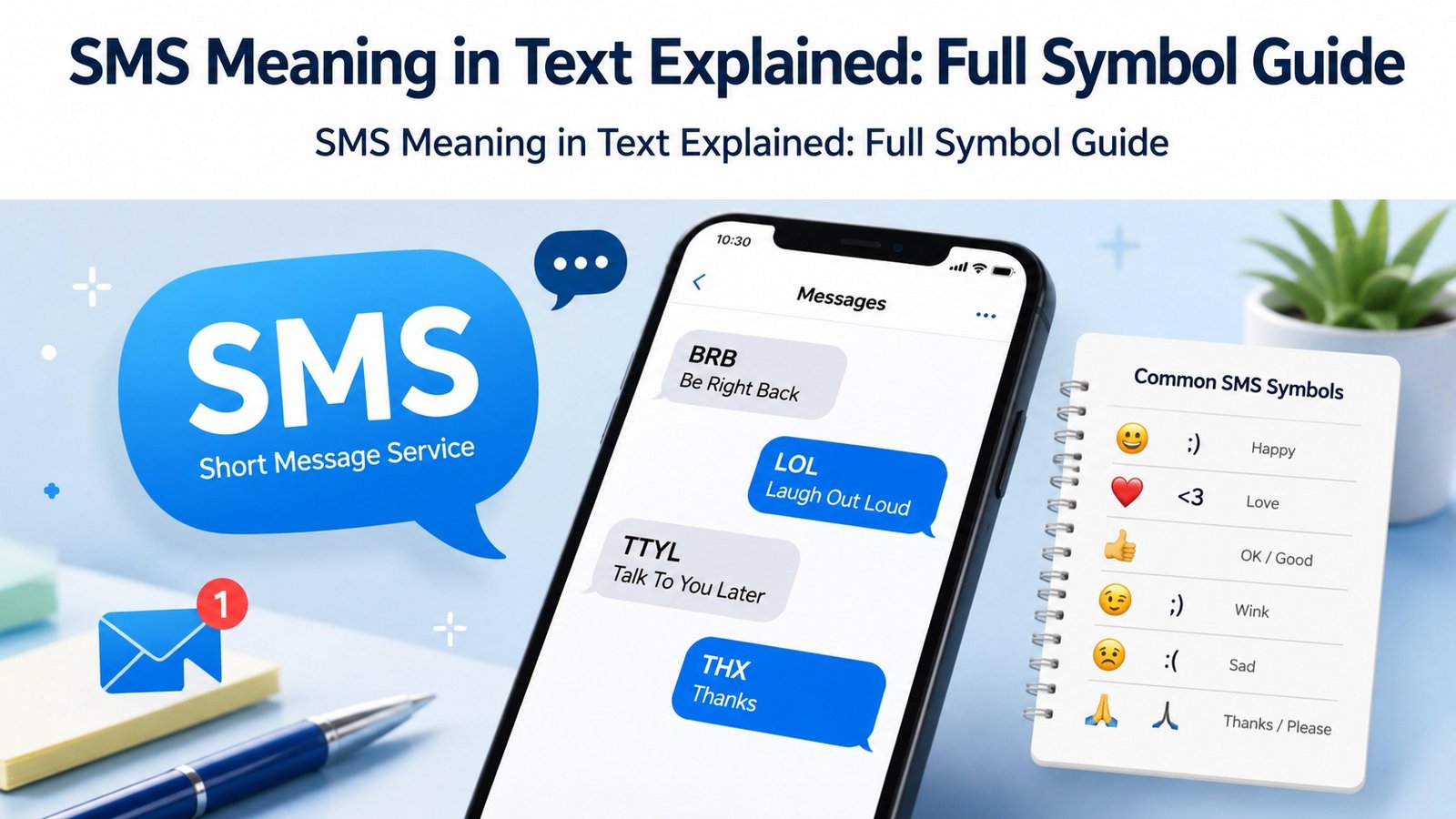
SMS Meaning in Text symbolizes “Short Message Service,” which is a system for sending brief text messages between mobile devices. In the USA, it represents fast, direct communication used for personal chats, alerts, and official notifications. Globally, it also reflects the early foundation of mobile messaging.
TL;DR
• SMS stands for Short Message Service
• It enables basic text communication between phones
• Originated before modern internet messaging apps
• Still widely used in the USA for alerts and codes
• Represents fast, simple, reliable communication
• Evolved into the foundation of modern texting culture
What Is SMS Meaning in Text Messaging
This section explains the basic idea behind SMS and how it functions in everyday communication. For many Americans, SMS is simply “texting,” but it actually refers to a specific technology standard.
Basic Definition of SMS
SMS stands for Short Message Service. It allows users to send small text-based messages between mobile phones. Unlike internet-based apps, it works through cellular networks.
• Limited to short character messages
• Works without internet connection
• Supported by nearly all mobile phones
• Used for personal and official communication
How SMS Appears in Daily Life
You see SMS in many places without noticing. It appears in messages, alerts, and verification codes. It often feels invisible but essential.
How SMS Works in Everyday Communication
This section explores the technical side in a simple way. Understanding it helps explain why SMS remains reliable even today.
Cellular Network Transmission
SMS travels through mobile carrier networks. It does not need Wi-Fi or apps.
• Sent through cellular signal towers
• Delivered even on basic phones
• Stored briefly if recipient is offline
• Typically delivered within seconds
Message Delivery System
When you send a text, it passes through a message center. That system ensures delivery.
History of SMS and Early Mobile Messaging
This section covers where SMS came from and how it evolved. Its roots go back decades before smartphones.
Early Development of SMS
SMS was developed in the 1980s and first used commercially in the early 1990s. Engineers designed it as a simple way to send short messages.
Growth in the 2000s
As mobile phones spread, SMS became a global habit. Teenagers and professionals used it daily.
• Became primary communication tool
• Replaced pagers and handwritten notes
• Led to texting abbreviations and slang
• Influenced modern chat culture
SMS vs MMS vs Internet Messaging Apps
This section compares SMS with other messaging types. It helps clarify confusion between similar terms.
Key Differences Explained
SMS is text-only, while MMS includes media. Internet apps use data instead of cellular systems.
| Format | Meaning in the USA | Common Use | Key Feature |
| SMS | Basic text messaging | Alerts, chats | No internet required |
| MMS | Multimedia messaging | Photos, videos | Supports media files |
| Internet apps | App-based messaging | Social chat, groups | Requires internet |
Why SMS Still Exists
Even with advanced apps, SMS remains active. It works universally and reliably.
SMS Meaning in the USA Digital Culture
This section focuses on American usage. SMS plays a major role in everyday life.
Communication Style in America
In the USA, SMS represents fast and direct communication. People prefer short messages over long calls.
• Used for quick personal updates
• Common in work communication
• Preferred for appointment reminders
• Used in emergency alerts
Cultural Shift Toward Texting
SMS changed how Americans interact. It made communication less formal and more immediate.
Why SMS Still Matters in Modern America
This section explains why SMS is still important despite modern apps.
Reliability and Accessibility
SMS works on nearly every phone. It does not depend on apps or the internet.
Essential for Services
Banks, hospitals, and businesses rely on SMS.
• Used for two-factor authentication
• Sends delivery updates
• Provides emergency notifications
• Supports customer service alerts
Emotional and Psychological Associations of SMS
This section explores how SMS feels to people emotionally.
Feelings Linked to SMS
SMS often feels personal and immediate. It can create urgency or comfort.
• Instant connection with others
• Sense of importance when receiving alerts
• Anxiety when waiting for replies
• Comfort in simple communication
Symbol of Modern Simplicity
SMS represents minimalism in communication. It removes unnecessary detail.
Read More: GTG Meaning in Text Explained: What It Really Signals
SMS in Business, Banking, and Verification Codes
This section shows how SMS supports essential services.
Security and Authentication
Many companies use SMS for security checks.
Customer Communication
Businesses rely on SMS for updates.
• Appointment reminders
• Shipping notifications
• Payment confirmations
• Security alerts
SMS in Pop Culture and Social Media Language
This section explains SMS influence on language and culture.
Texting Language Evolution
SMS created abbreviations like “LOL” and “BRB.” It changed communication habits.
Influence on Media
Movies and shows often use SMS-style dialogue to reflect real life.
Cross-Cultural Views of SMS Messaging
This section briefly compares global interpretations.
Global Communication Tool
SMS is used worldwide, but meaning can vary slightly.
• In Europe, often used for formal alerts
• In Asia, integrated with mobile payment systems
• In developing regions, primary communication tool
• In USA, both casual and official use
Misunderstandings and Common Confusions About SMS
This section clears up confusion around SMS.
Common Mistakes People Make
Many people confuse SMS with all texting.
• Thinking SMS requires internet
• Confusing SMS with messaging apps
• Believing SMS is outdated
• Assuming SMS includes images
Controversies, Spam, and Safety Concerns in SMS
This section discusses problems linked to SMS use.
Spam and Fraud Risks
SMS can be used for scams or unwanted messages.
Privacy Concerns
Because SMS is not fully encrypted, privacy can be limited.
• Phishing text messages
• Fake verification requests
• Unwanted promotional texts
• Data interception risks
Evolution of SMS in the Smartphone Era
This section shows how SMS adapted over time.
From Basic Texting to Hybrid Use
SMS now works alongside apps and smart features.
Integration with Technology
Modern phones combine SMS with notifications and apps.
Future of SMS Communication
This section explores what may happen next.
Gradual Transformation
SMS may evolve but not disappear.
• Used mainly for verification
• Supports backup messaging
• Integrated with digital identity systems
• Remains universal fallback option
FAQs
Is SMS the same as texting?
SMS is a type of texting. However, texting now includes app-based messages too. SMS specifically uses cellular networks.
Why do companies still use SMS?
Companies use SMS because it is reliable and reaches almost every phone. It works even without internet access.
Can SMS send pictures or videos?
No, SMS is text-only. Multimedia messages require MMS or internet-based apps.
Is SMS secure?
SMS is moderately secure but not fully encrypted. Sensitive information is better shared through secure apps.
Why do I still get SMS messages?
SMS is still used for alerts, codes, and official notifications. It remains a universal communication method.
Conclusion
SMS continues to play a powerful role in modern communication. The SMS Meaning in Text goes beyond simple messaging. It represents the foundation of mobile communication that shaped how people connect today.
Even with advanced apps and digital platforms, SMS remains relevant in the USA and worldwide. It stands as a reminder that simple technology can have lasting impact.

Alyan Ashraf is a passionate English language writer who simplifies grammar for everyday learners. He focuses on clear explanations, practical examples, and common usage rules to help readers write better, speak confidently, and avoid mistakes in real-world English.