In today’s fast-moving digital world, short forms carry a lot of weight. One of those is FS meaning in text, a simple two-letter phrase that can signal different intentions depending on how it’s used. You’ll see it in messages, captions, and even marketplace listings.
At first glance, “FS” looks straightforward. However, its meaning isn’t fixed. Instead, it adapts to tone, platform, and social context. That flexibility is exactly why people keep using it.
In the United States, especially among younger users, “FS” has become part of everyday texting language. It reflects how people communicate quickly, casually, and sometimes emotionally through short forms.
Quick Answer
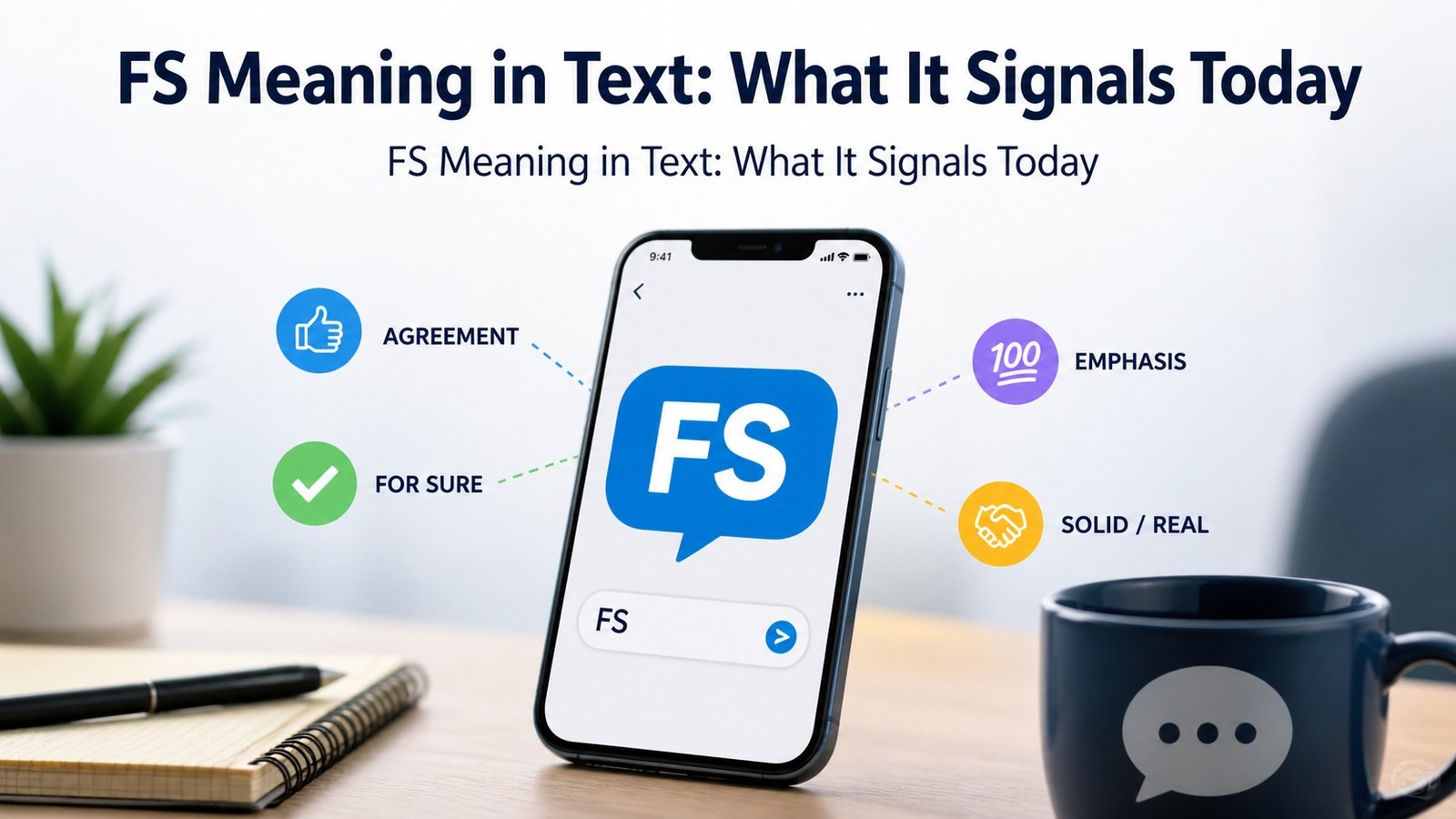
FS meaning in text usually stands for “for sure” in American messaging. It signals agreement, certainty, or strong affirmation. However, in other contexts, it can also mean “for sale,” especially in online listings.
TL;DR
• “FS” often means “for sure” in casual texting
• It can also mean “for sale” in online marketplaces
• Tone and context decide its meaning
• Popular in U.S. texting and social media culture
• Signals certainty, agreement, or intent
What Does FS Mean in Text?
This section breaks down the basic definition of “FS” and why it matters today. For American readers, understanding tone is key because context shapes meaning more than the letters themselves.
Common Meanings
• “For sure” — agreement or confirmation
• “For sale” — used in buying or selling posts
• Less commonly, “full send” — meaning go all in
Why Context Matters
“FS” changes meaning based on where you see it. In a chat, it usually shows agreement. In a listing, it signals availability. Because of this, readers rely on surrounding words to interpret it correctly.
Origins of FS in Digital Communication
Short forms like “FS” didn’t appear randomly. They evolved as messaging platforms pushed users toward speed and efficiency. This section explores where it came from and how it spread.
Early Internet Roots
In the early 2000s, chatrooms and SMS texting limited characters. People shortened phrases to save time and space. “For sure” naturally became “FS.”
Growth Through Mobile Culture
As smartphones took over, texting became constant. Abbreviations like “FS” survived because they felt quick and natural. Unlike older slang, it adapted well to new platforms.
FS Meaning in American Texting Culture
In the United States, “FS” reflects a broader shift toward casual, fast communication. It’s not just shorthand—it’s part of how people express tone and personality.
Everyday Usage
• Friends confirming plans: “You coming?” — “FS”
• Agreeing quickly without typing full sentences
• Showing enthusiasm or confidence
Cultural Influence
American texting culture values speed and clarity. “FS” fits perfectly because it’s short but expressive. It feels relaxed and conversational rather than formal.
FS Meaning on Social Media
Social media platforms amplify how abbreviations spread. This section shows how “FS” works across apps and why it stays relevant.
Platform-Specific Use
• Instagram captions: adds emphasis or confidence
• TikTok comments: quick agreement or hype
• Facebook Marketplace: indicates items for sale
Tone and Intent
On social media, tone matters more than definition. “FS” can feel supportive, confident, or even persuasive depending on how it’s used.
FS Meaning in Online Selling and Marketplaces
Here’s where “FS” takes on a completely different role. In buying and selling spaces, it’s less about emotion and more about clarity.
Marketplace Usage
• “FS: Used bike” — item available
• “FS: Shoes, size 10” — listing headline
• Often paired with price and condition
Practical Purpose
This version of “FS” helps people scan listings quickly. It acts as a signal rather than a conversation tool.
Emotional and Psychological Meaning of FS
Even a short phrase can carry emotional weight. In American communication, “FS” often signals more than just agreement.
Emotional Signals
• Confidence in a decision
• Trust or reassurance
• Casual friendliness
Psychological Impact
Because it’s quick and informal, “FS” reduces friction in conversation. It makes interactions feel easy and natural.
Read More: HRU Meaning in Text: What It Signals Today
FS in Modern Identity and Communication Style
Language shapes identity. Using “FS” can subtly reflect how someone communicates and connects with others.
What It Signals About the Speaker
• Comfortable with digital slang
• Prefers casual, efficient communication
• Part of modern online culture
Generational Differences
Younger users tend to use “FS” more often. Older users may understand it but use full phrases instead.
Cross-Cultural Interpretations of FS
Outside the U.S., “FS” may not always mean the same thing. This section highlights how meaning shifts globally.
Variations Across Regions
• Some countries use English abbreviations differently
• In non-English contexts, “FS” may be unclear
• Meaning often depends on exposure to U.S. media
Cultural Sensitivity
Because abbreviations vary, misunderstandings can happen. It’s important to consider the audience and context.
Modern Uses: Tattoos, Branding, and Aesthetic Trends
While “FS” is mostly digital, it sometimes appears in visual culture. This shows how language moves beyond text.
Visual and Cultural Use
• Minimalist tattoos with personal meaning
• Graphic design emphasizing short phrases
• Branding that uses concise messaging
Why It Works Visually
Short forms like “FS” look clean and bold. They fit modern design trends that favor simplicity.
Misunderstandings and Confusion Around FS
Because “FS” has multiple meanings, confusion is common. This section explains where misunderstandings happen and why.
Common Mix-Ups
• Reading “for sale” as “for sure”
• Misinterpreting tone in messages
• Using it incorrectly in formal contexts
How to Avoid Confusion
• Look at surrounding words
• Consider platform and purpose
• When unsure, ask for clarification
How FS Meaning Has Changed Over Time
Language evolves constantly, and “FS” is no exception. Its meaning has shifted with technology and culture.
Then vs. Now
• Early use focused on efficiency
• Today, it carries tone and emotion
• Expanded into multiple meanings
What’s Next?
Short forms will likely continue evolving. However, “FS” remains stable because it’s simple and adaptable.
FS Meaning Across Different Contexts
This table shows how meaning changes depending on where you see “FS.”
| Context | Meaning in the USA | Common Associations | Notes |
| Text messages | For sure | Agreement, confidence | Most common usage |
| Social media | For sure | Support, hype, emphasis | Tone-driven meaning |
| Online selling | For sale | Listings, transactions | Practical and direct |
| Group chats | For sure | Quick replies, confirmation | Casual and fast-paced |
| Visual design | Stylized phrase | Minimalism, identity | Less common but growing |
FAQs
What does FS mean in texting?
“FS” usually means “for sure.” It shows agreement or confidence in a casual way.
Does FS always mean for sure?
No, it can also mean “for sale.” The meaning depends on context and platform.
Is FS slang or an abbreviation?
It’s both. “FS” is an abbreviation that functions as slang in casual communication.
Is FS appropriate in professional messages?
Not usually. In formal settings, it’s better to write “for sure” or “confirmed.”
Why do people use FS instead of full words?
It saves time and feels natural in fast conversations. It also matches modern texting habits.
Can FS be misunderstood?
Yes, especially in mixed contexts like social media and selling platforms. Context is key.
Conclusion
At its core, FS meaning in text reflects how language adapts to speed, culture, and connection. Whether it means “for sure” or “for sale,” the phrase carries clarity and intent in just two letters.
In American communication, it stands out as a symbol of casual confidence and efficiency. It shows how people express agreement quickly without losing meaning.
As the digital language keeps evolving, small phrases like “FS” remind us of something simple. Even the shortest expressions can carry big signals about how we think, feel, and connect.

Alyan Ashraf is a passionate English language writer who simplifies grammar for everyday learners. He focuses on clear explanations, practical examples, and common usage rules to help readers write better, speak confidently, and avoid mistakes in real-world English.