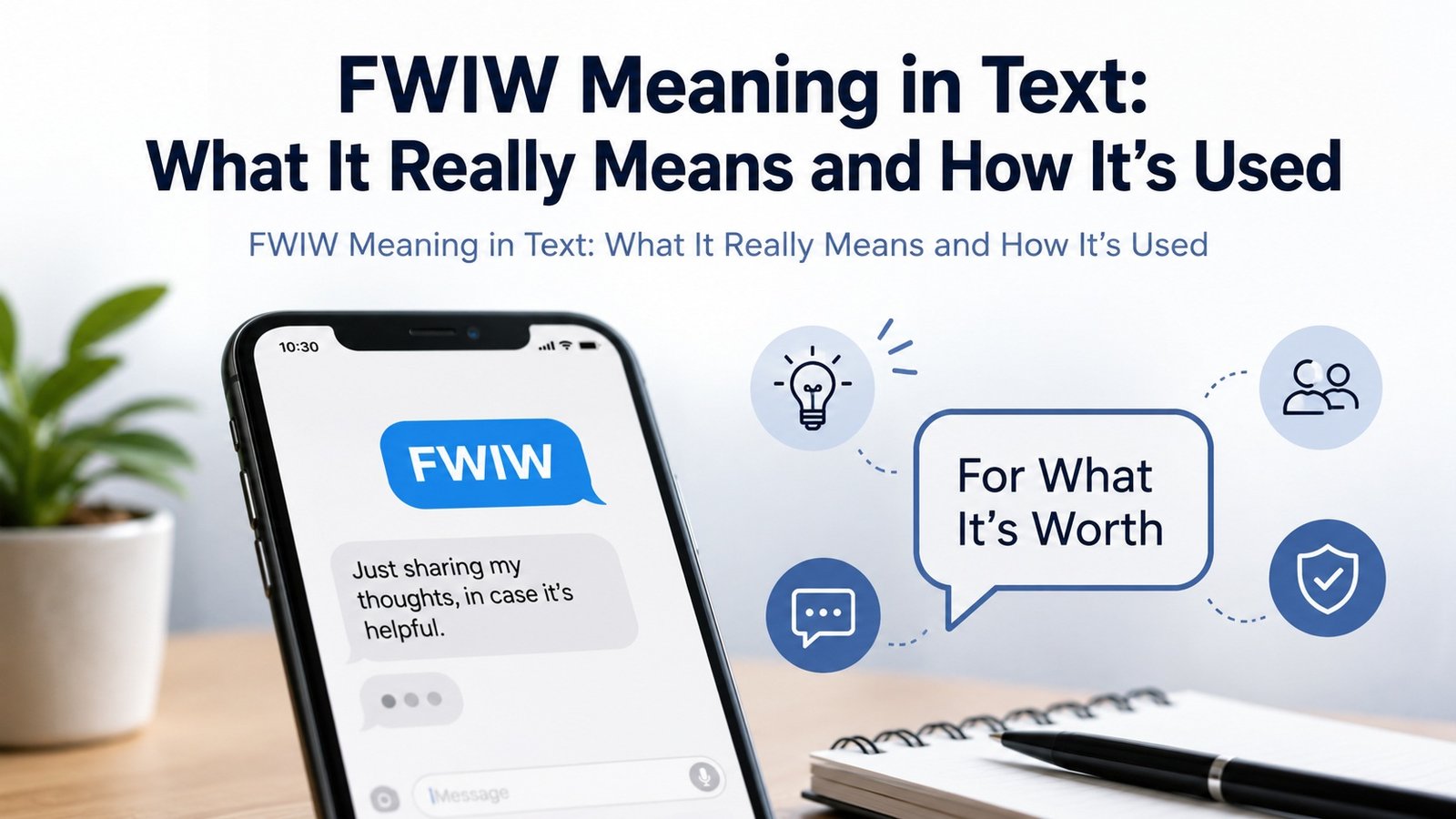
FWIW Meaning in Text is a small phrase that carries a surprisingly big role in digital communication. People in the United States use it every day in texts, emails, and social media replies. Even though it looks short and simple, it changes how a message feels.
FWIW stands for “for what it’s worth.” It often shows that someone is offering an opinion without pushing too hard. In American online culture, it acts like a softener that reduces tension in conversation.
Today, you’ll see FWIW in casual chats, work emails, and even public discussions. It helps people share thoughts while keeping conversations polite and flexible.
Quick Answer
FWIW meaning in text is “for what it’s worth,” used in the USA to share a polite opinion or suggestion. It often signals humility or soft disagreement while adding context.
TL;DR
• FWIW means “for what it’s worth” in digital communication
• Common in US texting, emails, and online discussions
• Used to soften opinions or advice
• Often shows humility or gentle disagreement
• Originates from early internet and email culture
• Still widely used in modern messaging platforms
Overview of FWIW Meaning in Text
This section explains the basic idea behind FWIW and how people recognize it in conversation. It is important because understanding its tone helps avoid misreading messages in American digital culture.
What FWIW Represents in Communication
FWIW is a phrase that introduces a personal viewpoint. It signals that the speaker is sharing something optional, not absolute truth.
• Softens disagreement in conversations
• Introduces casual advice or opinion
• Reduces emotional intensity in messages
• Adds context without pressure
How It Appears in Messages
FWIW usually appears at the start or middle of a sentence. It is often followed by a comma and a statement.
What Does FWIW Mean in America
This section focuses on how Americans use FWIW in everyday life. In the United States, it plays a strong role in maintaining polite tone in both casual and professional communication.
Everyday Usage in US Culture
In American texting culture, FWIW helps keep conversations smooth and respectful.
• Common in workplace emails
• Frequent in group chats and forums
• Used during disagreements politely
• Helps avoid sounding aggressive
Why Americans Rely on It
The phrase fits American communication style, which values clarity but also politeness.
Origin and Early Internet Roots
This section explores where FWIW came from and how it entered digital language. Its history goes back to early online communication systems.
Early Use in Email and Forums
FWIW became popular during the early internet era when people used email and message boards.
• Emerged in Usenet discussions
• Spread through early email chains
• Became shorthand for long phrases
• Adopted in tech communities
Connection to Pre-Digital Language
Before the internet, people already used the full phrase “for what it’s worth” in spoken English.
How FWIW Evolved in Digital Communication
This section shows how FWIW changed as communication moved from email to social media. Its meaning stayed stable, but its usage expanded.
From Formal to Casual Tone
Over time, FWIW shifted from semi-formal writing into everyday slang.
• Used in corporate emails today
• Appears in memes and comments
• Blends formal and informal tone
• Works across platforms
Influence of Messaging Apps
Apps like SMS and chat platforms made FWIW even more common due to character limits and fast typing.
Read More: IMAO Meaning in Text: What It Really Means in Online Chats
FWIW in Professional Emails and Work Culture
This section explains how FWIW functions in workplace communication. It is often used to soften suggestions or feedback.
Workplace Communication Style
In offices, FWIW helps maintain professionalism while sharing opinions.
• Introduces alternative viewpoints
• Reduces risk of sounding direct
• Helps polite disagreement
• Supports collaborative tone
When Professionals Use It
It is common in emails when someone wants to stay respectful but honest.
FWIW in Social Media and Messaging Apps
This section focuses on how FWIW appears in modern online spaces. It is widely used on platforms where tone can easily be misunderstood.
Role in Online Conversations
FWIW helps prevent conflict in fast-moving discussions.
• Used in comment sections
• Appears in group chats
• Helps soften criticism
• Adds nuance to short messages
Why It Works Online
Because text lacks tone, FWIW adds emotional balance to written words.
Tone and Intent Behind FWIW
This section explores what FWIW “feels like” in communication. Tone matters more than literal meaning.
Common Intent Signals
FWIW often signals subtle emotional cues.
• Polite disagreement
• Gentle suggestion
• Neutral observation
• Low-pressure advice
How Readers Interpret It
People usually see it as non-threatening and respectful.
Emotional and Psychological Signals
This section explains the emotional layer behind FWIW. It plays a role in how people manage social interaction.
Emotional Meaning in Conversation
FWIW often reflects caution and empathy in communication.
• Avoids confrontation
• Shows respect for opinions
• Encourages open discussion
• Reduces emotional friction
Psychological Function
It gives speakers a safe way to express thoughts without dominating discussion.
Cross-Cultural and Global Usage
This section looks at how FWIW compares to similar expressions worldwide. While it is English-based, similar ideas exist in other languages.
Similar Expressions in Other Cultures
Many cultures use phrases that soften opinions.
• “Just my thoughts” in casual English
• “In my opinion” in global English use
• Local polite disclaimers in many languages
• Cultural emphasis on humility in speech
Global Digital Adaptation
Non-native English speakers also use FWIW in online communities.
Misunderstandings and Common Misuse
This section explains where confusion happens with FWIW. Misreading tone is common in digital spaces.
Common Mistakes
People sometimes misinterpret the phrase.
• Thinking it weakens argument completely
• Assuming sarcasm where none exists
• Ignoring context of sentence
• Overusing it in every message
When It Creates Confusion
Tone mismatch can lead to misunderstandings in serious discussions.
When You Should and Shouldn’t Use FWIW
This section gives practical guidance on usage. It helps readers apply FWIW correctly in real communication.
Good Situations for FWIW
• Offering gentle disagreement
• Giving optional advice
• Adding context to discussion
• Softening strong opinions
Situations to Avoid
• Formal legal writing
• High-stakes instructions
• Emergency communication
• Direct factual reporting
Examples of FWIW in Real Conversations
This section shows real-style usage so readers can understand context clearly.
Conversation Examples
| Context | Sentence | Meaning | Tone |
| Work email | FWIW, I think we should revise the report | Gentle suggestion | Professional |
| Group chat | FWIW, that restaurant is usually crowded | Casual opinion | Informal |
| Debate | FWIW, there’s another way to see this | Neutral input | Balanced |
| Advice | FWIW, I would try a different approach | Helpful suggestion | Supportive |
Why Examples Matter
Examples show how flexible FWIW is in tone and meaning.
Modern Shifts in Internet Language
This section explains how FWIW fits into changing online language trends. Communication is becoming faster and more layered.
Evolving Digital Tone
Short phrases like FWIW help people express nuance quickly.
• Increasing use of abbreviations
• Faster message pacing
• More tone markers in text
• Blended formal and informal speech
Future of Usage
FWIW remains relevant because it adds clarity without length.
FAQs
What does FWIW stand for in texting?
FWIW stands for “for what it’s worth.” It introduces a personal opinion or suggestion.
Is FWIW rude or polite?
FWIW is generally polite. It softens statements rather than making them harsh.
Where is FWIW most commonly used?
It is common in the United States, especially in texting and emails.
Can FWIW be used in formal writing?
It is better suited for informal or semi-formal communication.
Does FWIW show disagreement?
Yes, but it does so gently without sounding confrontational.
Conclusion
FWIW Meaning in Text reflects how modern communication balances honesty with politeness. It allows people to share thoughts without creating tension or pressure.
FWIW continues to play a quiet but important role in American digital language. It shapes tone, adds context, and keeps conversations respectful in fast-moving online spaces.
As communication evolves, phrases like FWIW will keep helping people express meaning with clarity and care.

Alyan Ashraf is a passionate English language writer who simplifies grammar for everyday learners. He focuses on clear explanations, practical examples, and common usage rules to help readers write better, speak confidently, and avoid mistakes in real-world English.