In today’s fast-moving digital world, short phrases often carry deeper meaning than they seem. One of the most common is “DM,” a tiny abbreviation that appears everywhere from texts to social media captions. At first glance, it feels casual. However, its tone and purpose can shift depending on context.
The phrase “DM Meaning in Text” has grown in importance as people try to decode modern communication. In the United States, especially, it reflects how private and public conversations blend online. What seems like a simple message request can signal interest, privacy, or even subtle intention.
So, what does “DM” really stand for, and why does it matter? Let’s unpack its meaning, history, and cultural weight in everyday American life.
Quick Answer
DM Meaning in Text usually stands for “Direct Message.” In the U.S., it signals a move from public to private conversation, often implying personal interest, discretion, or deeper communication.
TL;DR
• DM means “Direct Message” in texting and social apps
• It signals a private, one-on-one conversation
• Often used to show interest or continue a discussion
• Popular in American social media culture
• Can carry subtle emotional or social signals
What Does DM Mean in Text?
Understanding DM starts with its basic definition, but its usage goes far beyond that. In American digital culture, it acts as both a tool and a signal.
Basic Definition
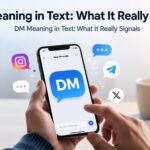
“DM” stands for “Direct Message.” It refers to a private message sent between users on platforms like Instagram, X, or Facebook.
Common Contexts
• Asking someone to message privately instead of publicly
• Moving a conversation from comments to personal chat
• Sharing sensitive or personal information discreetly
• Building connections without public visibility
Where Did DM Come From?
Although DM feels modern, its roots trace back to early internet communication. Its evolution mirrors how online spaces became more social.
Early Digital Messaging
In the 1990s, chatrooms and forums introduced private messaging features. These allowed users to communicate outside public threads.
Rise of Social Media
As platforms like Facebook and Twitter grew in the 2000s, “Direct Message” became a standard feature. Over time, it shortened to “DM” for convenience.
Cultural Shift
Today, DM isn’t just a feature. It’s a social cue that reflects how people balance public identity with private interaction.
DM Meaning in American Culture
In the United States, DM carries a strong cultural tone. It reflects how Americans navigate boundaries, relationships, and communication.
Public vs. Private Balance
Americans often use social media publicly but prefer personal topics in private. DM acts as the bridge.
Social Signals
• Suggests interest without being overly direct
• Indicates a desire for privacy or discretion
• Shows initiative in starting a deeper conversation
• Sometimes hints at romantic or personal curiosity
DM vs Texting: What’s the Difference?
While both involve messaging, DM and texting serve slightly different roles in communication.
Key Differences
| Context | Meaning in the USA | Common Associations | Notes |
| DM (Direct Message) | Private message within a platform | Social media, casual tone | Often informal |
| Text Message | SMS via phone number | Personal, direct contact | More private and direct |
| Public Comment | Open conversation | Visibility, engagement | Less personal |
| Formal communication | Work, business tone | More structured |
Why It Matters
Choosing DM over texting can signal a more casual or exploratory interaction, especially in early communication stages.
Read More: TMP Meaning in Text: What It Really Signals
Emotional and Psychological Meaning of DM
Beyond its literal meaning, DM carries emotional weight. It often reveals intent without stating it outright.
What DM Can Signal
• Curiosity about someone
• Desire for privacy or exclusivity
• Subtle flirting or interest
• Intent to deepen a connection
Tone Variations
The phrase “DM me” can feel inviting, neutral, or even suggestive, depending on context and relationship.
DM in Social Media Culture
Social media platforms shaped how DM is used today. It’s now a core part of digital interaction.
Common Usage
• “DM me for details” in posts or stories
• Influencers connecting with followers
• Brands offering customer support privately
• Friends sharing personal updates
Why It’s Popular
DM creates a sense of exclusivity. It feels more personal than commenting publicly.
DM in Dating and Relationships
In American dating culture, DM plays a big role. It often marks the beginning of interaction.
Romantic Contexts
• Starting conversations after liking posts
• Flirting without public attention
• Building connection gradually
• Testing interest before meeting
Subtle Meanings
A DM can be a low-risk way to show interest. However, it can also feel ambiguous or unclear.
Cross-Cultural Meaning of DM
While DM is widely used, its interpretation can vary slightly across cultures.
Global Perspective
• In many countries, DM also means private messaging
• Some cultures view it as more direct or bold
• Others use it mainly for practical communication
Cultural Nuance
In the U.S., DM often carries emotional or social undertones. In contrast, elsewhere it may stay purely functional.
Misunderstandings and Misuse of DM
Like many digital terms, DM can be misunderstood or misused. Context matters more than ever.
Common Misinterpretations
• Assuming romantic intent when none exists
• Misreading tone without facial cues
• Overusing DM in professional settings
Potential Issues
• Unwanted messages or boundaries crossed
• Spam or promotional misuse
• Miscommunication due to lack of clarity
How DM Meaning Has Changed Over Time
Language evolves, and DM is no exception. Its meaning has shifted with technology and culture.
Then vs Now
• Originally purely functional
• Now carries emotional and social meaning
• Used as both a tool and a signal
Modern Trends
Today, DM often implies more than just messaging. It reflects intention, interest, and digital etiquette.
DM in Everyday American Life
From casual chats to business interactions, DM is everywhere in the U.S.
Daily Usage
• Friends planning events
• Influencers engaging followers
• Businesses handling customer inquiries
• Networking in informal ways
Why It Sticks
It’s quick, private, and flexible. That makes it ideal for modern communication habits.
DM in Branding and Marketing
Brands in the U.S. use DM strategically. It helps build personal connections with customers.
Marketing Uses
• Customer support via private messages
• Exclusive offers shared through DM
• Personalized communication
Impact
DM creates a sense of direct connection, which can increase trust and engagement.
FAQs
What does DM mean in texting?
DM means “Direct Message,” referring to a private message sent on social platforms. It’s often used to move conversations off public spaces.
Is DM the same as a text message?
Not exactly. A DM happens within apps like Instagram, while texts use phone numbers. DMs are usually more casual.
What does “DM me” imply?
It suggests someone wants a private conversation. Depending on context, it can also signal interest or curiosity.
Is DM used in professional settings?
Yes, but mostly in informal or social contexts. For formal communication, email is still preferred.
Can DM have romantic meaning?
Sometimes. In dating culture, DMs often serve as a first step in showing interest.
Why do people prefer DMs over comments?
DMs offer privacy and direct interaction. They also feel more personal and less exposed.
Conclusion
At its core, DM is a simple abbreviation with layered meaning. It stands for “Direct Message,” yet in practice, it reflects much more than just private communication. In American culture, it signals intention, interest, and the desire for a more personal connection.
The meaning of DM continues to evolve as digital communication grows. What started as a basic feature now carries emotional and social weight. Understanding DM Meaning in Text helps you read between the lines in modern conversations.
Next time you see “DM me,” pause for a moment. It might be more than just a message request—it could be an invitation, a signal, or even the start of something new.

Muhammad Haroon is the voice behind GrammarClubs.com. He creates clear, practical grammar guides that make English easier to understand and use. With a focus on real-life examples and simple explanations, his goal is to help learners write with confidence, accuracy, and clarity.