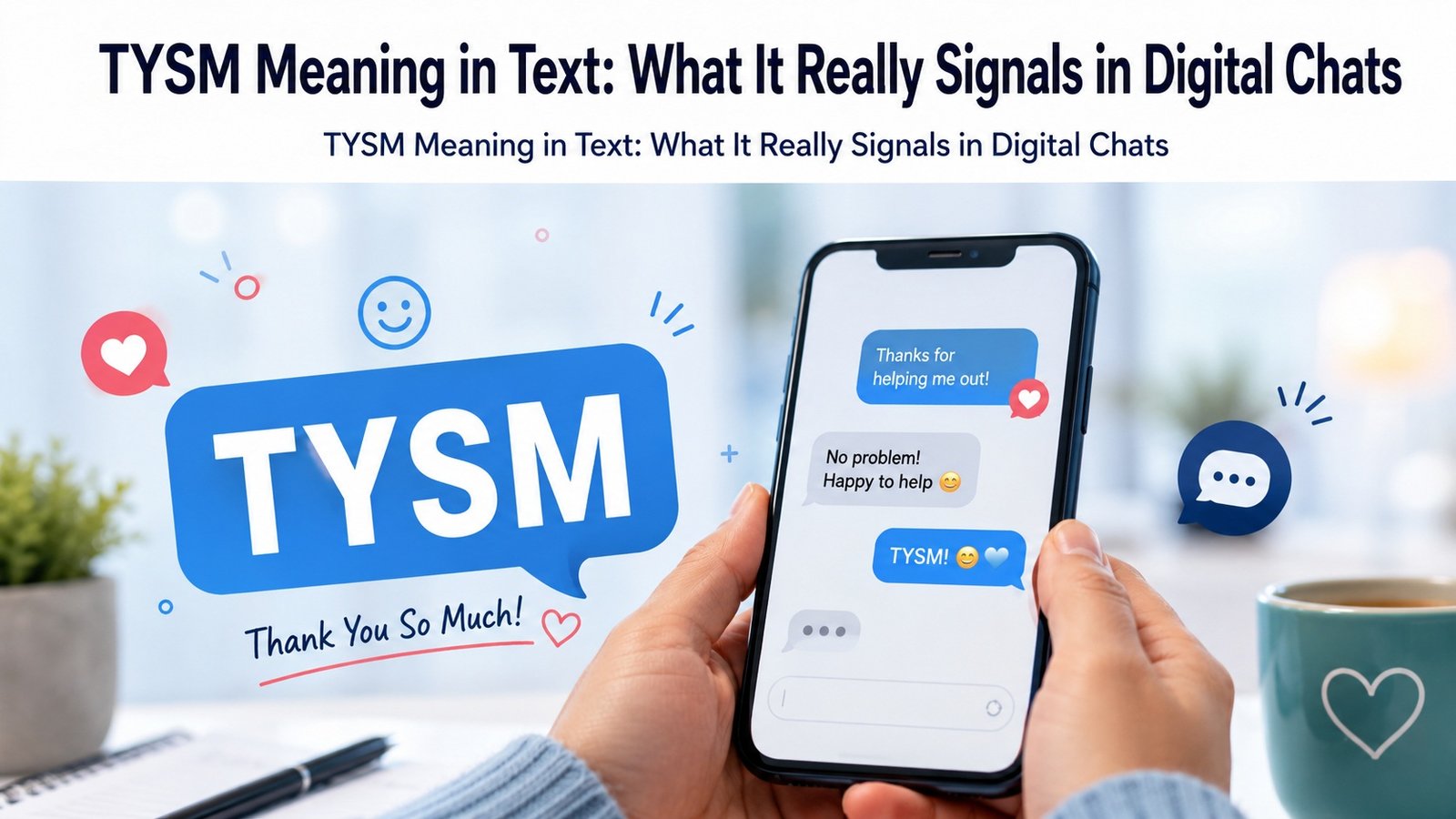
The phrase Tysm Meaning in Text shows up everywhere in modern messaging. You might see it in a quick reply, a social media comment, or even a work chat. At first glance, it looks like random letters, but it carries a clear emotional message that people instantly understand.
In simple terms, TYSM is part of digital shorthand culture. It reflects how people compress language while still trying to stay warm and polite. In the United States, it has become a casual but powerful way to express gratitude in seconds.
However, TYSM is more than just convenience. It also signals tone, personality, and social connection. Understanding it helps you read between the lines of modern online communication.
Quick Answer
TYSM means “Thank You So Much.” In the USA, it is commonly used in texting and social media to show strong appreciation in a fast, friendly way. It usually signals warmth, politeness, and casual digital friendliness.
TL;DR
• TYSM stands for “Thank You So Much”
• Common in texting and social media in the USA
• Expresses strong, friendly gratitude
• More casual than formal written thanks
• Often used in quick digital conversations
• Can signal warmth or emotional appreciation
What Does TYSM Mean in Text Messages
To understand TYSM, you need to look at how modern texting works. People shorten words to save time while still keeping meaning intact. TYSM Meaning in Text simply breaks down into a fast expression of gratitude.
• TYSM = Thank You So Much
• Used in casual digital communication
• Conveys stronger gratitude than “thanks”
• Common in texting apps and chats
• Often used with friends, coworkers, or online strangers
In the USA, this phrase is widely understood across age groups, especially among younger users.
Origin of TYSM in Internet Slang Evolution
TYSM didn’t appear randomly. It grew from early internet chatrooms and SMS culture in the late 1990s and early 2000s.
Early Digital Shortcuts
In early messaging systems, character limits pushed users to shorten language. People started abbreviating common phrases like:
• BRB (be right back)
• LOL (laugh out loud)
• TY (thank you)
• TYSM (thank you so much)
TYSM emerged as a natural expansion of TY, adding emotional emphasis.
Evolution Over Time
As smartphones became dominant, TYSM moved from niche chatrooms to mainstream texting. Today, it feels natural rather than technical.
How TYSM Became Popular in American Digital Culture
In the United States, TYSM grew through social media platforms and messaging apps. Its popularity comes from speed and emotional clarity.
Key Drivers of Popularity
• Rise of texting over phone calls
• Growth of platforms like Instagram and Snapchat
• Influence of meme and internet culture
• Preference for casual communication style
People in the USA prefer short, expressive messages. TYSM fits that perfectly.
TYSM vs Thank You vs Thanks Explained
Not all gratitude expressions feel the same. TYSM carries a stronger emotional weight than simpler phrases.
| Expression | Meaning Strength | Tone | Common Use |
| Thanks | Light gratitude | Neutral | Everyday responses |
| Thank you | Standard politeness | Formal-casual | General communication |
| TYSM | Strong appreciation | Warm & emotional | Friendly or heartfelt moments |
TYSM Meaning in Text often signals deeper appreciation than a simple “thanks.”
Read More: BRB Meaning in Text: What It Really Signals Today
Emotional Tone Behind TYSM in Conversations
Words in digital spaces carry emotion even without voice or facial expression. TYSM is a good example of emotional compression.
Common Emotional Signals
• Gratitude with warmth
• Friendly closeness
• Relief or appreciation
• Positive social bonding
• Soft emotional emphasis
People often use TYSM when they genuinely feel thankful, not just polite.
When People Use TYSM in the USA
Usage depends on context. In American texting culture, TYSM appears in both casual and semi-formal settings.
Common Situations
• Receiving help or favors
• After compliments or gifts
• In customer service chats
• Friendly social interactions
• Online gaming or communities
It is rarely used in strict formal writing but common in everyday digital talk.
TYSM in Social Media and Online Communities
Social platforms have made TYSM even more visible. It is often used in comments, replies, and reactions.
Where You’ll See It
• Instagram comment sections
• TikTok replies
• Twitter/X threads
• Discord chats
• Reddit discussions
It often appears as a quick appreciation response to content or advice.
Is TYSM Formal or Informal Communication?
TYSM sits clearly on the informal side of communication, though it can sometimes appear in semi-professional digital settings.
Communication Style Breakdown
• Informal: Friends, social media, gaming
• Semi-formal: Workplace chats, email replies
• Rarely formal: Official letters or documents
In professional environments, “thank you so much” is usually preferred instead.
Misunderstandings Around TYSM Meaning
Even though TYSM is simple, misunderstandings still happen, especially across generations.
Common Confusions
• Some think it is sarcastic
• Others mistake it for slang with hidden meaning
• Non-native speakers may not recognize it
• Older users may see it as too casual
Context usually clarifies the intent quickly.
TYSM in Professional vs Personal Contexts
TYSM behaves differently depending on where it is used. Tone matters more than the words themselves.
Professional Use
• Acceptable in internal chat tools
• Common in quick replies
• Not ideal for formal documents
Personal Use
• Very common among friends
• Often used with emojis or casual tone
• Helps maintain emotional warmth
| Context | TYSM Usage | Tone Outcome |
| Work chat | Limited use | Polite casual |
| Friends | Frequent use | Warm & relaxed |
| Public posts | Moderate use | Friendly engagement |
Cross-Cultural Understanding of TYSM Equivalent
While TYSM is English-based, other cultures have similar shorthand gratitude expressions.
Global Equivalents
• Spanish: “MCHS gracias” (muchas gracias shortened online)
• Japanese: “Arigato” in casual text form
• Korean: “Gamsa” in chat slang
• Arabic: Shortened “shukran” in messaging apps
However, TYSM itself is mainly tied to English-speaking internet culture.
Psychological Meaning of TYSM in Digital Etiquette
From a communication perspective, TYSM reflects social bonding and emotional clarity.
What It Signals Psychologically
• Acknowledgment of kindness
• Desire to maintain positive relationship
• Low-effort but high-emotion communication
• Digital politeness marker
People often use it to keep interactions smooth and friendly.
Modern Usage Trends of TYSM (2025–2026)
Today, TYSM continues evolving with online culture. It remains stable but adapts to new platforms.
Current Trends
• Often paired with emojis like 😊 or 🙏
• Used in voice-to-text converted messages
• Common in influencer audience replies
• Sometimes replaced by “tysm!!” for emphasis
Despite new slang appearing, TYSM remains widely understood.
FAQs
What does TYSM mean in simple words?
TYSM means “Thank You So Much.” It is used to express strong gratitude quickly in texts or online messages.
Is TYSM rude or polite?
TYSM is generally polite and friendly. It shows appreciation in a casual, modern way.
Can I use TYSM in work emails?
It depends on the workplace. It is okay in casual team chats but not formal emails.
Is TYSM still used today?
Yes, TYSM is still widely used in texting and social media across the USA and beyond.
What is the difference between TY and TYSM?
TY means “thank you,” while TYSM adds stronger emotion, meaning “thank you so much.”
Do older people understand TYSM?
Some do, especially frequent internet users. However, it is more common among younger generations.
Conclusion
TYSM is more than just an abbreviation. It reflects how digital communication has evolved to balance speed with emotion. The Tysm Meaning in Text shows how people express gratitude in a fast, connected world.
At its core, TYSM signals appreciation, warmth, and social connection. Even though it is short, it carries real emotional weight in everyday conversations.
As online language continues to evolve, TYSM remains a steady reminder that even small words can carry meaningful human connection.