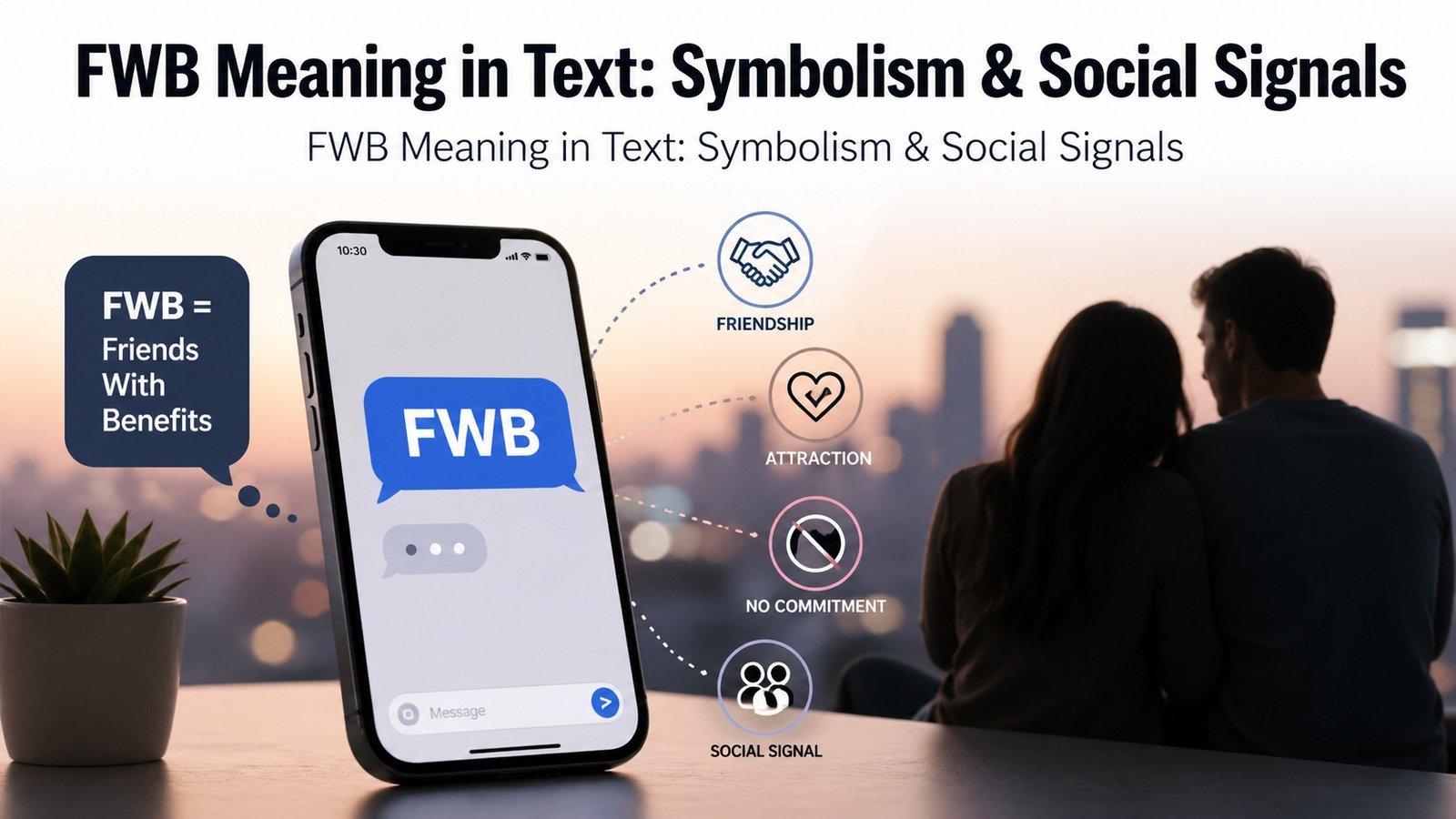
People see short phrases online every day, yet some carry deeper social signals. One of those is FWB Meaning in Text, a phrase that shows up in messages, dating apps, and pop culture. At first glance, it looks like simple slang. However, it reflects a broader shift in how relationships are defined in modern American life.
Today, communication is faster and more coded. Because of that, abbreviations like FWB don’t just save time; they express attitudes, boundaries, and expectations. In the United States, this term has become a shorthand for a specific type of connection that sits between friendship and romance.
So, what does it really symbolize? Let’s unpack its meaning, history, and emotional weight in today’s culture.
Quick Answer
FWB Meaning in Text usually symbolizes a casual relationship where two people are friends but also engage in physical intimacy without commitment. In the U.S., it reflects independence, flexibility, and changing views on romance, while also hinting at emotional boundaries.
TL;DR
• FWB means “friends with benefits,” a casual relationship label
• It reflects modern views on independence and non-commitment
• Popularized by media, texting culture, and dating apps
• Signals clear boundaries but can carry emotional complexity
• Often used in U.S. dating culture and online conversations
What Does FWB Mean in Text?
FWB stands for “friends with benefits.” It describes a relationship where two people maintain a friendship while also having a physical connection, without romantic commitment. This meaning matters in the U.S. because it reflects how people define relationships outside traditional norms.
Core Definition
FWB is not just about convenience. Instead, it signals a mutual agreement and understanding between individuals.
• Friendship remains the base of the connection
• Physical intimacy exists without long-term expectations
• Emotional involvement is often limited or controlled
• Communication and boundaries are usually discussed openly
Why People Use the Term
People prefer clear labels. FWB helps avoid confusion and sets expectations early in a conversation.
Historical Background and Cultural Roots
Although the phrase feels modern, the idea behind FWB isn’t entirely new. Human relationships have always included informal or non-traditional bonds. However, the label itself gained traction in the late 20th and early 21st centuries.
Early Relationship Norms
In earlier American history, relationships were more structured. Marriage and courtship followed clear social rules. Casual arrangements existed, yet they were rarely discussed openly.
Rise of Modern Dating Culture
By the early 2000s, things changed. Media, college culture, and shifting values made casual relationships more visible.
• Romantic comedies normalized non-traditional relationships
• College environments encouraged exploration and independence
• Social acceptance of casual dating increased over time
• Technology made private conversations more common
Symbolism of FWB in Modern America
In the U.S., FWB represents more than a relationship type. It acts as a symbol of modern identity and social flexibility.
Key Symbolic Meanings
• Freedom from traditional romantic expectations
• Emotional independence and personal control
• A balance between connection and autonomy
• Experimentation in relationships without long-term pressure
Cultural Impact
Because American culture values individual choice, FWB fits into a broader pattern of redefining relationships. It reflects a “choose your own path” mindset.
Emotional and Psychological Associations
Even though FWB sounds simple, it often carries emotional layers. People may enter these relationships for different reasons, which shapes their experience.
Common Emotional Signals
• Desire for companionship without commitment
• Fear of long-term emotional vulnerability
• Need for physical connection without pressure
• Curiosity about non-traditional relationships
Psychological Tension
However, emotions don’t always stay controlled. One person may develop deeper feelings, which can complicate the arrangement.
FWB in Texting and Digital Communication
Texting plays a huge role in how FWB is used today. A short message can define the tone of an entire relationship.
How It Appears in Messages
• “Looking for FWB, nothing serious”
• “We’re just FWB, right?”
• “FWB situation only, no drama”
• “Do you want to keep it FWB?”
Why It Works in Text
Digital communication encourages quick clarity. Instead of long explanations, people use FWB as a shorthand for boundaries and expectations.
Read More: 30 Other Ways to Say ‘Thank You for the Information Professionally’ (With Examples)
FWB in Dating Apps and Social Media
Dating apps have amplified the visibility of FWB. Profiles often include the term to signal intentions upfront.
Common Uses Online
• Bio descriptions stating relationship preferences
• Hashtags or captions describing casual connections
• Messaging shortcuts to avoid misunderstandings
• Profile filters indicating non-serious dating goals
Social Meaning
In this space, FWB becomes part of identity. It tells others how someone approaches relationships.
Symbolism Across Cultures
While FWB is most visible in American culture, similar ideas exist worldwide. Still, the interpretation varies.
Cross-Cultural Perspectives
• Some cultures view it as taboo or inappropriate
• Others see it as a private matter, not openly labeled
• In certain societies, casual relationships remain hidden
• Western influence has spread the term globally
Respectful Differences
Not all cultures embrace the concept equally. Cultural values shape how people interpret and accept it.
FWB and Modern Identity
Today, relationship labels are part of personal identity. FWB reflects how people define themselves socially and emotionally.
Identity Signals
• Preference for flexibility over commitment
• Focus on personal goals and independence
• Openness to unconventional relationship styles
• Desire for clear, honest communication
Changing Norms
As society evolves, labels like FWB help people navigate new social expectations.
Common Misunderstandings About FWB
Despite its popularity, FWB is often misunderstood. People may assume it’s simple or emotion-free, which isn’t always true.
Frequent Misconceptions
• It always stays casual without emotional impact
• Both people want the exact same outcome
• It replaces traditional relationships completely
• It guarantees no complications
Reality Check
In practice, FWB can be complex. Communication plays a major role in keeping things balanced.
Controversies and Social Debate
FWB has sparked debate in American culture. Some see it as empowering, while others view it as risky or emotionally challenging.
Points of Debate
• Whether it promotes emotional detachment
• Concerns about unclear boundaries
• Impact on long-term relationship expectations
• Differences in how men and women experience it
Balanced View
There’s no single answer. Experiences vary widely depending on communication and personal values.
How FWB Meaning Has Shifted Over Time
The meaning of FWB has evolved as society changes. What once felt controversial is now more openly discussed.
Evolution Timeline
• Early 2000s: Emerging term in pop culture
• 2010s: Mainstream acceptance through media and apps
• 2020s: Normalized as one of many relationship options
Current Trend
Today, it’s seen as one choice among many. People use it more openly and honestly than before.
FWB Meaning in Different Contexts
| Context | Meaning in the USA | Common Associations | Notes |
| Text Messages | Casual relationship intent | Direct, clear boundaries | Quick communication tool |
| Dating Apps | Non-committed dating style | Honesty, expectations | Often stated in profiles |
| Social Media | Lifestyle or identity signal | Independence, freedom | Sometimes casual tone |
| Friend Groups | Known arrangement type | Trust, discretion | May stay private |
| Pop Culture | Relationship trope | Humor, drama | Widely portrayed in films |
FAQs
What does FWB mean in texting?
It means “friends with benefits.” It describes a casual relationship without commitment. In texting, it sets expectations quickly.
Is FWB a serious relationship?
No, it’s usually not serious. However, emotions can still develop over time, depending on the people involved.
Why do people use FWB instead of dating?
People may want flexibility or avoid commitment. It can also suit busy lifestyles or personal priorities.
Can FWB turn into a real relationship?
Yes, sometimes it does. However, both people need to agree and communicate clearly for that shift to work.
Is FWB common in the United States?
Yes, it’s quite common. It’s especially visible among younger adults and in online dating culture.
Does FWB mean no feelings at all?
Not necessarily. While the goal is to keep things casual, feelings can still develop in some situations.
Conclusion
At its core, FWB Meaning in Text reflects more than a simple abbreviation. It represents a shift in how relationships are understood in modern American culture. Instead of strict categories, people now explore connections that fit their needs and lifestyles.
However, the meaning isn’t purely casual or emotion-free. It carries layers of intention, communication, and sometimes complexity. Like many modern symbols, its interpretation depends on context and personal experience.
In the end, FWB shows how language evolves alongside society. It reminds you that even a short text can hold a whole story about connection, choice, and changing social norms.

Alyan Ashraf is a passionate English language writer who simplifies grammar for everyday learners. He focuses on clear explanations, practical examples, and common usage rules to help readers write better, speak confidently, and avoid mistakes in real-world English.