Texting has its own language. Short forms, symbols, and tiny cues carry big meaning. One of the most common—but often misunderstood—is TM meaning in text. At first glance, it looks formal. Yet in daily messages, it can feel casual, even playful.
So why do people use “TM” in texts or online posts? In the United States, it sits at an interesting crossroads. It blends legal history with modern digital expression. Today, it can signal ownership, sarcasm, identity, or even humor.
Because of that mix, “TM” isn’t just a symbol. It’s a subtle cultural cue. Understanding it helps you read tone better—and use it with intention.
Quick Answer
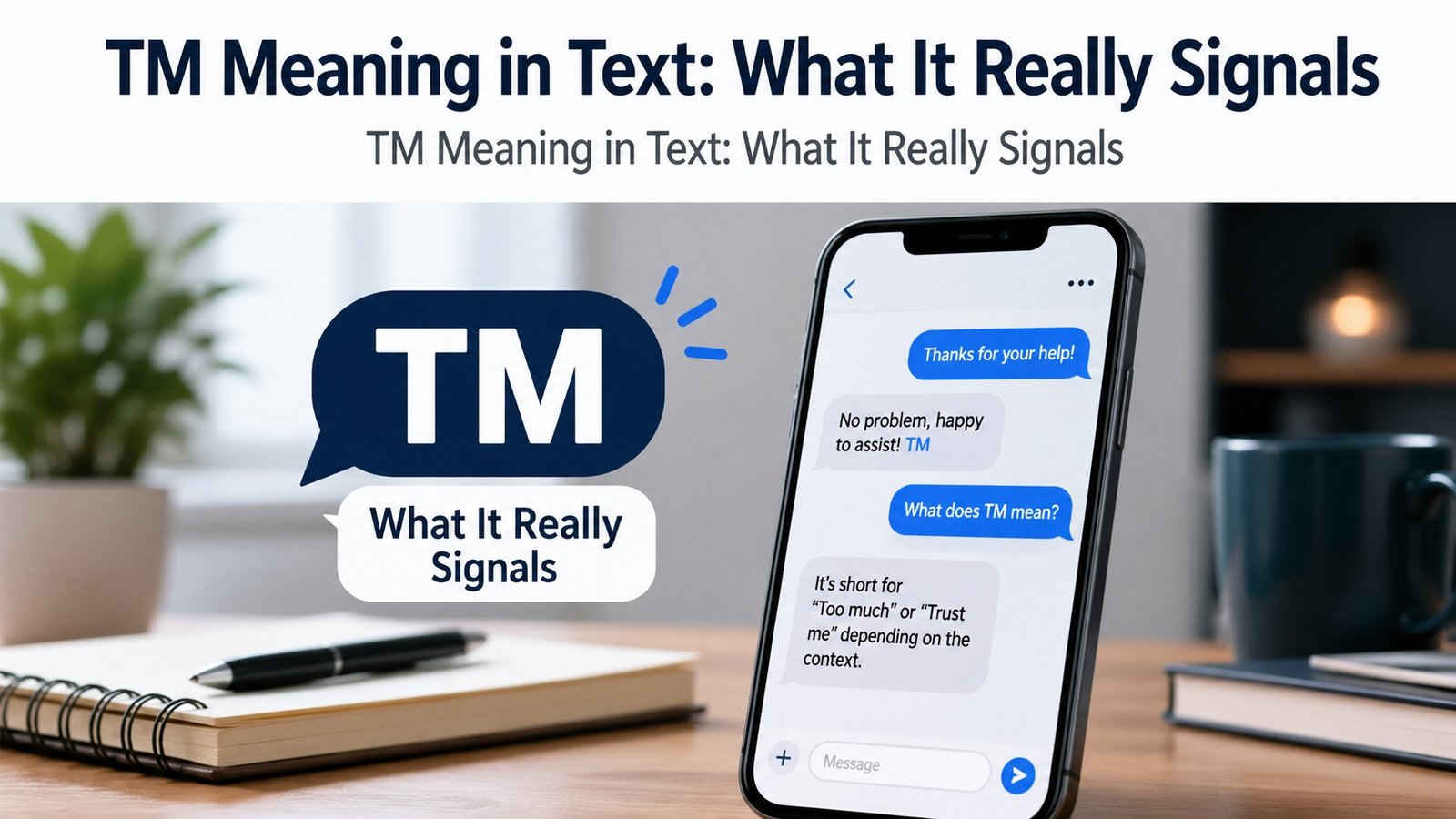
TM meaning in text usually signals a “trademark,” showing ownership of a phrase or idea. In the USA, it also works playfully to claim jokes, catchphrases, or personal style. More broadly, it can express identity, humor, or emphasis in digital communication.
TL;DR
• TM originally means “trademark” in legal and business contexts
• In texts, it often adds humor or mock ownership
• Americans use it for branding, jokes, or identity signals
• It can show pride in phrases or personal expressions
• Tone depends on context—serious or playful
• Meaning has shifted with social media culture
What Does TM Mean in Text?
TM appears simple, but its meaning depends on context. In formal use, it stands for “trademark.” However, in everyday texting, it often carries a lighter tone.
Literal Meaning
At its core, TM marks something as claimed or owned. This comes from business and intellectual property law. Companies use it to show a name or slogan belongs to them.
Texting Meaning
In casual messages, TM evolves. People use it to “claim” ideas or phrases jokingly.
• “That’s my phrase TM” signals playful ownership
• “Best cook in the house TM” adds humor and pride
• “Late-night thinker TM” builds a personal identity
• “Drama queen TM” can be self-aware or teasing
Because of this, TM acts like a wink. It says, “I know this isn’t official—but I’m owning it anyway.”
Where Did TM Come From?
To understand its symbolism, you need to look at its roots. TM didn’t start texting. It began in law and commerce.
Legal Origins
The term “trademark” dates back to early trade systems. Merchants marked goods to show origin and quality. Over time, these marks became protected identifiers.
Evolution Over Time
As business expanded, trademarks became formalized in the United States. Companies used TM to signal a claim before official registration.
• Early trade marks identified craftsmen and guilds
• Industrial growth made branding more important
• TM became a quick symbol of ownership
• Eventually, it entered everyday awareness
Today, that legal symbol has moved into casual language. Its meaning stretched beyond courts and contracts.
Why Do People Use TM in Text Messages?
People don’t use TM randomly. It serves specific social and emotional purposes.
Social Signaling
In texting, tone can be tricky. TM helps clarify intent.
• Adds humor to statements that might sound serious
• Softens bragging by making it playful
• Signals self-awareness in identity claims
• Turns ordinary phrases into personal “brands”
Cultural Influence
American digital culture values individuality. TM fits that mindset.
• Encourages self-branding in everyday talk
• Reflects influencer and branding culture
• Connects to meme humor and irony
• Supports playful exaggeration
Because of this, TM feels natural in modern communication.
TM Meaning in the USA
In the United States, TM carries layered meaning. It blends law, identity, and humor.
Everyday Usage
Americans often use TM beyond business.
• In group chats to claim inside jokes
• On social media bios for personality traits
• In captions to highlight signature habits
• In memes to exaggerate uniqueness
Cultural Context
The USA has a strong branding culture. People don’t just sell products—they “sell” personalities.
• TM mirrors entrepreneurial thinking
• It reflects pride in originality
• It aligns with self-expression trends
• It supports personal storytelling
This makes TM more than a symbol. It becomes part of identity language.
TM in Social Media and Digital Culture
Social platforms accelerated TM’s evolution. It’s now a staple in online expression.
Common Online Uses
You’ll see TM across posts, captions, and usernames.
• Instagram bios like “Coffee lover TM”
• Twitter jokes ending with TM for emphasis
• TikTok trends using TM ironically
• Gaming tags to create unique identities
Tone and Interpretation
Tone shifts depending on context.
• Serious when tied to real branding
• Playful when used in jokes
• Ironic in memes or sarcasm
• Confident when used for identity
Because of this flexibility, TM adapts to many situations.
Emotional and Psychological Meaning
Symbols often carry emotional weight. TM is no exception.
What TM Signals Emotionally
Using TM can reveal subtle feelings.
• Confidence in one’s traits or habits
• Desire for recognition or identity
• Humor and self-awareness
• Playfulness in communication
Psychological Impact
It can also shape how others perceive you.
• Makes statements feel more intentional
• Adds personality to plain text
• Builds a memorable communication style
• Encourages connection through humor
In short, TM adds emotional texture to digital language.
Is TM Always About Trademarks?
Not anymore. While it started that way, its meaning expanded.
Modern Interpretations
Today, TM can mean different things depending on use.
• Literal trademark in business contexts
• Personal branding in casual messages
• Humor or sarcasm in jokes
• Identity marker in online culture
Context Matters
The same symbol can mean different things.
• In emails, it may be formal
• In texts, it’s often playful
• In branding, it’s serious
• In memes, it’s ironic
Understanding context is key to reading TM correctly.
Read More: When a Guy Calls You Dangerous: Meaning Explained
TM vs ® vs © in Text
These symbols often appear together, but they differ in meaning.
| Context | Meaning in the USA | Common Associations | Notes |
| TM | Unregistered trademark claim | Branding, humor, identity | Flexible and widely used |
| ® | Registered trademark | Legal protection, official status | Formal and regulated |
| © | Copyright ownership | Creative works, media | Protects original content |
Key Differences
• TM is informal and widely adaptable
• ® is strictly legal and official
• © relates to creative ownership
• TM is most common in texting culture
Because TM is flexible, it became popular in everyday language.
Cross-Cultural and Global Meanings
Outside the USA, TM still carries its legal meaning. However, digital culture spreads its playful use globally.
Global Perspective
Different cultures interpret TM differently.
• In business, it remains formal worldwide
• In online spaces, younger users adopt playful uses
• In some regions, it’s less common in casual speech
• In global memes, meaning often mirrors US trends
Cultural Sensitivity
While TM is harmless in most cases, tone still matters. Humor doesn’t always translate the same way.
Misunderstandings and Misuse
Not everyone reads TM the same way. This can lead to confusion.
Common Misinterpretations
• Seen as arrogance instead of humor
• Mistaken for legal seriousness in casual texts
• Misused in professional communication
• Overused, losing its impact
When to Avoid TM
• Formal emails or workplace messages
• Sensitive conversations
• Situations needing clarity
• Cross-cultural communication without context
Using TM wisely helps avoid mixed signals.
How TM Meaning Has Changed Over Time
Like many symbols, TM evolved with culture.
Then vs Now
In the past, TM was strictly legal. Today, it’s more expressive.
• Originally used by businesses only
• Gradually entered public awareness
• Adopted by internet culture
• Now part of everyday texting language
Modern Shift
The biggest shift is tone.
• From serious to playful
• From legal to personal
• From restricted to widespread
• From formal to flexible
This evolution reflects how language adapts to technology.
TM in Identity, Branding, and Self-Expression
In modern culture, everyone builds a personal brand—even casually.
Personal Identity
TM helps people define themselves.
• “Fitness lover TM” shows commitment
• “Always late TM” adds humor
• “Bookworm TM” signals personality
• “Night owl TM” creates identity
Branding Influence
Social media encourages self-presentation.
• People treat traits like brands
• TM mimics professional branding
• It adds a signature feel to phrases
• It reinforces uniqueness
Because of this, TM blends identity with expression.
FAQs
What does TM mean in texting?
TM usually means “trademark,” but in texting, it often signals playful ownership. People use it to claim phrases or traits humorously.
Is TM serious or joking in text?
It depends on context. In casual messages, it’s usually joking. In business or branding, it can be serious.
Can I use TM in professional messages?
It’s best to avoid it in formal settings. TM can feel informal or unclear in professional communication.
What’s the difference between TM and ®?
TM shows a claim to a trademark. ® means the trademark is officially registered and legally protected.
Why do people put TM after their name or phrase?
They use it to create a sense of identity or humor. It’s a way to “brand” themselves or their ideas.
Is TM used worldwide in texting?
Yes, but mostly influenced by US digital culture. Its playful use is more common in English-speaking online spaces.
Conclusion
At first glance, TM seems like a simple legal mark. Yet its meaning has grown far beyond that. In modern communication, especially in the United States, it blends ownership with humor and identity.
Understanding TM meaning in text helps you read tone more clearly. It shows when someone is joking, expressing pride, or shaping their personal voice. Over time, it shifted from strict legal use to a flexible cultural signal.
So next time you see TM, look closer. It might not just mark ownership—it might reveal personality, humor, or a playful claim to something uniquely “theirs.”