In today’s fast-moving digital world, short replies often say more than long sentences. One of the most common is “mhm.” At first glance, it looks simple. However, its meaning can shift depending on tone, context, and timing. That’s why understanding Mhm Meaning in Text matters more than you might expect.
Across the United States, “mhm” shows up in texts, voice messages, and social media replies. People use it casually, yet it can signal agreement, boredom, or even passive resistance. Because of this, it acts less like a word and more like a subtle social cue.
So, what does it really mean when someone types “mhm”? The answer depends on how—and why—it’s used.
Quick Answer
Mhm Meaning in Text usually signals agreement or acknowledgment in American communication. However, depending on context, it can also suggest indifference, hesitation, or passive confirmation.
TL;DR
• “Mhm” often means yes or agreement
• Tone and context completely change its meaning
• Common in casual American texting and speech
• Can signal boredom or disinterest subtly
• Widely used in social media and quick replies
What Does “Mhm” Mean in Text?
“Mhm” is a short, phonetic expression. It mimics a sound people make when they agree without speaking fully. In the USA, it’s widely understood as a casual “yes.”
Basic Meaning
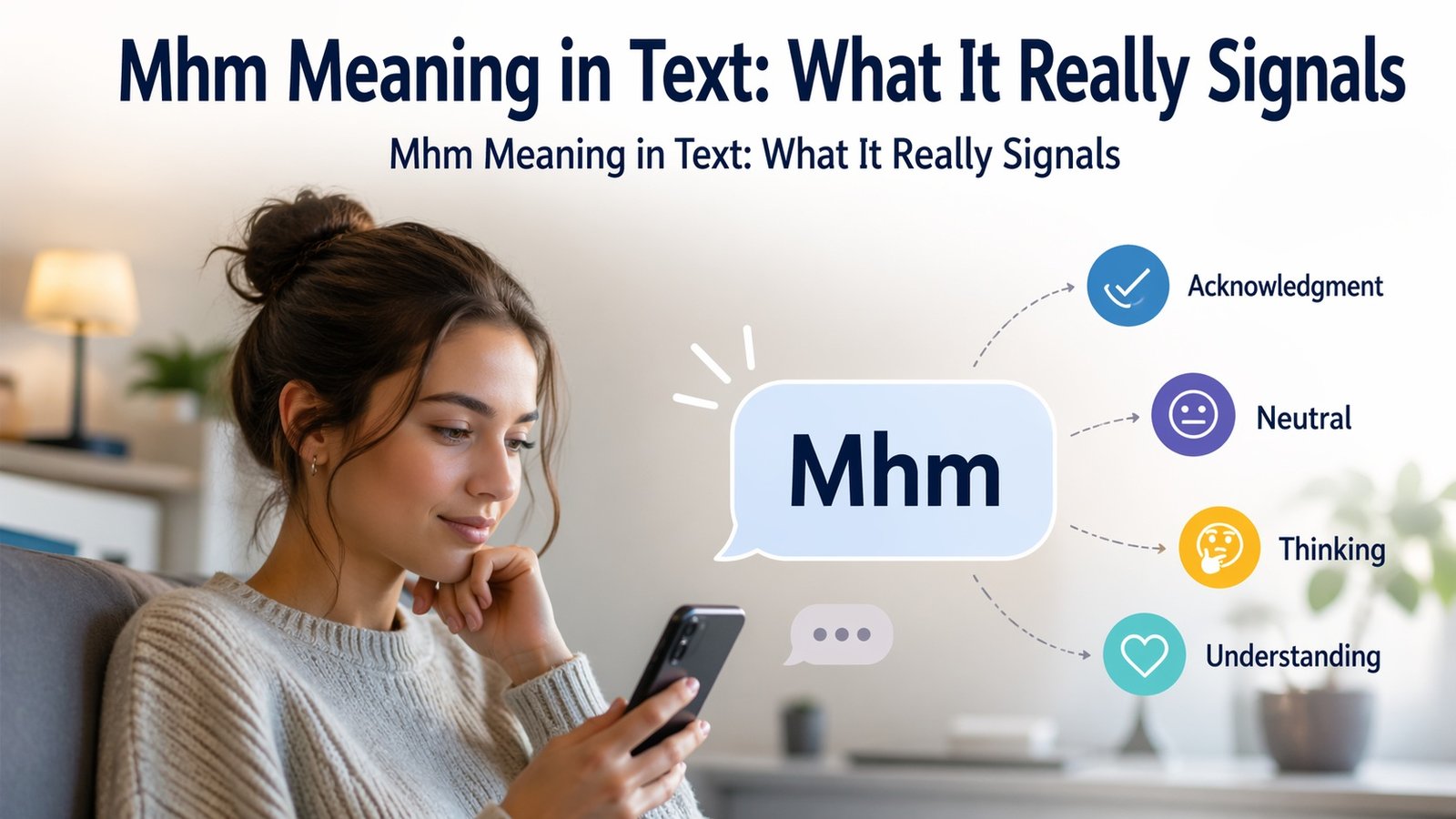
At its core, “mhm” reflects acknowledgement. However, it’s less direct than “yes.”
• A soft agreement without strong emotion
• A quick response when multitasking
• A signal that the listener is paying attention
• A low-effort reply in casual conversations
Why It Matters
Today, texting removes vocal tone. So, small words like “mhm” carry emotional weight. Because of this, people often read between the lines.
How “Mhm” Sounds and Feels
Unlike typed words, “mhm” comes from spoken sound. Its meaning originally depends on tone and pitch.
Spoken vs. Texted “Mhm”
In speech, tone changes everything. However, in text, that tone disappears.
• A rising tone can mean interest or curiosity
• A flat tone may suggest boredom
• A slow “mhm” can feel thoughtful
• A quick “mhm” might seem dismissive
Why Tone Gets Lost
When typed, “mhm” becomes ambiguous. Therefore, readers rely on context and relationship.
Origins of “Mhm” in Language
“Mhm” isn’t a modern invention. Instead, it comes from natural human sounds used across cultures.
Early Human Communication
Before structured language, people used sounds like “mm” to show agreement. Over time, this evolved into expressions like “mhm.”
Linguistic Evolution
In English-speaking cultures, especially in the United States, “mhm” became a conversational filler.
• Rooted in nonverbal vocal cues
• Developed alongside spoken English
• Became common in informal dialogue
• Transitioned into digital communication
Mhm Meaning in American Culture
In the USA, communication often values speed and efficiency. Because of this, short responses like “mhm” thrive.
Everyday Usage
Americans use “mhm” in both spoken and written conversations.
• Text messages between friends and family
• Casual workplace chats
• Social media comments and replies
• Voice notes and phone conversations
Cultural Context
In American culture, “mhm” often signals relaxed communication. However, it can also hint at emotional distance.
Emotional and Psychological Signals
“Mhm” isn’t just a word—it’s a feeling marker. It reflects how someone engages emotionally.
Common Emotional Meanings
Depending on context, “mhm” can suggest different moods.
• Agreement without enthusiasm
• Passive listening or distraction
• Mild approval or acceptance
• Subtle annoyance or impatience
Reading Between the Lines
Because it’s vague, people often overanalyze “mhm.” That’s why misunderstandings happen easily.
When “Mhm” Means Yes… and When It Doesn’t
Although “mhm” often means yes, it doesn’t always carry full agreement.
Clear Agreement
In some cases, it’s a simple confirmation.
• Responding to factual statements
• Agreeing in casual conversations
• Acknowledging instructions or plans
Uncertain or Passive Meaning
However, tone and context can shift the meaning.
• Responding without real interest
• Avoiding deeper conversation
• Showing minimal engagement
Common Contexts and Their Meanings
| Context | Meaning in the USA | Common Associations | Notes |
| Casual texting | Light agreement | Relaxed tone | Often friendly |
| Arguments | Passive resistance | Frustration or dismissal | Can feel dismissive |
| Workplace chats | Acknowledgment | Efficiency | Not always enthusiastic |
| Social media replies | Minimal engagement | Quick response | May lack emotional depth |
| Close relationships | Comfortable shorthand | Familiarity | Depends on tone and history |
Read More: TTYL Meaning in Text: What It Really Signals
“Mhm” in Social Media and Digital Life
Today, “mhm” plays a big role in online communication. It’s quick, simple, and widely understood.
Popular Platforms
You’ll see “mhm” across many apps.
• Messaging apps like WhatsApp and iMessage
• Social platforms like Instagram and Snapchat
• Comment sections and replies
• Online gaming chats
Why People Use It
People prefer speed in digital conversations.
• Saves time compared to full sentences
• Feels more natural than “yes”
• Matches casual online tone
• Reduces typing effort
Is “Mhm” Rude or Polite?
This is one of the biggest questions. The answer depends on context.
When It Feels Polite
In friendly conversations, it’s completely normal.
• Talking with close friends
• Casual check-ins
• Light, ongoing chats
When It Feels Rude
However, it can come across negatively.
• During serious discussions
• When a detailed response is expected
• In emotional conversations
Cross-Cultural and Spiritual Interpretations
While “mhm” is common in the USA, similar sounds exist worldwide.
Global Variations
Different cultures use comparable expressions.
• “Mm” in many languages signals agreement
• Nods or hums replace spoken words
• Tone often carries the real meaning
Symbolic Meaning
On a deeper level, “mhm” represents acknowledgement. It shows presence, even without full engagement.
Misunderstandings and Misuse
Because “mhm” is vague, it’s easy to misinterpret.
Common Confusions
People often read too much into it.
• Assuming disinterest when none exists
• Misreading tone in serious conversations
• Feeling dismissed or ignored
Avoiding Miscommunication
To reduce confusion, clarity helps.
• Add extra words when needed
• Use emojis carefully
• Match tone to situation
How “Mhm” Has Changed Over Time
Like many expressions, “mhm” evolved with technology.
Before Digital Communication
It was mainly spoken. Tone carried meaning clearly.
Today’s Digital Shift
Now, it’s typed more than spoken.
• Became shorter and more frequent
• Lost vocal nuance in text
• Gained new meanings through context
Mhm in Relationships and Identity
“Mhm” can reflect how people relate to each other.
In Close Relationships
It often signals comfort and familiarity.
• No need for full sentences
• Shared understanding of tone
• Efficient communication
In Distant Relationships
However, it may feel cold or distant.
• Lack of emotional warmth
• Minimal engagement
• Possible misunderstanding
FAQs
What does “mhm” mean in texting?
“Mhm” usually means yes or agreement. However, it can also show passive acknowledgment depending on context.
Is “mhm” the same as “yes”?
Not exactly. “Yes” is clear and direct, while “mhm” can feel softer or less enthusiastic.
Can “mhm” be rude?
Yes, sometimes. In serious or emotional conversations, it may seem dismissive or uninterested.
Why do people use “mhm” instead of words?
Because it’s quick and easy. It also mimics natural speech patterns.
Does “mhm” mean someone is bored?
Sometimes. If used repeatedly or without detail, it may signal low engagement.
Is “mhm” positive or negative?
It can be both. The meaning depends on tone, context, and relationship.
Conclusion
At first glance, “mhm” seems like a tiny, harmless reply. However, its meaning runs deeper than most people realize. In American communication, it acts as a flexible signal—sometimes warm, sometimes distant, and often somewhere in between.
Understanding Mhm Meaning in Text helps you read conversations more accurately. It also helps you respond with better clarity. Because in today’s digital world, even the smallest words can carry big emotional weight.
Next time you see “mhm,” pause for a moment. The real meaning might not be in the word itself—but in everything around it.