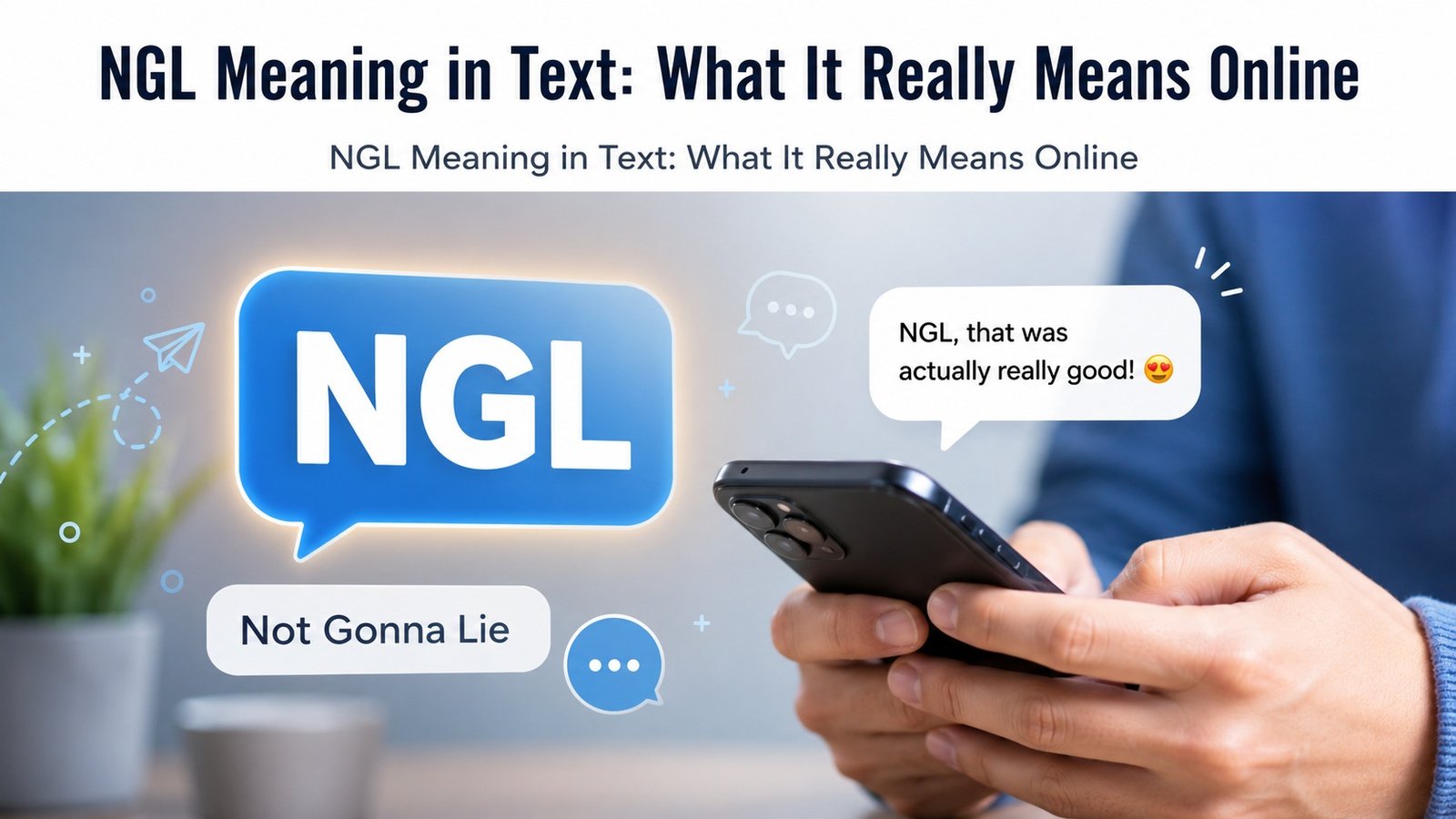
NGL has become one of the most recognizable shortcuts in modern online communication. You may see it in text messages, social media comments, online forums, or direct messages. While it looks simple, the phrase carries social and emotional meaning that goes beyond its literal definition.
In American digital culture, people use abbreviations to save time and create a more casual tone. Among these expressions, NGL stands out because it often signals honesty, vulnerability, or a personal opinion. It acts almost like a modern conversational symbol that prepares readers for what comes next.
Understanding NGL helps explain how people communicate online today. It reveals how digital language has evolved and why certain phrases become cultural markers across generations.
Quick Answer
NGL Meaning in Text usually stands for “Not Gonna Lie.” In the United States, it symbolizes honesty, sincerity, and personal opinion. More broadly, it signals that someone is about to share a truthful thought, feeling, or observation.
TL;DR
• NGL means “Not Gonna Lie.”
• It signals honesty or personal opinion.
• Popular in American texting culture.
• Common on social media and messaging apps.
• Often introduces compliments, criticisms, or confessions.
• Reflects modern digital communication trends.
Overview of NGL Meaning in Text
What Does NGL Stand For?
NGL is an abbreviation for “Not Gonna Lie.” It serves as a conversational introduction before someone shares an opinion, confession, or observation.
In most cases, the phrase isn’t meant literally. Instead, it works as a social cue that tells readers the speaker is being direct or genuine.
Why People Use It
People often use NGL because it feels informal and relatable. It can soften strong opinions while making statements seem more authentic.
Common examples include:
• NGL, that movie surprised me.
• NGL, I miss the old version.
• NGL, that was impressive.
• NGL, I’m nervous about tomorrow.
• NGL, this might be my favorite song.
The Origins of NGL
Early Internet Language
The roots of NGL trace back to early internet communication. During the late 1990s and early 2000s, users began shortening common phrases in chat rooms and instant messaging services.
Because typing speed mattered, abbreviations became a practical solution. Expressions such as LOL, BRB, and IMO gained popularity, eventually paving the way for NGL.
Growth Through Social Media
The rise of social media accelerated NGL’s adoption. Platforms encouraged shorter posts and faster communication.
As online conversations became more conversational and personality-driven, NGL evolved into a marker of authenticity rather than merely a shortcut.
Evolution of Meaning
Originally, NGL simply condensed a phrase. Over time, however, it developed symbolic value.
Today, many people interpret NGL as a signal that the speaker is about to reveal a genuine thought or emotion.
Why NGL Symbolizes Honesty
A Modern Honesty Marker
Language often contains phrases that establish trust. In face-to-face conversations, people might say, “Honestly” or “To tell the truth.”
Online, NGL performs a similar role.
Emotional Signals Behind NGL
When readers see NGL, they often expect:
• A sincere opinion.
• A personal confession.
• An unexpected admission.
• A vulnerable statement.
• A genuine reaction.
Because of these expectations, the phrase has become associated with openness and authenticity.
NGL in American Digital Culture
Why It Became Popular in the USA
American internet culture values casual communication. NGL fits naturally into this style because it sounds conversational rather than formal.
Younger generations especially embraced the term as social media became central to daily life.
Common Contexts
NGL frequently appears in:
• Text messages.
• Social media captions.
• Video comments.
• Group chats.
• Online gaming discussions.
• Meme culture.
Meaning Across Generations
While younger users introduced much of its popularity, older internet users now recognize and use the term as well.
As a result, NGL has become part of mainstream digital vocabulary in the United States.
NGL Meanings in Different Contexts
Context Changes Interpretation
Although NGL usually means “Not Gonna Lie,” its emotional impact changes depending on the conversation.
| Context | Meaning in the USA | Common Association | Notes |
| Compliment | Genuine praise | Honesty | Builds credibility |
| Criticism | Direct feedback | Transparency | Softens criticism |
| Confession | Personal feeling | Vulnerability | Creates connection |
| Humor | Unexpected opinion | Authenticity | Adds personality |
| Social Media | Attention-grabbing opener | Relatability | Encourages engagement |
Reading Tone Correctly
The words following NGL usually determine the intended tone. Sometimes it introduces praise. Other times it introduces criticism or self-reflection.
Read More: SS Meaning in Text: What It Means and Why It Matters in 2026
The Psychology Behind NGL
Why People Trust It
Human communication relies on signals that indicate sincerity. NGL functions as one of these signals.
Even when readers know it’s a casual phrase, it creates an expectation of truthfulness.
Emotional Associations
NGL is commonly connected with:
• Authenticity.
• Confidence.
• Vulnerability.
• Relatability.
• Transparency.
• Personal expression.
These emotional associations explain why the abbreviation remains popular.
Building Social Connection
People often use NGL to make conversations feel more personal. It helps transform simple statements into opinions that feel human and relatable.
NGL and Social Media Culture
A Symbol of Online Authenticity
Modern social media rewards content that feels genuine. Users often prefer personal experiences over polished presentations.
Because of this trend, NGL has become associated with authenticity.
Common Social Media Uses
You’ll often see NGL before:
• Reviews of products.
• Reactions to events.
• Personal stories.
• Pop culture opinions.
• Daily life observations.
Viral Communication Patterns
The phrase works well because it’s short, recognizable, and emotionally meaningful. These qualities make it ideal for social media environments.
The Rise of the NGL App
More Than an Abbreviation
In recent years, NGL also became associated with a social messaging application called NGL.
The app allows users to receive anonymous messages through social media links.
Impact on Digital Culture
The application’s popularity introduced the abbreviation to new audiences. However, the original meaning of “Not Gonna Lie” remains more common in everyday conversation.
Two Meanings to Remember
Today, NGL may refer to:
• “Not Gonna Lie.”
• The anonymous messaging app.
• Honest opinions online.
• Digital social interaction.
Context usually makes the intended meaning obvious.
NGL and Personal Identity
Expressing Individuality
People use language to communicate identity. NGL helps users express opinions in a way that feels direct and personal.
Social Signaling
Using NGL can signal:
• Informal communication style.
• Internet literacy.
• Social media familiarity.
• Comfort with digital culture.
• Conversational confidence.
For many users, it’s simply part of everyday online language.
Common Misunderstandings About NGL
Does It Always Mean Honesty?
Not necessarily.
People sometimes use NGL humorously, sarcastically, or ironically. In those cases, the phrase functions more as a stylistic tool than a literal statement.
Is It Only for Young People?
No. Although younger users helped popularize it, people of many age groups now understand and use the abbreviation.
Is It Always Serious?
Not at all.
NGL often introduces playful opinions or lighthearted comments rather than serious confessions.
Criticism and Controversies
Questions About Authenticity
Some critics argue that phrases like NGL can become overused.
When repeated too often, they may lose some of their original impact.
The Paradox of Online Honesty
Interestingly, adding “Not Gonna Lie” doesn’t guarantee truthfulness. It only signals an intention to appear honest.
This creates an interesting contrast between language and actual behavior online.
Neutral Perspective
Most users view NGL simply as a conversational habit rather than a deceptive tactic. Its meaning largely depends on context and intent.
How NGL Has Changed Over Time
From Chat Rooms to Mainstream Culture
The journey of NGL reflects broader changes in digital communication.
What started as a practical abbreviation became a cultural expression associated with honesty and authenticity.
Modern Revival
Even as internet slang changes rapidly, NGL remains relevant because it fulfills a basic communication need: signaling sincerity.
Future Outlook
The phrase may continue evolving, but its connection to openness and personal expression will likely remain recognizable.
Similar Expressions to NGL
Related Digital Phrases
Several abbreviations carry similar meanings:
• TBH — To Be Honest.
• IMO — In My Opinion.
• FR — For Real.
• ICYMI — In Case You Missed It.
• FWIW — For What It’s Worth.
How NGL Differs
Unlike many alternatives, NGL often feels more conversational and emotionally expressive. It creates the impression that a candid thought is about to follow.
FAQs
What does NGL mean in a text message?
NGL usually means “Not Gonna Lie.” It signals that the sender is sharing a sincere opinion or feeling.
Is NGL considered slang?
Yes. NGL is internet slang that became widely accepted in texting and social media communication.
Can NGL be used professionally?
Generally, NGL is best suited for casual communication. Formal business writing usually favors complete phrases instead.
Does NGL always mean someone is telling the truth?
No. The phrase suggests honesty, but it doesn’t guarantee accuracy. It functions as a conversational signal rather than proof.
What is the difference between NGL and TBH?
Both express honesty. However, NGL often introduces an opinion, while TBH can sound slightly more direct or reflective.
Is NGL still popular in 2026?
Yes. NGL remains widely used across texting, social media, gaming communities, and online discussions.
Conclusion
NGL Meaning in Text goes far beyond a simple abbreviation. While it literally means “Not Gonna Lie,” it has evolved into a symbol of honesty, authenticity, and personal expression in modern digital culture.
In the United States, NGL reflects how online communication continues to shape everyday language. It helps people share opinions, emotions, and reactions in a way that feels direct and relatable.
As digital language evolves, some expressions disappear while others become lasting cultural markers. NGL has endured because it satisfies a timeless human need: signaling sincerity while connecting with others through conversation.

Alyan Ashraf is a passionate English language writer who simplifies grammar for everyday learners. He focuses on clear explanations, practical examples, and common usage rules to help readers write better, speak confidently, and avoid mistakes in real-world English.