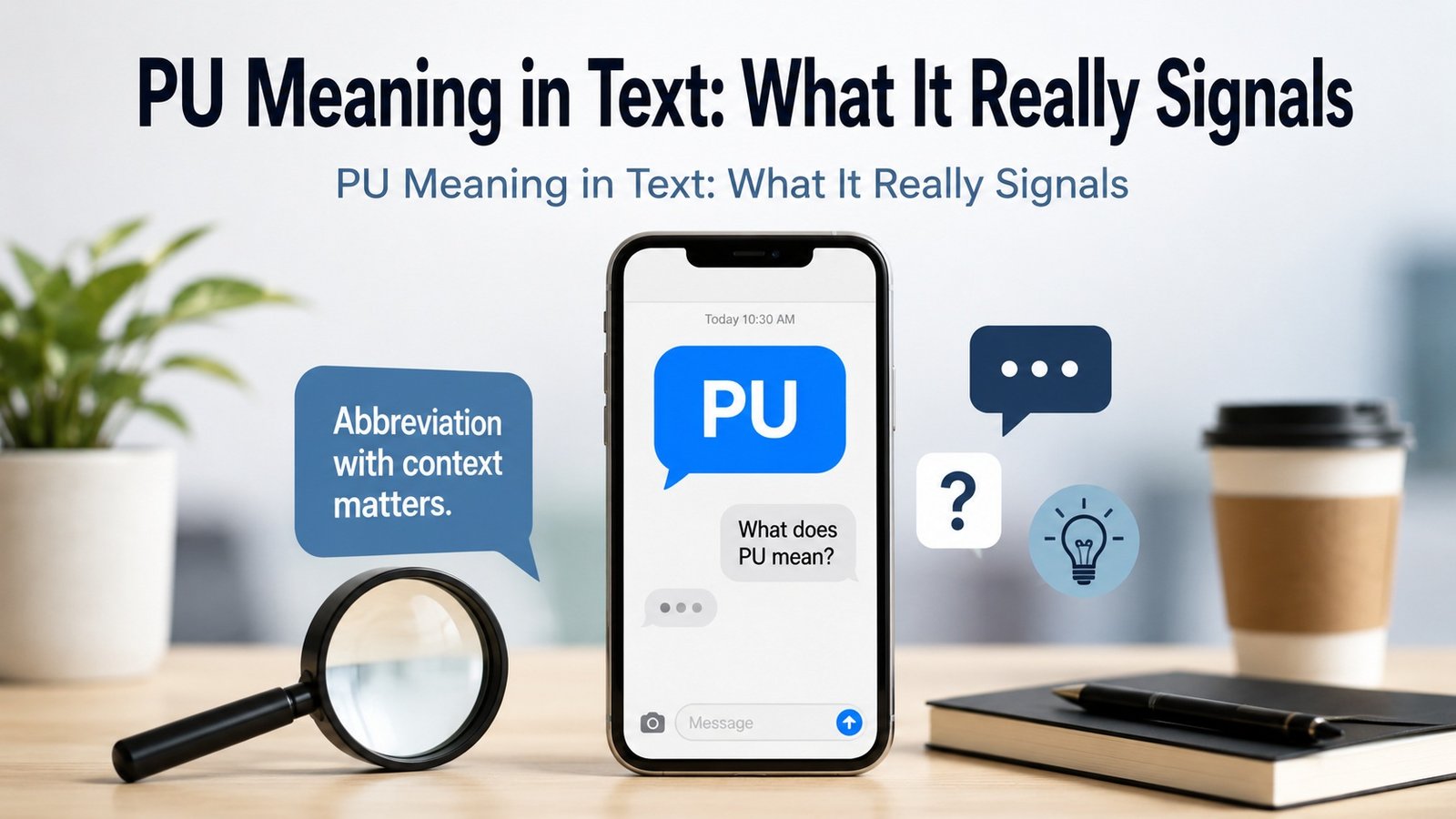
PU Meaning in Text has become a common question as texting slang keeps evolving across the United States. Short abbreviations now shape how people react, joke, flirt, and express emotions online. While some slang fades quickly, PU has stayed recognizable because it delivers a strong emotional reaction in only two letters.
Today, Americans often see PU in text messages, TikTok captions, gaming chats, and social media comments. The meaning usually depends on tone and context. In many cases, it expresses disgust or reacts to a bad smell. However, younger users sometimes use it playfully or sarcastically among friends.
The phrase also connects to older spoken expressions in American culture. Parents, cartoons, and comedy shows have used “P.U.!” for decades to signal something unpleasant. Because of that history, the slang feels familiar even to people who rarely text.
Understanding the phrase matters because digital language changes fast. A simple abbreviation can carry humor, emotion, or social meaning depending on who uses it and where it appears.
Quick Answer
PU Meaning in Text usually symbolizes disgust, annoyance, or a reaction to something unpleasant in American digital culture. In casual chats, “PU” often means “eww” or “that stinks,” although some people also use it jokingly or sarcastically among friends.
TL;DR
• PU usually expresses disgust or dislike
• The phrase comes from older spoken American slang
• Texting culture made the abbreviation more popular
• Tone changes the meaning completely
• Americans often use it humorously online
• Context matters more than the letters themselves
What Does PU Mean in Text?
PU is a short slang reaction used in texting and online conversations. Most Americans recognize it as a digital version of saying “pee-yew,” an old expression linked to bad smells or unpleasant situations.
The term appears simple, yet it carries emotional weight. Because texting lacks facial expressions and vocal tone, short reactions like PU help users communicate feelings quickly.
The Most Common Meaning
In most conversations, PU means something smells bad, feels gross, or seems unpleasant. It acts like a fast emotional reaction.
For example:
• “PU, that locker room smells awful.”
• “PU, this milk expired yesterday.”
• “PU, that movie was terrible.”
• “PU, your gym shoes need washing.”
How Tone Changes the Meaning
Tone matters heavily in texting culture. Friends may use PU playfully instead of seriously.
Sometimes it signals:
• Light teasing between friends
• Dramatic humor online
• Fake disgust for comedy
• Sarcastic reactions in memes
• Exaggerated emotional storytelling
Because digital slang evolves quickly, younger users sometimes stretch the meaning beyond smells alone.
The Origins of PU in American Culture
The phrase did not begin with smartphones. In fact, Americans used “P.U.” long before texting existed. The spoken version “pee-yew” appeared in everyday speech during the late nineteenth and early twentieth centuries.
Parents often used it around children to describe strong odors. Comic strips, cartoons, and radio programs later spread the phrase nationally.
Early Spoken Usage
The expression likely developed as a playful imitation of reacting to unpleasant smells. Instead of using harsh language, people used “pee-yew” in a humorous way.
This softer reaction made it popular in family settings.
PU in Mid-Century Entertainment
American entertainment helped preserve the phrase across generations.
Classic cartoons often used exaggerated stink clouds alongside characters yelling “P.U.!” That visual connection shaped how Americans understood the phrase emotionally.
Because of this media exposure, many adults still recognize PU instantly today.
Why PU Became Popular in Texting
Digital communication rewards speed and emotional clarity. Short reactions spread quickly because they are easy to type and instantly recognizable.
PU fits perfectly into that environment.
Social Media and Emotional Reactions
Modern platforms encourage fast emotional responses. PU works well because it communicates mood in only two letters.
People use it on:
• TikTok comment sections
• Snapchat conversations
• Instagram captions
• Gaming chats
• Meme culture posts
• Group texts
Texting and Informal Language
American texting culture values personality over grammar. Abbreviations feel casual, relatable, and expressive.
Because of that, PU survives even among constantly changing slang trends.
PU Meaning in American Digital Culture
In the United States, slang often reflects emotional identity. PU represents a playful, expressive communication style common in American online culture.
The abbreviation feels informal and emotionally direct. That matches how Americans often communicate online today.
Common Associations in the USA
| Context | Meaning in the USA | Common Associations | Notes |
| Text messages | Disgust or annoyance | Humor, teasing | Usually casual |
| Social media | Dramatic reaction | Memes, sarcasm | Often exaggerated |
| Family conversations | Bad smell | Childhood phrases | Older generations recognize it |
| Gaming chats | Negative reaction | Trash talk, jokes | Tone varies heavily |
| Pop culture references | Comic disgust | Cartoons, comedy | Often nostalgic |
Why Americans Still Recognize It
Many slang phrases disappear quickly. PU stayed recognizable because older spoken culture supports modern digital usage.
Parents taught it to children. Television reinforced it. Social media revived it.
That rare mix keeps the phrase alive.
Emotional and Psychological Meaning of PU
Slang words often reveal emotions more than literal meanings. PU immediately signals discomfort, rejection, or exaggerated dislike.
Psychologically, it creates emotional distance from something unpleasant.
Emotional Signals Behind the Phrase
PU may communicate:
• Disgust toward smells or situations
• Social rejection or criticism
• Playful teasing among friends
• Comic exaggeration
• Mild annoyance without aggression
Because it sounds softer than insults, many users choose it for harmless joking.
Why People Use Short Emotional Slang
Short reactions feel fast and emotionally authentic. They mimic spoken conversation.
Digital users prefer expressions that instantly communicate mood without lengthy explanations.
That’s why slang like PU survives despite changing internet trends.
PU and Generational Differences
Different age groups understand PU differently. Older Americans often connect it with spoken childhood expressions. Younger users mainly know it through texting and memes.
This creates an interesting cultural overlap.
Older Generations
Older adults may associate PU with:
• Family-friendly language
• Cartoon humor
• Schoolyard expressions
• Simple reactions to smells
For them, the phrase feels nostalgic.
Younger Generations
Younger users often apply PU more creatively.
They may use it for:
• Cringe behavior online
• Embarrassing situations
• Sarcastic jokes
• Viral meme reactions
• Dramatic storytelling
This shift shows how slang meanings expand over time.
Cross-Cultural Understanding of PU
Although PU is strongly tied to American English, similar expressions exist worldwide. Many cultures use short sound-based reactions to express disgust or surprise.
However, meanings can vary by language and region.
Similar Reactions in Other Cultures
Different countries use comparable expressions:
• “Eww” in English-speaking regions
• “Yuck” in American slang
• “Blech” in Germanic-language influence
• “Uf” or “ugh” in online global slang
These reactions serve similar emotional purposes.
Why Cultural Context Matters
A person unfamiliar with American slang may misunderstand PU completely. Some may assume it stands for initials or a name.
That’s why context remains important in digital communication.
Read More: RLS Meaning in Text: What It Really Signals
PU in Social Media and Meme Culture
Internet humor transformed many old expressions into modern meme language. PU gained renewed popularity because it works well in exaggerated reactions.
Social media rewards dramatic emotional expression.
How Memes Changed the Phrase
Online humor often stretches emotions for comedy. PU fits perfectly into reaction memes.
Examples include:
• Fake disgust at celebrity gossip
• Dramatic food reactions
• Pet videos with funny captions
• Fashion criticism jokes
• Sports fan reactions
Visual Culture and PU
Memes often pair PU with visual exaggeration:
• Green stink clouds
• Crying-laughing faces
• Dramatic reaction images
• Over-the-top captions
These visuals strengthen the emotional meaning instantly.
Misunderstandings and Alternate Meanings
Like many abbreviations, PU can confuse readers because multiple meanings exist online. Context decides which interpretation applies.
Some meanings are harmless, while others are niche or uncommon.
Alternate Interpretations
Depending on context, PU may occasionally refer to:
• “Pop up” in gaming discussions
• Personal initials
• School abbreviations
• University shorthand
• Brand or username references
However, the disgust-related meaning remains the most widely recognized in the USA.
Why Confusion Happens
Text slang lacks vocal tone and body language. Because of that, short abbreviations sometimes create misunderstandings.
A playful PU might sound rude if the relationship between users is unclear.
Is PU Offensive?
Most Americans do not consider PU offensive. It usually feels mild, playful, or childlike rather than aggressive.
Still, tone and context matter.
When PU Feels Harmless
PU usually feels harmless when:
• Friends joke casually
• Someone reacts to smells
• Meme culture exaggerates emotions
• Families use playful teasing
When It May Feel Rude
The phrase can feel insulting if directed personally.
For example:
• Mocking someone’s appearance
• Publicly embarrassing another person
• Using repeated sarcastic insults
• Bullying in online groups
Intent changes how the phrase feels emotionally.
How PU Reflects Modern Identity and Communication
Modern slang reflects social identity. PU signals casual communication, emotional openness, and internet fluency.
People often use slang to show belonging within online communities.
Digital Identity and Informal Speech
Online communication favors authenticity and emotional reactions. PU helps users appear expressive without sounding formal.
That relaxed style dominates much of American internet culture today.
Why Simple Slang Persists
Some phrases survive because they feel emotionally universal. Disgust, humor, and teasing remain common human experiences.
PU expresses all three quickly.
The Evolution of PU Over Time
The meaning of PU shifted gradually from spoken slang to digital shorthand. However, its emotional core stayed remarkably consistent.
That continuity explains its lasting recognition.
Then vs. Now
| Era | Main Usage | Emotional Tone |
| Early 1900s | Spoken reaction | Mild disgust |
| Mid-century cartoons | Comedy expression | Humor |
| 1990s texting | Abbreviation | Casual annoyance |
| 2020s social media | Meme reaction | Sarcasm and exaggeration |
What Changed Most
Modern users expanded the phrase beyond smells alone. Today, PU can react to awkward behavior, embarrassing trends, or online drama.
That broader usage reflects changing internet culture.
PU in Pop Culture and Entertainment
Entertainment continues shaping slang meanings. Television, memes, and online creators help old phrases stay relevant.
PU survives partly because audiences instantly understand its emotional tone.
Where You Might See It
The phrase appears in:
• Comedy sketches
• Animated shows
• TikTok captions
• Reaction videos
• Sports commentary memes
• Internet humor pages
Nostalgia and Humor
Older slang often returns because it feels nostalgic. Younger creators sometimes revive phrases ironically for humor.
PU benefits from that cycle.
FAQs
Frequently Asked Questions
What does PU mean in a text message?
PU usually means disgust or dislike. Americans often use it like saying “eww” or “that stinks.”
Is PU considered rude?
Usually, no. However, repeated use toward a person can sound insulting or mocking.
Does PU only refer to bad smells?
No. Modern users also apply it to awkward situations, bad opinions, or embarrassing behavior online.
Why do people spell it as PU?
The spelling imitates the spoken reaction “pee-yew,” which Americans have used for generations.
Is PU old-fashioned slang?
The spoken version is older. However, texting and meme culture gave it fresh popularity online.
Do younger Americans still use PU?
Yes, especially in jokes, memes, and playful texting conversations.
Conclusion
PU Meaning in Text reflects how digital slang blends old spoken culture with modern online communication. What began as a playful American reaction to unpleasant smells evolved into a flexible internet expression filled with humor, sarcasm, and emotional exaggeration.
Today, PU still signals disgust, teasing, or dramatic reactions across texts, memes, and social media. Its staying power comes from simplicity. Nearly everyone understands the emotion behind it instantly.
As online language keeps changing, phrases like PU show how older expressions can survive by adapting to new platforms and new generations.

Alyan Ashraf is a passionate English language writer who simplifies grammar for everyday learners. He focuses on clear explanations, practical examples, and common usage rules to help readers write better, speak confidently, and avoid mistakes in real-world English.