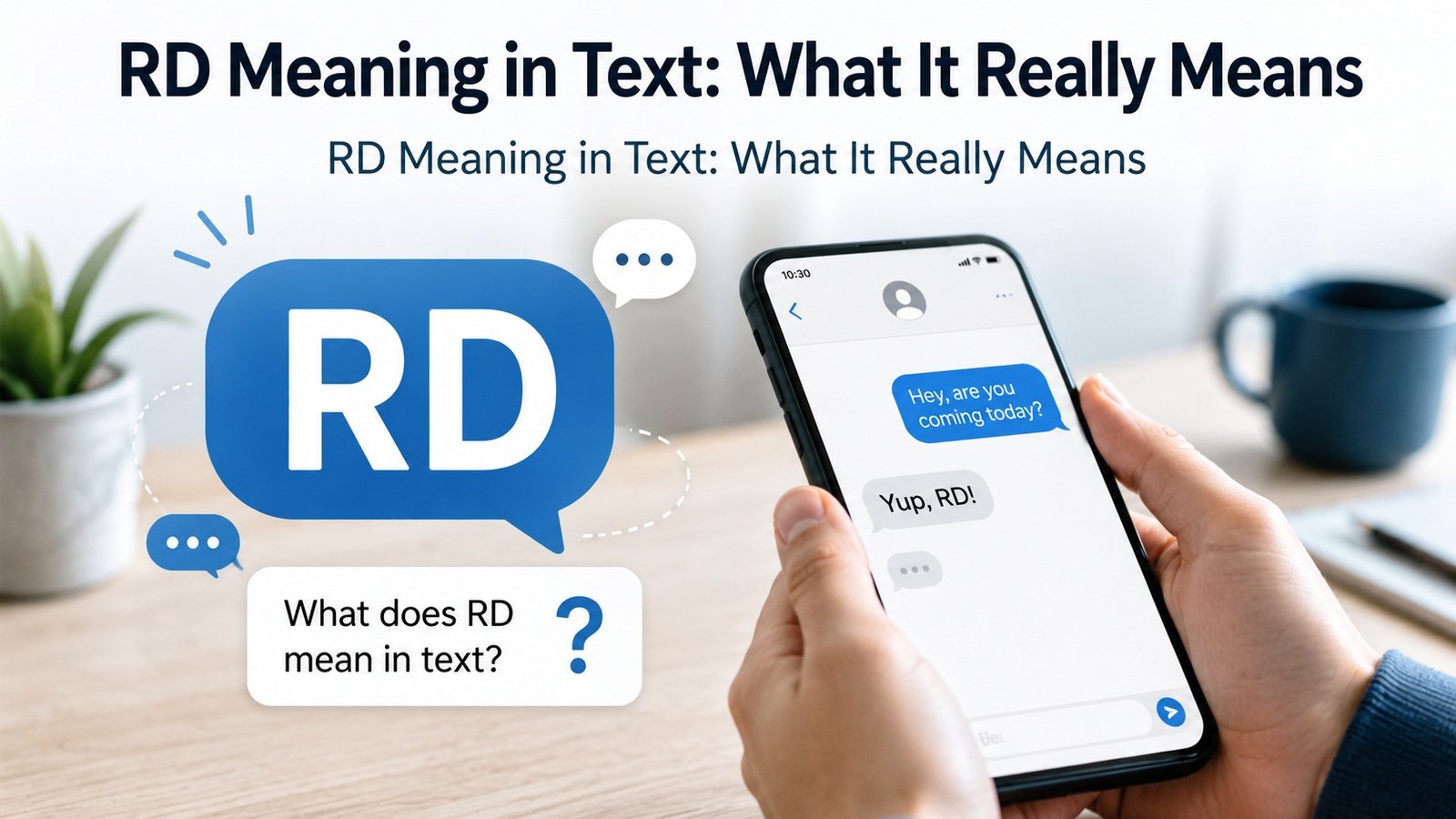
Many texting shortcuts spread fast online. Some stay popular for years while others shift in meaning depending on age, region, or platform. One abbreviation that often confuses people is red meaning in text, especially when it appears in casual chats, gaming conversations, or social media comments.
Today, Americans use shortened forms constantly. Quick replies save time and help conversations feel relaxed. However, abbreviations can also create confusion because the same letters may mean different things in different contexts. That’s why many people search for what “RD” actually means.
In most cases, RD is shorthand for “alright” or “okay.” Yet its meaning can change slightly based on tone, relationship, and platform. Over time, the term became part of modern digital culture, especially among younger users in the United States.
Quick Answer
The rd meaning in text usually refers to “alright,” “okay,” or “understood” in casual American texting. People use it as a fast reply during online conversations, gaming chats, and social media messages. In broader digital culture, RD can also signal agreement, emotional distance, or relaxed communication.
TL;DR
• RD usually means “alright” or “okay” in texts
• Americans use it for quick casual replies
• The term became common through mobile messaging
• Tone changes depending on context and punctuation
• RD appears often in gaming and social media chats
• Some users see it as friendly while others see it as cold
What Does RD Mean in Text?
Understanding RD starts with modern texting habits in the United States. Shortened words became normal because fast communication matters online. As a result, many users trim letters from longer words.
The Basic Definition
In most conversations, “RD” means:
• Alright
• Okay
• I understand
• Sounds good
• Agreement or acceptance
For example:
• “You coming later?” — “rd”
• “Meet at 8?” — “RD”
• “I sent the file.” — “rd thanks”
The meaning stays simple in most situations. However, tone changes based on capitalization, punctuation, and relationship.
Why People Use RD
Americans often prefer short digital replies. Because texting happens quickly, users shorten common phrases naturally.
People use RD because it feels:
• Faster than typing “alright”
• Casual and relaxed
• Informal among friends
• Common in gaming culture
• Natural during rapid conversations
Today, many teenagers and young adults use similar abbreviations daily.
The History of Text Abbreviations in America
Text shorthand did not begin with smartphones. Instead, it evolved slowly through different communication technologies.
Early Internet and SMS Culture
During the 1990s and early 2000s, texting had character limits. Old flip phones also made typing slower. Because of that, Americans shortened many common phrases.
Popular examples included:
• BRB — Be right back
• LOL — Laughing out loud
• IDK — I don’t know
• THX — Thanks
• RD — Alright
Internet chatrooms and instant messengers helped spread these shortcuts nationwide.
The Rise of Casual Digital Language
Over time, abbreviations became more than convenience. They also shaped online identity and tone.
For example:
• Short replies suggested confidence
• Fast typing felt socially modern
• Informal spelling showed friendliness
• Minimal responses became trendy online
Today, many abbreviations function almost like emotional symbols.
RD Meaning in American Digital Culture
The United States strongly influenced modern internet language. Social media platforms, gaming culture, and mobile apps helped slang spread rapidly.
How Americans Commonly Use RD
In the USA, RD usually appears in:
• Text messages
• Snapchat conversations
• Instagram DMs
• Discord chats
• Multiplayer gaming
Most Americans understand RD through context rather than dictionary definitions.
Tone and Social Meaning
Tone matters heavily in American texting culture. A simple “rd” may sound very different from “RD!!!”
| Context | Meaning in the USA | Emotional Tone | Notes |
| “rd” | Alright | Neutral | Common casual reply |
| “RD” | Strong agreement | Firm or direct | Sometimes louder tone |
| “rd lol” | Friendly approval | Relaxed | Softer emotional feel |
| “k” vs “rd” | RD feels warmer | Less dismissive | Depends on relationship |
| “rd bet” | Agreement and excitement | Positive | Popular among younger users |
Because tone is hard to read digitally, people often interpret abbreviations emotionally.
Why RD Feels Different From “Okay”
Many Americans notice emotional differences between short replies. Even tiny wording changes affect interpretation.
Emotional Associations
RD often feels:
• Relaxed
• Casual
• Confident
• Emotionally neutral
• Socially modern
Meanwhile, “okay” may sound:
• More formal
• More complete
• Slightly distant
• More serious
Psychological Effects of Short Replies
Digital language influences emotions more than many people realize.
For example:
• One-word replies may feel cold
• Fast responses suggest attention
• Informal slang builds closeness
• Minimal typing signals comfort
Because of this, RD sometimes acts like a social shortcut between friends.
RD in Gaming and Online Communities
Gaming culture helped many abbreviations grow across the United States. Fast-paced communication encouraged short replies during live play.
Why Gamers Use RD
Gamers often need instant responses. Therefore, short terms became useful.
Common reasons include:
• Faster teamwork communication
• Less typing during matches
• Shared internet slang culture
• Informal online friendships
In games, “rd” often means:
• Ready
• Alright
• Understood
• Let’s continue
Discord and Streaming Culture
Platforms like Discord strengthened casual internet language. Streamers and online creators also normalized abbreviations through daily interaction.
Today, RD appears frequently in:
• Voice chat text channels
• Livestream comments
• Competitive gaming groups
• Meme communities
This helped the abbreviation remain relevant into 2025 and 2026.
Social Media and Modern Slang Usage
Social media changes language rapidly. Trends appear, disappear, and return within months.
RD on TikTok and Snapchat
Short communication dominates mobile-first platforms. Because users value speed, abbreviations thrive.
People often use RD to:
• Confirm plans
• End conversations quickly
• React casually
• Avoid sounding too formal
Minimalism in Online Identity
Modern internet culture often values effortless communication. Short replies can signal confidence or emotional control.
Examples include:
• “rd” instead of long explanations
• Lowercase typing for relaxed tone
• No punctuation for casual energy
• Slang abbreviations for social belonging
This style became especially popular among younger Americans.
Cross-Cultural Meanings of RD
Although RD mainly appears in English texting culture, abbreviations work differently worldwide.
Different Interpretations
Outside the USA, RD may confuse users because meanings vary by region.
Some international users interpret RD as:
• Initials
• Gaming shorthand
• Regional slang
• Random letters without meaning
Internet Language Across Cultures
Digital slang spreads globally through American media. However, meanings often shift locally.
For example:
• Some cultures prefer formal texting
• Others avoid abbreviations completely
• Younger users adapt American slang faster
• Older users may misunderstand internet shorthand
Because of this, context always matters.
Is RD Rude or Friendly?
Many people wonder whether RD sounds polite. The answer depends heavily on relationship and tone.
When RD Sounds Friendly
RD usually feels friendly when:
• Used among close friends
• Combined with emojis
• Sent during casual chats
• Paired with humor or slang
Examples:
• “rd bro”
• “rd 😂”
• “rd sounds good”
When RD Feels Cold
Sometimes short replies feel emotionally distant.
RD may seem rude if:
• The conversation is serious
• Someone expects emotional support
• Replies become extremely brief
• Tone already feels tense
Digital communication often lacks emotional clarity. Therefore, misunderstandings happen easily.
Read More: WTD Meaning in Text: What It Really Means
RD and Emotional Communication Online
Internet slang reflects emotional habits in modern society. Short replies often mirror changing communication styles.
The Psychology Behind Abbreviations
People use abbreviations because they:
• Reduce effort
• Speed up conversations
• Create group identity
• Feel socially current
• Match fast digital lifestyles
However, shorter communication can also reduce emotional detail.
Emotional Distance in Digital Culture
Some experts believe texting habits changed emotional expression online.
For example:
• Long messages became less common
• Quick reactions replaced detailed responses
• Slang created emotional shortcuts
• Minimal replies normalized emotional ambiguity
RD fits directly into this trend.
Modern Uses of RD Beyond Texting
RD sometimes appears outside personal chats. Modern internet culture spreads slang into everyday life.
RD in Memes and Pop Culture
Online humor often exaggerates texting language.
Memes may use RD to represent:
• Emotionless replies
• Confident reactions
• Dry humor
• Internet sarcasm
Fashion and Visual Culture
Some slang terms eventually appear in:
• Graphic clothing
• Digital stickers
• Meme merchandise
• Social media aesthetics
Although RD remains mostly conversational, internet slang often enters broader youth culture over time.
Misunderstandings and Confusion Around RD
Not everyone interprets abbreviations the same way. Because of this, confusion happens regularly online.
Common Misreadings
People sometimes mistake RD for:
• A person’s initials
• A company abbreviation
• “Read” shorthand
• Medical or technical terms
Context usually solves the confusion quickly.
Generational Differences
Age strongly affects digital language understanding.
Younger Americans often recognize RD instantly. Meanwhile, older users may find it unclear or unnecessary.
This reflects broader generational shifts in communication styles.
How Internet Language Keeps Changing
Digital language evolves constantly. Terms rise and disappear based on trends, platforms, and age groups.
Why Slang Changes Fast
Internet slang changes because:
• Platforms evolve rapidly
• Younger users create trends
• Memes reshape language daily
• Viral culture spreads phrases instantly
Will RD Stay Popular?
RD may continue because it serves a simple purpose. However, online language changes quickly.
Some abbreviations disappear within years. Others become permanent parts of digital communication.
Today, RD still feels current among many American users.
RD Compared to Similar Texting Terms
Many abbreviations share similar meanings online. However, emotional tone still differs slightly.
Similar Slang Terms
• Bet — enthusiastic agreement
• K — brief acknowledgment
• Aight — casual alright
• Fs — for sure
• Ight — relaxed acceptance
Subtle Differences Matter
Americans often read emotional meaning into tiny wording changes.
For example:
• “K” may sound colder than “rd”
• “Bet” feels more energetic
• “Alright” sounds more formal
• “Ight” feels more playful
Small language choices shape digital identity.
FAQs
What does RD mean in texting?
RD usually means “alright” or “okay” in casual American texting. It often signals agreement or understanding during informal conversations.
Is RD considered slang?
Yes, RD is modern internet slang. It developed through texting and online communication culture.
Why do people say RD instead of alright?
People use RD because it’s faster and feels casual. It also matches modern texting habits and internet culture.
Is RD rude in messages?
Usually, RD is neutral or friendly. However, very short replies can sometimes feel cold depending on context.
Do younger Americans use RD more often?
Yes, younger users commonly understand and use RD. It appears frequently in gaming, social media, and texting.
Does RD have different meanings online?
Sometimes. In certain communities, RD may mean other things. However, “alright” remains the most common meaning in texting.
Conclusion
The rd meaning in text mainly centers on agreement, acknowledgment, and casual communication. While the abbreviation seems simple, it reflects much larger changes in American digital culture. Fast messaging, online identity, and emotional tone all shape how people use short replies today.
Over time, internet slang became more than convenient. It now signals personality, mood, and social connection. RD fits naturally into that world because it feels quick, modern, and emotionally flexible.
As online language keeps evolving, abbreviations like RD will likely continue changing too. Still, their core purpose remains the same: helping people connect quickly in an increasingly digital world.

Alyan Ashraf is a passionate English language writer who simplifies grammar for everyday learners. He focuses on clear explanations, practical examples, and common usage rules to help readers write better, speak confidently, and avoid mistakes in real-world English.