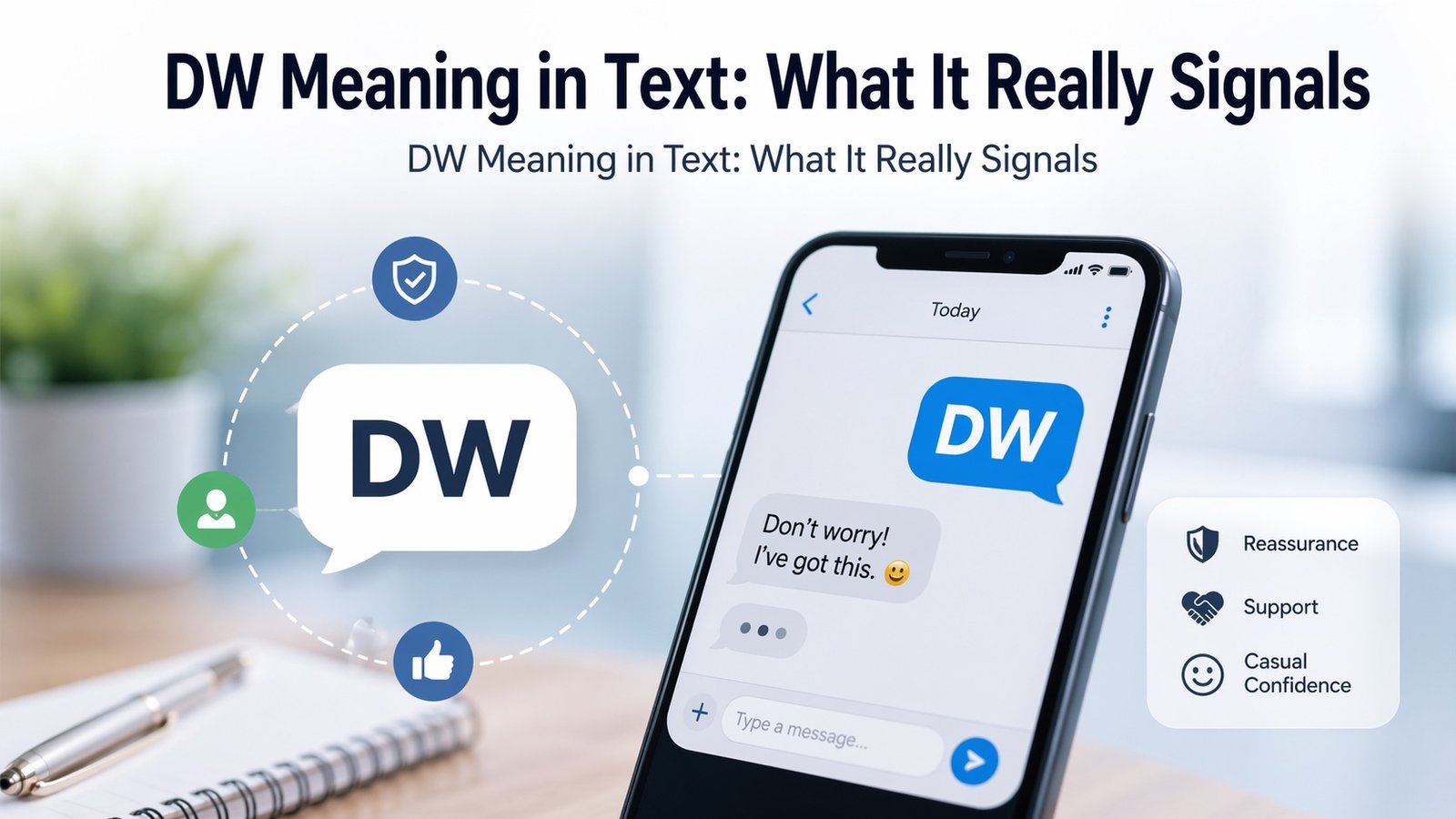
In today’s fast-moving digital world, short forms carry big meaning. One of the most common is DW meaning in text, a simple abbreviation that appears in everyday chats, social media posts, and quick replies. At first glance, it looks like just two letters. However, it often carries reassurance, tone, and even emotional nuance.
People in the United States use “DW” in casual communication to soften conversations. It helps reduce tension or show care without writing long sentences. Because texting is fast and informal, abbreviations like this shape how people connect.
So, what does “DW” really mean, and why does it matter? Let’s break it down from its roots to its modern cultural meaning.
Quick Answer
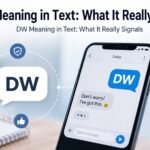
DW meaning in text usually stands for “Don’t Worry.” In the USA, it signals reassurance, calmness, or emotional support. More broadly, it can also imply friendliness, casual tone, or a desire to ease someone’s concern.
TL;DR
• “DW” means “Don’t Worry” in most texts
• Common in American casual conversations
• Signals reassurance or emotional support
• Often used to soften messages or reduce tension
• Popular in texting, social media, and gaming chats
• Tone depends on context—can feel caring or dismissive
What Does DW Mean in Text?
This section explains the core definition and why it matters in everyday communication. For American readers, this is where meaning meets tone.
Basic Definition
“DW” stands for “Don’t Worry.” It’s a quick way to tell someone everything is fine.
People use it in situations like:
• Reassuring someone after a mistake
• Responding to apologies casually
• Easing stress in conversations
• Keeping tone light and friendly
Tone and Context
However, tone changes everything. “DW” can feel warm or distant depending on how it’s used.
For example:
• “DW, I got it covered” feels supportive
• “DW about it” can feel slightly dismissive
Where Did DW Come From?
Understanding its origin helps explain why it became so popular in the USA.
Early Digital Communication
“DW” grew from early internet chatrooms and SMS culture in the late 1990s. Back then, character limits pushed people to shorten phrases.
Because “Don’t Worry” was common in conversation, it quickly became “DW.”
Evolution Over Time
Over time, texting apps and social media platforms normalized abbreviations.
• Early use: Efficiency in typing
• Mid-2000s: Became mainstream in texting
• Today: A cultural shorthand for emotional tone
Why Americans Use DW So Often
This section focuses on cultural behavior in the United States.
Casual Communication Style
American communication tends to be informal and direct. “DW” fits perfectly into that style.
People prefer:
• Short, efficient replies
• Friendly, relaxed tone
• Quick emotional reassurance
Social Norms
In the U.S., people often try to avoid conflict or awkwardness in casual chats.
“DW” helps:
• Reduce tension
• Keep conversations smooth
• Avoid over-explaining
Emotional Meaning Behind DW
This is where things get deeper. “DW” isn’t just words—it carries feeling.
Psychological Signals
When someone uses “DW,” they’re often signaling emotional intent.
• Comfort → “Everything’s okay”
• Support → “You’re fine, no stress”
• Control → “I’ve handled it”
• Distance → “Let’s move on quickly”
Subtle Differences
Tone depends on context, relationship, and timing.
For example:
• Close friend → caring and warm
• Stranger → neutral or brief
• Argument → can feel dismissive
DW in Social Media and Online Culture
Modern usage shapes meaning more than ever.
Common Platforms
“DW” appears frequently on:
• Text messages
• Instagram comments
• Snapchat chats
• Gaming chats
• Twitter/X replies
Digital Behavior
Because online communication lacks facial expressions, abbreviations carry tone.
“DW” helps:
• Replace verbal reassurance
• Keep responses quick
• Maintain conversational flow
Read More: NTM Meaning in Text: What It Signals in Chats
DW Meaning in Different Contexts
Context changes everything. Here’s how “DW” shifts meaning depending on the situation.
| Context | Meaning in the USA | Common Associations | Notes |
| Casual Chat | Don’t worry | Friendly, relaxed | Most common use |
| Apology Response | It’s okay | Forgiveness, ease | Softens tension |
| Work Message | No issue | Professional calm | Still informal |
| Argument | Drop it | Dismissive tone | Depends on phrasing |
| Gaming Chat | No problem | Team reassurance | Quick communication |
Is DW Always Positive?
Not always. This section explores nuance.
Positive Uses
• Comforting someone after a mistake
• Reassuring a friend
• Keeping tone light
Negative or Neutral Uses
However, sometimes it can feel:
• Dismissive → brushing off concerns
• Detached → lacking emotional depth
• Rushed → ending conversation quickly
DW vs Similar Text Abbreviations
Understanding comparisons helps clarify meaning.
Common Alternatives
• “NP” → No Problem
• “IDC” → I Don’t Care
• “It’s fine” → More formal reassurance
Key Differences
“DW” is softer than “IDC” and more casual than “It’s fine.” It sits right in the middle—friendly but efficient.
Cross-Cultural Meaning of DW
Outside the USA, meaning can shift slightly.
Global Interpretation
In most English-speaking cultures, “DW” still means “Don’t Worry.”
However:
• Some regions use it less frequently
• Others prefer full phrases
• Tone interpretation can vary
Cultural Sensitivity
Because tone differs across cultures, “DW” may feel:
• Friendly in the U.S.
• Too brief in formal cultures
• Neutral in global chats
DW in Modern Identity and Expression
This section explores how people use language to shape identity.
Personal Style
People often use “DW” to reflect personality.
• Chill personality → frequent use
• Supportive tone → used in reassurance
• Minimalist texters → prefer short forms
Digital Identity
Language online becomes part of identity. “DW” signals:
• Casual communication style
• Comfort with digital culture
• Emotional efficiency
Misunderstandings and Misuse
Even simple phrases can be misunderstood.
Common Confusion
• Some think it means “Do What”
• Others misread tone as rude
• Context gets lost in short messages
How to Avoid Misuse
• Add context when needed
• Use emojis for clarity 🙂
• Match tone to relationship
How DW Has Changed Over Time
Language evolves quickly, especially online.
Past vs Present
• Past: Pure abbreviation for efficiency
• Present: Emotional tone marker
Future Trends
Short forms like “DW” may continue evolving as communication becomes even faster and more visual.
When Should You Use DW?
Practical guidance helps readers apply the concept.
Best Situations
• Responding to small mistakes
• Reassuring friends
• Keeping chats casual
Situations to Avoid
• Serious conversations
• Professional emails
• Sensitive emotional topics
FAQs
What does DW mean in texting?
It means “Don’t Worry.” People use it to reassure others or keep conversations relaxed.
Is DW rude or polite?
It depends on tone. In most cases, it’s polite and friendly, but it can feel dismissive in certain contexts.
Do Americans use DW a lot?
Yes, especially in casual texting and social media. It fits the informal communication style in the U.S.
Can DW be used in professional settings?
Only in very casual work chats. It’s not suitable for formal emails or serious discussions.
What is the difference between DW and NP?
“DW” reassures emotions, while “NP” focuses on actions or tasks. Both are casual responses.
Does DW have other meanings?
In texting, it mainly means “Don’t Worry.” Other meanings are rare and context-specific.
Conclusion
At its core, DW meaning in text is simple, yet powerful. It stands for “Don’t Worry,” but it also carries tone, emotion, and cultural nuance. In the United States, it reflects a relaxed, friendly communication style that values speed and emotional ease.
Over time, “DW” has evolved from a typing shortcut into a subtle social signal. It can comfort, dismiss, reassure, or simply keep things moving. Like many digital expressions, its meaning depends on context, relationship, and intent.
As communication continues to change, small phrases like “DW” will keep shaping how people connect. So next time you see it, don’t just read the words—read the feeling behind them.