NTM pops up in texts, comments, and quick replies, often leaving people unsure what it really means. In today’s fast-moving digital conversations, short forms carry more than just convenience—they signal tone, mood, and social context. That’s exactly where NTM Meaning in Text becomes interesting.
In the United States, texting language has evolved into a kind of modern shorthand culture. People don’t just type faster—they express identity, attitude, and emotion through abbreviations. NTM fits right into that pattern, but its meaning can shift depending on who uses it and where.
So, what does NTM actually stand for, and why do people use it? Let’s break it down from its origins to its role in modern American communication.
Quick Answer
NTM Meaning in Text usually stands for “Not Too Much” in casual American conversations. It signals a relaxed response, often meaning “nothing much” or “just chilling,” though it can also mean “not too much effort” depending on context.
TL;DR
• NTM means “Not Too Much” in most texting situations
• It’s used to keep replies casual and low-effort
• Popular in U.S. texting culture and social media
• Tone depends on context and relationship
• Often signals relaxed mood or minimal activity
• Can also imply “don’t overdo it” in some cases
What Does NTM Mean in Text?
NTM is a short, flexible phrase used in everyday messaging. While it looks simple, its meaning depends heavily on tone and context. In the U.S., it’s most often used in casual conversations between friends or peers.
Common Interpretations
• “Not too much” as a response to “What’s up?”
• A relaxed way to say “nothing special happening”
• A signal of low effort or minimal action
• Sometimes used to soften a response or avoid detail
Because texting lacks voice tone, abbreviations like NTM help fill that gap. They suggest mood without needing long explanations.
Where Did NTM Come From?
NTM didn’t appear overnight. Instead, it grew out of a larger trend of shortening phrases in digital communication. This trend started with early internet chatrooms and SMS texting in the late 1990s.
Early Digital Roots
Back when character limits mattered, people began trimming phrases like “not too much” into shorter forms. Over time, this became a habit, not just a necessity.
Evolution Into Modern Slang
Today, NTM is less about saving space and more about style. It reflects how people prefer quick, informal communication, especially in texting and social apps.
NTM Meaning in American Culture
In the United States, texting slang often reflects personality and social tone. NTM fits into a broader culture of casual, low-pressure communication.
Why Americans Use It
• Keeps conversations light and easy
• Avoids over-explaining simple situations
• Matches fast-paced digital habits
• Signals friendliness without formality
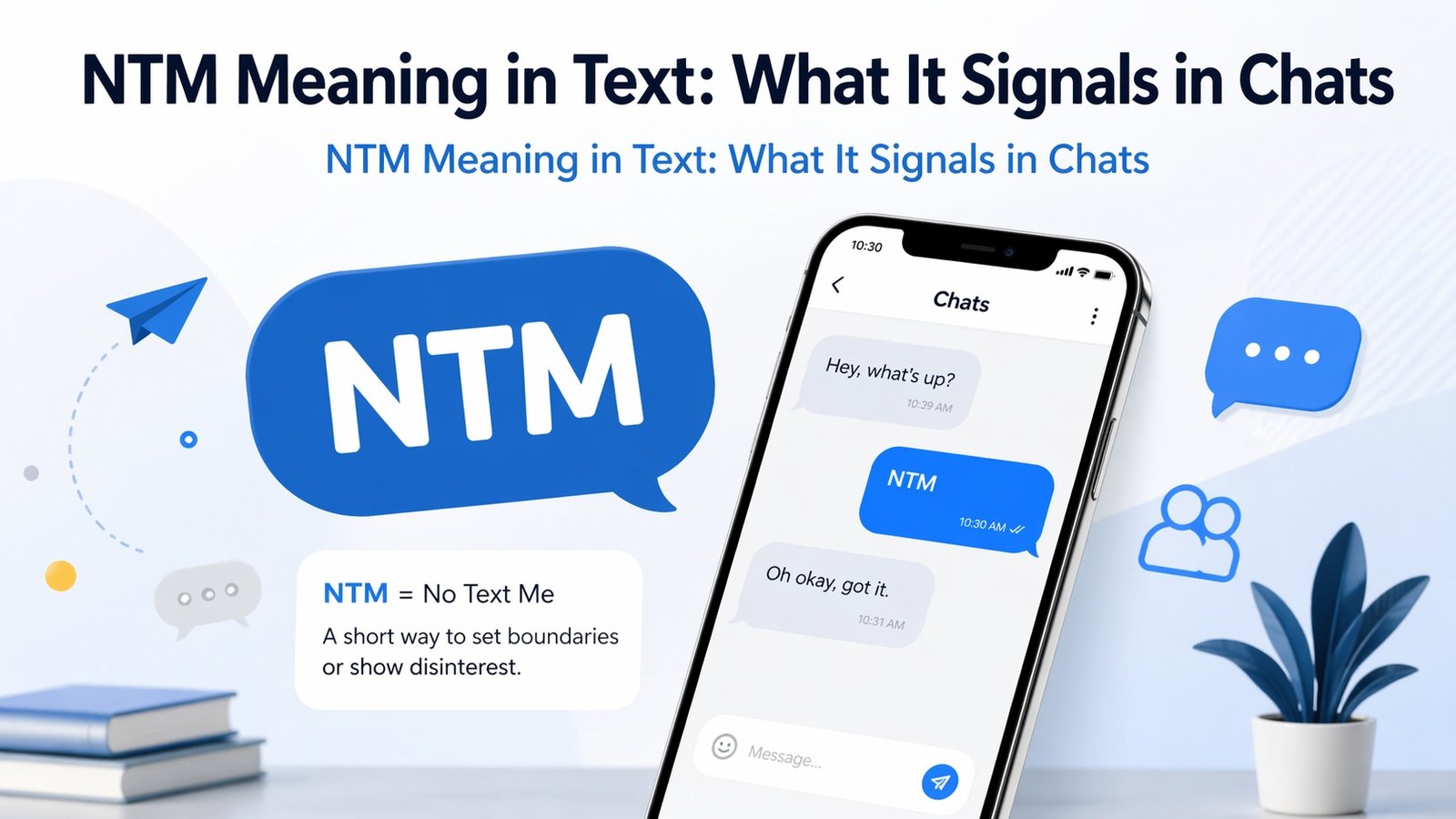
For example, if someone texts, “What are you doing?” , replying with “NTM” feels relaxed and approachable.
Different Contexts of NTM Usage
NTM doesn’t always mean the same thing. Its meaning shifts depending on how and where it’s used.
Everyday Conversation
• “What’s up?” → “NTM”
• Indicates calm, uneventful activity
Subtle Tone Adjustment
• Softens responses to avoid sounding harsh
• Keeps conversations from feeling too serious
Instructional Context
• “Don’t spend too much time on it—NTM”
• Implies moderation or restraint
Emotional and Psychological Meaning
Even a short phrase like NTM carries emotional signals. It reflects how people want to present themselves in conversation.
What NTM Communicates Emotionally
• Calmness and lack of urgency
• Emotional neutrality or balance
• A laid-back personality
• Social comfort and familiarity
In many cases, NTM helps people avoid emotional intensity. It keeps things smooth and easy.
Read More: FW Meaning in Text: What It Really Signals
NTM in Social Media and Messaging Apps
NTM shows up frequently across platforms like texting apps, group chats, and social media comments. Its use reflects broader communication trends.
Where You’ll See It
• Text messages and iMessage threads
• Snapchat and Instagram DMs
• Group chats among friends
• Casual comment replies
Because social media favors speed and simplicity, abbreviations like NTM thrive.
NTM Compared to Similar Slang
NTM isn’t the only phrase that expresses “nothing much.” However, it carries a slightly different tone.
Similar Expressions
• NM – “Nothing much” (more direct)
• IDC – “I don’t care” (more dismissive)
• Chill – suggests relaxed activity
• Meh – shows indifference
NTM sits in the middle. It’s casual without sounding negative.
Table: NTM Meaning Across Contexts
| Context | Meaning in the USA | Common Associations | Notes |
| Casual texting | Nothing much happening | Relaxed, friendly tone | Most common usage |
| Social media | Minimal activity | Informal, quick replies | Seen in comments and DMs |
| Instructions | Not too much effort | Moderation, balance | Context-dependent meaning |
| Emotional tone | Calm or neutral mood | Easygoing personality | Avoids strong emotions |
Cross-Cultural and Global Use
While NTM is common in the U.S., it also appears in other English-speaking regions. However, its meaning can vary slightly.
Outside the U.S.
• In some regions, NTM may be less common
• Meaning often stays close to “not too much”
• Usage depends on local texting culture
Because slang spreads quickly online, meanings can shift across cultures.
Misunderstandings and Confusion
NTM isn’t always clear, especially for people unfamiliar with texting slang. This can lead to confusion.
Common Misinterpretations
• Mistaken for a technical acronym
• Confused with unrelated abbreviations
• Seen as vague or unclear
Context is key. Without it, NTM can feel ambiguous.
Is NTM Ever Rude?
On its own, NTM isn’t rude. However, tone matters in digital communication.
When It Might Feel Off
• If used in serious conversations
• When a detailed response is expected
• If it seems dismissive in context
Still, most of the time, NTM is neutral or friendly.
How NTM Reflects Modern Communication Trends
NTM is part of a larger shift toward shorter, faster communication. People want to say more with less effort.
Broader Trends
• Rise of abbreviation-based language
• Preference for quick responses
• Blending of spoken and written styles
• Emphasis on tone over detail
NTM shows how language adapts to technology and social habits.
How Meaning Has Shifted Over Time
Originally, phrases like “not too much” were spoken casually. Over time, they became shortened into text form.
Then vs Now
• Past: Full phrases in conversation
• Early texting: Shortened for convenience
• Today: Used for tone and identity
Now, NTM isn’t just a shortcut—it’s a style choice.
FAQs
What does NTM stand for in texting?
NTM usually stands for “Not Too Much.” It’s a casual reply meaning nothing significant is happening.
Is NTM the same as NM?
Not exactly. NM means “Nothing Much,” which is more direct. NTM feels slightly softer and more conversational.
Can NTM mean something else?
Yes, in some contexts it can imply “not too much effort” or moderation. However, “not too much” is the most common meaning.
Is NTM commonly used in the USA?
Yes, it’s widely used in casual texting and social media, especially among younger users.
Should I use NTM in professional messages?
It’s better to avoid it in formal settings. NTM works best in casual conversations with friends.
Why do people use abbreviations like NTM?
They save time and help express tone quickly. They also reflect modern digital communication habits.
Conclusion
NTM may look like a simple abbreviation, but it carries layered meaning shaped by culture, context, and communication style. In the United States, it mostly signals a relaxed, easygoing response—something between “nothing much” and “keeping it low-key.”
Over time, NTM has moved from a practical shortcut to a social signal. It shows how people balance speed with expression in modern conversations. Whether you’re texting a friend or scrolling through comments, understanding NTM Meaning in Text helps you read between the lines.

Alyan Ashraf is a passionate English language writer who simplifies grammar for everyday learners. He focuses on clear explanations, practical examples, and common usage rules to help readers write better, speak confidently, and avoid mistakes in real-world English.