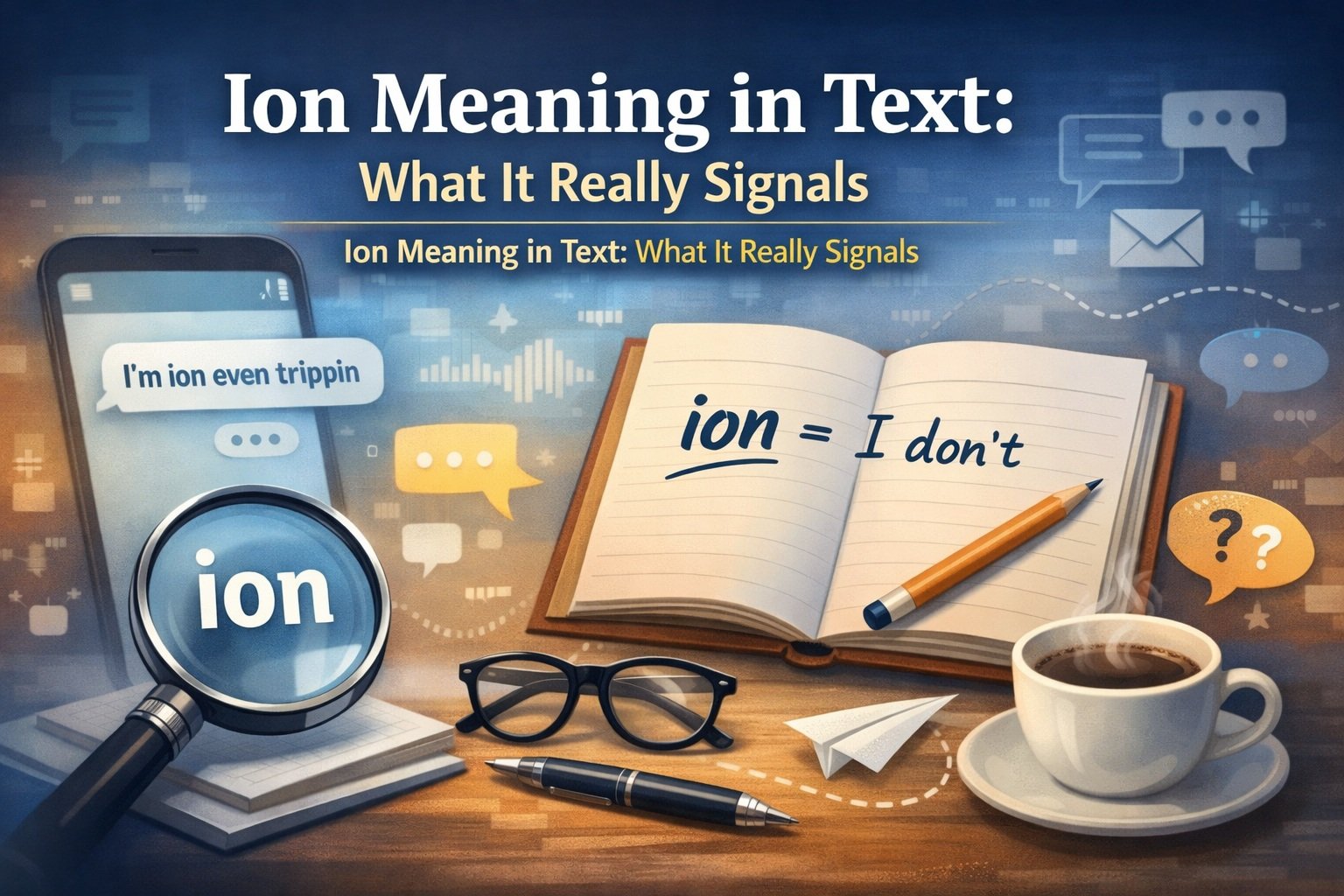
“Ion meaning in text” has become a common question as digital language keeps evolving. At first glance, “ion” might look scientific, like something from chemistry class. However, in texting and online chats, it carries a very different meaning.
Today, people in the United States often use “ion” as slang. It’s short, casual, and fast to type. Because texting culture values speed and tone, small words like this can say a lot. Understanding it helps you follow conversations and avoid confusion.
This article breaks down what “ion” really means, where it came from, and how it’s used today. You’ll also see how its meaning connects to identity, emotion, and modern communication.
Quick Answer
“Ion meaning in text” usually refers to a casual slang form of “I don’t.” In the United States, it signals informality, speed, and relaxed conversation tone, especially in texting and social media.
TL;DR
• “Ion” means “I don’t” in most text conversations
• It comes from spoken slang and fast typing habits
• Common in casual American digital communication
• Signals relaxed tone, not formal writing
• Often used to express opinions quickly
• Not related to scientific “ion” in this context
What Does “Ion” Mean in Text?
This section explains the basic meaning and why it matters in everyday communication. For many Americans, understanding slang like this helps decode tone and intent.
Simple Definition
“Ion” is a shortened way to say “I don’t.” It drops the “d” sound when spoken quickly, then turns into text.
For example:
• “Ion know” means “I don’t know”
• “Ion like that” means “I don’t like that”
• “Ion care” means “I don’t care”
• “Ion think so” means “I don’t think so”
Why People Use It
People prefer short, fast expressions in texting. “Ion” saves time and feels natural.
• Faster typing than full phrases
• Reflects spoken language patterns
• Feels casual and friendly
• Fits social media tone
• Signals informal conversation style
Origins of “Ion” as Slang
To understand its symbolism, you need to look at how language evolves. This section traces how “ion” moved from speech to text.
Spoken Roots
“Ion” comes from how people pronounce “I don’t” quickly. Over time, the words blend together.
For example, “I don’t know” often sounds like “ion know” in casual speech.
Digital Evolution
As texting grew, people started writing words the way they sound.
• Texting culture favors speed over grammar
• Slang reflects real speech patterns
• Social media spreads phrases quickly
• Younger users drive language change
Because of this, “ion” became widely recognized in online spaces.
Ion Meaning in Text in the USA
This section focuses on how Americans interpret and use “ion.” Context matters a lot here.
Everyday Usage
In the United States, “ion” is common in casual chats. It’s rarely used in formal writing.
• Friends texting each other
• Social media comments
• Group chats
• Casual online discussions
Cultural Context
American culture values expressive, fast communication. Slang like “ion” reflects that.
• Informality is widely accepted online
• Tone matters more than grammar in chats
• Language adapts to digital speed
• Identity shows through word choice
Ion vs Scientific Ion: Key Differences
The word “ion” already exists in science. That creates confusion, so this section clears it up.
Two Meanings Compared
| Context | Meaning in the USA | Common Associations | Notes |
| Text slang | “I don’t” | Casual tone, speed | Informal only |
| Science | Charged particle | Chemistry, physics | Formal term |
| Education | Learning concept | School subjects | Not slang |
| Online slang | Expression shortcut | Youth culture | Context-dependent |
Why Confusion Happens
The spelling is identical, but the meanings are unrelated.
• Context determines meaning
• Texting vs academic setting matters
• Tone gives clues
• Audience influences interpretation
Emotional and Psychological Meaning
Language isn’t just about words. It also carries emotion and identity.
What “Ion” Signals Emotionally
Using “ion” often reflects a relaxed or dismissive tone.
• Casual attitude toward topic
• Emotional distance or indifference
• Confidence in opinion
• Comfort with the audience
Identity and Expression
People use slang to show who they are.
• Feels modern and current
• Connects with peer groups
• Signals informal personality
• Reflects digital-native habits
Why “Ion” Became Popular
Not every slang term catches on. This one did for specific reasons.
Factors Behind Its Growth
“Ion” fits perfectly into modern communication trends.
• Short and easy to type
• Matches spoken rhythm
• Widely shared on social media
• Used by influencers and creators
• Easy to understand from context
Role of Social Media
Platforms helped spread it quickly.
• Viral posts increase visibility
• Comments reinforce usage
• Memes normalize slang
• Repetition builds familiarity
How “Ion” Is Used in Modern Communication
This section explores where you’ll actually see it today.
Common Places You’ll See It
“Ion” appears across many digital spaces.
• Text messages between friends
• Instagram and TikTok comments
• Twitter-style short posts
• Online gaming chats
Typical Situations
It’s often used in quick reactions or opinions.
• Expressing disagreement
• Showing uncertainty
• Dismissing an idea
• Responding casually
Is “Ion” Appropriate in Formal Writing?
Understanding when not to use it is just as important.
Formal vs Informal Contexts
“Ion” is not suitable for professional settings.
• Avoid in emails
• Avoid in school essays
• Avoid in business communication
• Avoid in official documents
Better Alternatives
Use standard language instead.
• “I don’t agree”
• “I do not know”
• “I don’t think so”
• “I am unsure”
Cross-Cultural Perspective on Slang Shortening
While “ion” is common in the US, similar patterns exist globally.
Universal Language Trends
Many cultures shorten phrases in casual speech.
• Words blend together naturally
• Texting mirrors spoken language
• Younger users drive changes
• Informal language evolves quickly
Differences Across Cultures
However, not all slang translates well.
• Meanings can shift across regions
• Some slang stays local
• Tone may be misunderstood
• Context becomes even more important
Read More: HY Meaning in Text: What It Really Signals
Misunderstandings and Common Mistakes
Slang can easily confuse people, especially across generations.
Frequent Misinterpretations
Some people think “ion” always relates to science.
• Confusing it with chemistry term
• Misreading tone in messages
• Assuming it’s a typo
• Overthinking simple meaning
How to Avoid Confusion
Context is your best guide.
• Look at the sentence structure
• Consider the conversation tone
• Check the platform type
• Notice who is speaking
How Meaning Has Shifted Over Time
Language never stays still. “Ion” shows how quickly things change.
Early Stage
Originally, it was just spoken slang.
Transition Phase
Then, it moved into texting and online spaces.
Current Usage
Now, it’s widely recognized in casual communication.
• More accepted in digital culture
• Still informal, not standard
• Continues evolving with trends
• May change again in future
Ion in Social Media and Pop Culture
Modern culture plays a big role in shaping language.
Pop Culture Influence
Content creators often use slang like “ion.”
• Makes content feel relatable
• Appeals to younger audiences
• Reflects real conversation style
• Builds connection with viewers
Social Identity
Using “ion” can signal belonging.
• Part of online communities
• Shared language creates bonds
• Reinforces group identity
• Shows awareness of trends
FAQs
What does “ion” mean in texting?
“Ion” usually means “I don’t.” It’s a casual slang term used in informal conversations.
Is “ion” proper English?
No, it’s not considered standard English. It’s informal slang used in texting and social media.
Why do people say “ion” instead of “I don’t”?
It’s faster to type and matches how people speak casually. It also feels more relaxed.
Can “ion” mean something else?
Yes, in science it means a charged particle. However, context usually makes the meaning clear.
Is “ion” used by all age groups?
It’s more common among younger users, but others may use it in casual settings.
Should I use “ion” in professional messages?
No, it’s best to avoid it in formal or professional communication.
Conclusion
“Ion meaning in text” reflects more than just a shortcut. It shows how language adapts to speed, culture, and connection in the digital age. In the United States, it has become a simple way to express “I don’t” while keeping conversations quick and informal.
At the same time, its meaning depends heavily on context. While it works well in casual chats, it doesn’t belong in formal writing. That contrast highlights how flexible language can be.
As communication keeps evolving, small words like “ion” remind us that meaning isn’t fixed. Instead, it grows with how people speak, connect, and express themselves every day.

Muhammad Haroon is the voice behind GrammarClubs.com. He creates clear, practical grammar guides that make English easier to understand and use. With a focus on real-life examples and simple explanations, his goal is to help learners write with confidence, accuracy, and clarity.