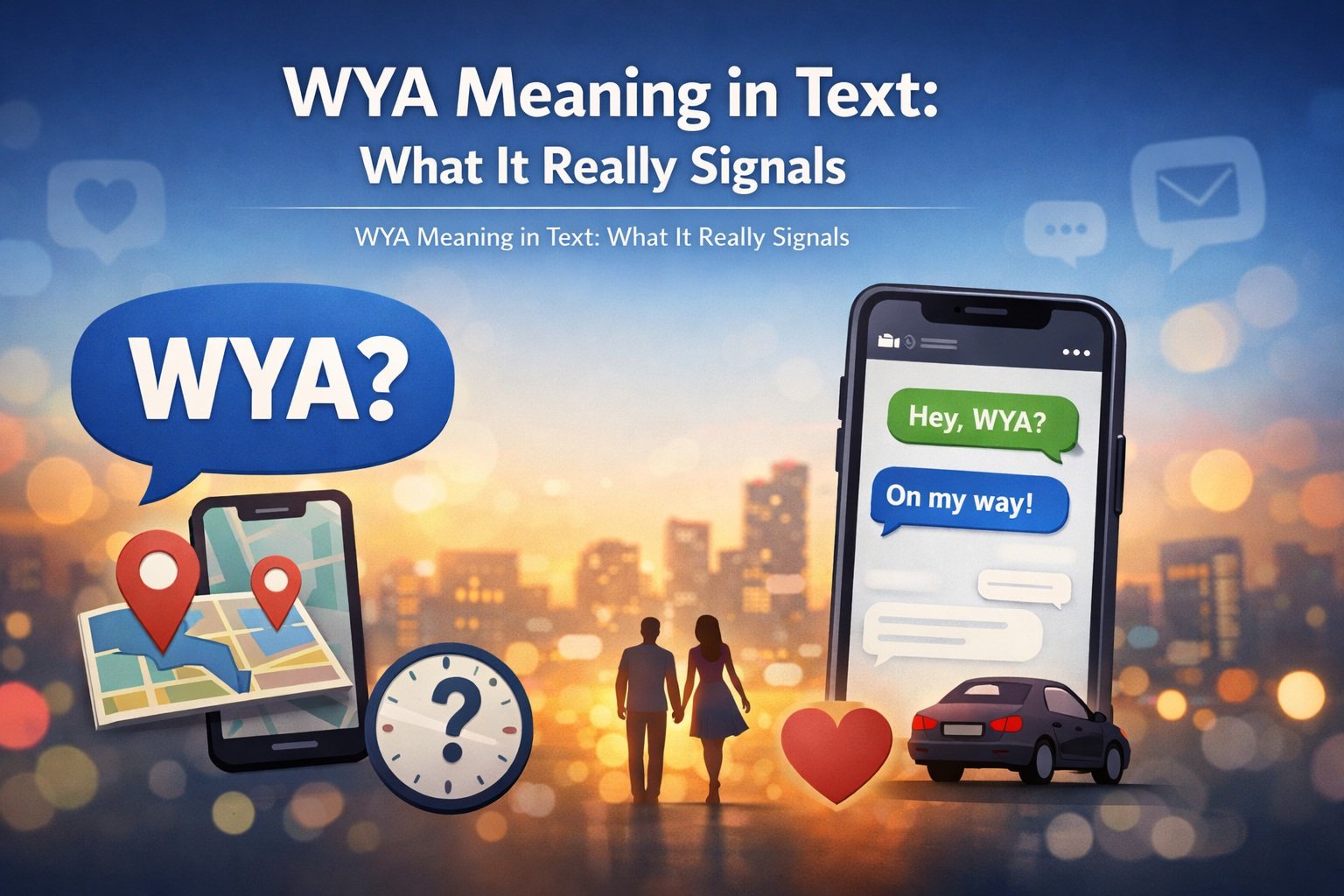
When you see “WYA” pop up in a message, it may feel simple. Yet, like many digital expressions, it carries layers of meaning shaped by culture, tone, and timing. In the United States, texting language evolves fast, and short phrases often signal more than just words.
WYA Meaning in Text is one of those everyday expressions that blends convenience with emotion. It shows up in casual chats, social media, and even relationships, often hinting at urgency, curiosity, or connection.
Today, understanding WYA isn’t just about decoding slang. It’s about reading intent. Because in modern communication, how something is said can matter as much as what is said.
Quick Answer
WYA Meaning in Text stands for “Where You At?” In the USA, it usually signals a casual check-in about someone’s location, but it can also express urgency, interest, or a desire to connect.
TL;DR
• Means “Where You At?” in casual texting
• Signals location, but often implies emotional intent
• Common in US texting and social media culture
• Tone changes based on context and relationship
• Can feel friendly, urgent, or even demanding
• Widely used across age groups, especially younger users
What Does WYA Mean in Text?
This section explains the basic meaning and why it matters in everyday American communication. While simple on the surface, WYA often carries subtle social cues.
Literal Meaning
WYA is a shorthand for “Where You At?” It’s a quick way to ask someone’s location without typing a full sentence.
However, it’s rarely just about geography. Instead, it often reflects timing and intent.
Why People Use It
People in the USA prefer speed in digital conversations. Short forms like WYA save time and feel natural.
• Faster than typing a full sentence
• Fits casual texting tone
• Feels conversational and informal
• Works across messaging platforms
• Signals immediacy or urgency
Origins of WYA and Text Slang Culture
To understand WYA fully, it helps to look at how texting language developed. This section explores its roots and evolution.
Early Digital Communication
Text abbreviations began in the early 2000s with SMS limits. People shortened phrases to fit character counts.
Over time, these shortcuts became part of everyday language.
Influence of Internet and Urban Culture
WYA also reflects spoken language patterns, especially informal American English.
• Inspired by spoken phrase “Where you at?”
• Popularized through texting and instant messaging
• Spread through social media platforms
• Reinforced by music and pop culture
• Became normalized in everyday speech
Symbolism of WYA in Modern Communication
Now, let’s look deeper. WYA isn’t just a question—it’s a signal. This section explains what it represents emotionally and socially.
Beyond Location
While WYA asks for a place, it often carries deeper meaning.
• Desire for connection or presence
• Checking availability or plans
• Expressing impatience subtly
• Showing interest in someone’s time
• Hinting at spontaneity
Tone Matters
The same phrase can feel different depending on context.
For example, “WYA?” from a friend feels casual. From someone upset, it may feel demanding.
WYA Meaning in the USA Today
In the United States, WYA has become part of everyday digital language. This section focuses on its cultural role.
Common Situations
Americans use WYA in many everyday scenarios.
• Meeting up with friends
• Checking if someone is nearby
• Starting casual conversations
• Planning last-minute events
• Following up on unanswered messages
Cultural Context Table
| Context | Meaning in the USA | Common Associations | Notes |
| Friends texting | Casual location check | Hangouts, plans | Friendly tone |
| Dating | Interest or curiosity | Attention, closeness | Can feel flirty |
| Late-night texts | Desire to connect | Spontaneity | Sometimes emotional |
| Group chats | Coordination | Events, timing | Practical use |
| Social media DMs | Engagement | Interaction | Often informal |
Emotional and Psychological Signals
This section explores how WYA connects to feelings and mindset. Because even short texts carry emotional weight.
What It Can Reveal
WYA often reflects more than curiosity.
• Wanting attention or response
• Feeling impatient or eager
• Seeking reassurance or connection
• Testing someone’s availability
• Expressing closeness indirectly
How It Feels to Receive
Depending on tone, WYA can feel different.
For some, it feels warm and friendly. For others, it may feel abrupt or demanding.
Read More: MB Meaning in Text: What It Really Signals
WYA in Social Media and Digital Life
Today, WYA appears far beyond text messages. This section explains its role in modern platforms.
Popular Platforms
WYA shows up across apps like Instagram, Snapchat, and messaging tools.
• Used in captions and comments
• Appears in direct messages
• Often paired with emojis or slang
• Common in short-form content
• Used for engagement and interaction
Visual and Cultural Use
Sometimes WYA becomes part of digital storytelling.
For example, a post saying “WYA?” may invite responses or reactions.
WYA in Relationships and Dating
In personal relationships, WYA can carry extra meaning. This section explores how context shapes interpretation.
Friendly vs Romantic Use
The same phrase can shift depending on the relationship.
• Friends: casual and neutral
• Romantic interest: curious or flirty
• Partners: checking in or expecting response
• New connections: testing interest
• Conflict situations: may feel tense
Timing Changes Meaning
A message sent late at night can feel very different from one sent during the day.
Cross-Cultural Perspectives on “Where Are You?”
Although WYA is strongly tied to American texting, similar ideas exist globally. This section gives a brief, respectful overview.
Universal Concept
Asking someone’s location is common worldwide. However, tone varies by culture.
• Some cultures prefer formal phrasing
• Others use indirect communication
• Digital slang differs across languages
• Informality levels vary widely
• Context determines politeness
Misunderstandings and Misuse
Like many short texts, WYA can be misunderstood. This section explains common issues.
When It Feels Negative
Sometimes WYA may come across the wrong way.
• Sounds demanding without context
• Lacks tone clarity
• May feel intrusive
• Can seem impatient
• Might be misread in formal settings
How to Avoid Misinterpretation
Adding context or emojis can soften the tone.
For example, “WYA 😊” feels friendlier than just “WYA”.
Evolution of WYA Over Time
Language changes quickly, especially online. This section tracks how WYA has evolved.
Then vs Now
Originally, WYA was purely practical. Today, it carries emotional nuance.
• Early use: simple location question
• Mid-phase: casual texting slang
• Current use: emotional and social signal
• Future trend: may evolve with new slang
• Continues adapting across platforms
Modern Usage in Tattoos, Fashion, and Identity
While WYA is mostly digital, it reflects broader identity trends. This section connects it to modern expression.
Symbol of Digital Identity
Short phrases like WYA represent how people communicate today.
• Reflects fast-paced lifestyle
• Shows casual communication style
• Represents youth culture
• Connects to online identity
• Highlights digital-first interaction
Similar Slang Terms and Variations
WYA isn’t alone. Many similar expressions exist in texting culture.
Related Terms
• “HMU” – Hit Me Up
• “BRB” – Be Right Back
• “WYD” – What You Doing
• “LMK” – Let Me Know
• “IDK” – I Don’t Know
Each carries its own tone and context, but they all reflect quick communication.
FAQs
What does WYA mean in texting?
WYA means “Where You At?” It’s a casual way to ask someone’s location or availability.
Is WYA rude or polite?
It depends on context. It can feel friendly, but without tone, it may seem abrupt.
What does WYA mean from a guy or girl?
It usually means they want to know where you are. However, it may also show interest or curiosity.
Is WYA used only in the USA?
It’s most common in the USA, but it’s understood globally due to social media.
What’s the difference between WYA and WYD?
WYA asks about location, while WYD asks what someone is doing.
Why do people say WYA late at night?
Late-night use can signal wanting to connect, hang out, or start a conversation.
Conclusion
At first glance, WYA seems like just another texting shortcut. However, its meaning runs deeper in everyday communication. It reflects how people in the United States balance speed with emotion in digital conversations.
WYA Meaning in Text shows how even a few letters can signal curiosity, connection, or urgency. Over time, it has grown from a simple question into a subtle social cue shaped by tone, timing, and relationship.
As language keeps evolving, phrases like WYA remind us of something simple. Even the shortest messages can carry meaning far beyond their words.