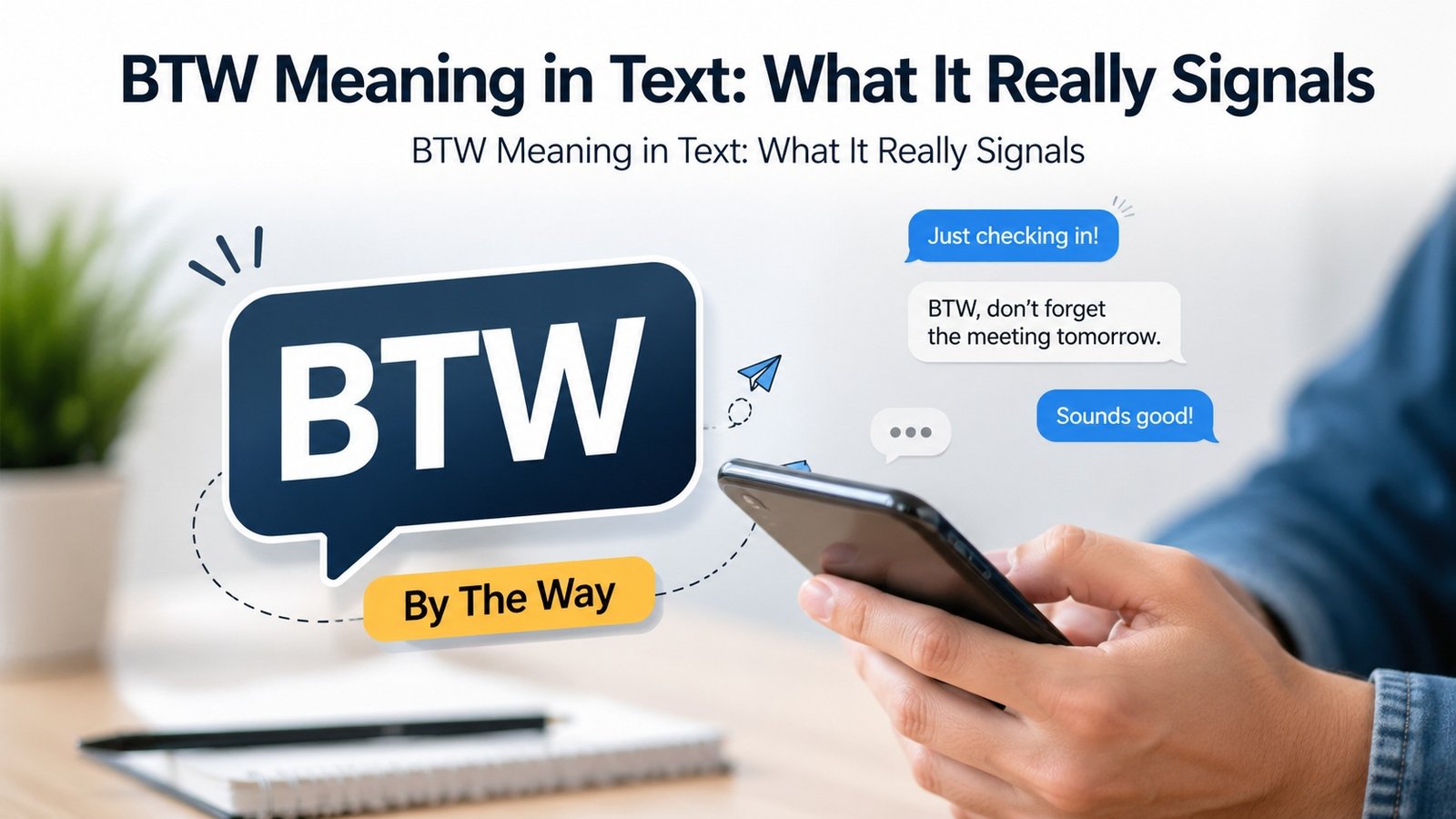
“BTW” pops up everywhere—texts, emails, comments, and captions. It’s short, casual, and easy to miss. Yet it quietly shapes how conversations flow, especially in the United States.
At first glance, it simply means “by the way.” However, like many digital shortcuts, it carries deeper symbolic weight. It signals tone, intent, and even social style. In modern communication, small phrases often do more than they seem.
So why does “BTW” matter? Because language isn’t just about words—it’s about connection. Understanding how people use “BTW” reveals how Americans navigate casual talk, soften messages, and keep conversations moving.
Quick Answer
BTW Meaning in Text stands for “by the way.” In the United States, it signals a casual shift in topic or adds extra information without sounding formal. More broadly, it reflects informal, friendly communication in digital culture.
TL;DR
• Means “by the way” in texts and online chats
• Signals a topic shift or added thought
• Common in casual American communication
• Feels friendly, not formal or serious
• Reflects fast, informal digital culture
• Often softens or lightens messages
What Does BTW Mean in Text?
This section explains the basic meaning and why it matters in everyday American conversations. While it looks simple, its role in communication is subtle.
Basic Definition
“BTW” stands for “by the way.” People use it to introduce extra information or change direction slightly.
For example, someone might say, “I’ll call you later. BTW, did you finish the project?” The phrase connects ideas without sounding abrupt.
Common Uses
• Add extra information after a main message
• Change the topic slightly without awkwardness
• Bring up something forgotten earlier
• Keep conversations casual and flowing
• Avoid sounding too serious or direct
Where Did BTW Come From?
Understanding its origin helps explain why it feels natural today. Like many abbreviations, “BTW” grew from practical needs.
Early Digital Roots
“BTW” became popular during early internet chatrooms and SMS texting. Character limits pushed people to shorten common phrases.
However, its roots go deeper. The full phrase “by the way” has existed in English for centuries. It originally helped speakers shift topics smoothly.
Evolution Over Time
• Originated from spoken English transitions
• Shortened during early texting culture
• Spread through forums and instant messaging
• Became standard in emails and social media
• Now widely understood across age groups
Why Do Americans Use BTW So Often?
In the United States, communication often values speed and friendliness. “BTW” fits perfectly into that style.
Cultural Communication Style
Americans tend to prefer direct yet relaxed conversation. “BTW” helps balance both.
It softens transitions. Instead of sounding abrupt, it keeps things conversational.
Everyday Contexts
• Text messages between friends or coworkers
• Casual workplace chats or emails
• Social media comments and captions
• Online discussions and forums
• Group chats with quick updates
Emotional and Psychological Meaning of BTW
Words carry emotional signals, even short ones like “BTW.” This section explores what it “feels like.”
Tone and Mood
“BTW” often signals ease and comfort. It shows the speaker isn’t being overly formal.
It can also reduce tension. Adding “BTW” before a request makes it feel less demanding.
Psychological Signals
• Suggests friendliness and openness
• Softens requests or reminders
• Indicates casual confidence
• Shows conversational flexibility
• Reduces pressure in communication
BTW in American Digital Culture
Digital life in the U.S. shapes how language evolves. “BTW” is a clear example of that shift.
Social Media and Messaging
Today, “BTW” appears across platforms like texts, chats, and posts. It blends naturally into fast communication.
People often use it without thinking. That’s how deeply it’s embedded.
Modern Usage Patterns
• Appears in quick, informal exchanges
• Used across generations, especially younger users
• Often paired with emojis or slang
• Fits mobile-first communication habits
• Signals relaxed digital tone
Read More: YH Meaning in Text: What It Really Signals
Different Contexts and Meanings of BTW
Meaning can shift depending on context. While the core stays the same, the tone changes.
Contextual Variations
| Context | Meaning in the USA | Common Associations | Notes |
| Friendly chat | Casual add-on thought | Relaxed, easy tone | Most common use |
| Workplace message | Soft reminder or note | Professional but informal | Avoid in formal emails |
| Social media | Extra comment or aside | Playful or witty | Often humorous |
| Arguments | Sudden topic shift | Can feel dismissive | Tone matters |
| Group chats | Quick updates | Fast-paced communication | Keeps flow moving |
Is BTW Formal or Informal?
This is one of the most common questions. The answer matters in professional settings.
Formality Level
“BTW” is informal. It works best in casual or semi-casual situations.
In formal writing, people usually spell out “by the way” or avoid it entirely.
When to Use or Avoid
• Use in texts and casual emails
• Avoid in official documents
• Use with coworkers only if culture allows
• Avoid in academic writing
• Use in friendly conversations freely
BTW in Cross-Cultural Communication
Although widely understood, not all cultures use abbreviations the same way.
Global Perspective
In many countries, abbreviations like “BTW” may feel too casual. Some cultures prefer full phrases for clarity.
However, global internet culture spreads these shortcuts quickly.
Cross-Cultural Insights
• Common in English-speaking countries
• Less used in formal cultures
• May confuse non-native speakers
• Often learned through social media
• Increasingly global due to digital trends
Common Misunderstandings of BTW
Even simple abbreviations can be misunderstood. Context plays a big role.
Potential Confusion
Sometimes, “BTW” can feel abrupt or dismissive. Especially in serious conversations.
For example, using it during a sensitive topic might seem careless.
Misuse Examples
• Using in serious or emotional discussions
• Adding unrelated or random information
• Overusing in professional communication
• Using with people unfamiliar with slang
• Interrupting important points
BTW and Generational Differences
Different age groups use language differently. “BTW” highlights that shift.
Younger vs Older Users
Younger people use “BTW” naturally and frequently. Older generations may use it less or prefer full phrases.
However, the gap is shrinking as digital habits spread.
Generational Patterns
• Gen Z uses it casually and often
• Millennials use it comfortably
• Older users may prefer full wording
• Adoption increases with tech use
• Meaning stays consistent across ages
How BTW Has Changed Over Time
Language evolves, and “BTW” is no exception.
Then vs Now
Originally, it saved space in texts. Now, it also signals tone and personality.
It’s no longer just about efficiency. It’s about style.
Key Shifts
• From necessity to habit
• From niche to mainstream
• From text-only to all platforms
• From function to tone indicator
• From abbreviation to cultural marker
BTW in Modern Identity and Expression
Even small phrases can reflect identity.
Personal Communication Style
Using “BTW” can signal someone’s tone—relaxed, friendly, and modern.
It can also show digital fluency. People who use it often feel comfortable online.
Identity Signals
• Casual and approachable personality
• Familiar with digital communication norms
• Preference for efficiency and speed
• Informal social style
• Comfortable multitasking conversations
FAQs
What does BTW mean in texting?
It means “by the way.” People use it to add extra thoughts or shift topics casually.
Is BTW rude to use?
Not usually. However, it can seem rude if used during serious conversations or arguments.
Can I use BTW in professional emails?
You can in casual workplaces. Still, avoid it in formal or official communication.
Why do people say BTW instead of “by the way”?
It’s faster and fits digital communication habits. It also feels more relaxed.
Is BTW used worldwide?
Yes, but mostly in English-speaking contexts. Its use varies by culture and formality.
Does BTW change the tone of a message?
Yes. It makes messages feel lighter, less formal, and more conversational.
Conclusion
“BTW” may look like a small shortcut, yet it carries real meaning in modern communication. At its core, it simply means “by the way.” However, in the United States, it symbolizes something bigger—casual connection, smooth conversation, and digital fluency.
Over time, it has moved beyond efficiency. It now reflects how people think, speak, and interact online. Whether in texts, chats, or social posts, it helps conversations feel natural and human.
Understanding BTW Meaning in Text isn’t just about decoding slang. It’s about seeing how language evolves with culture. And sometimes, the smallest phrases say the most.