DTM pops up in texts, DMs, and group chats more often than you might expect. At first glance, it looks like just another random abbreviation. However, like most internet shorthand, it carries tone, intent, and even a bit of personality.
In everyday messaging, especially in the United States, people use short forms to save time and add casual flair. That’s where DTM comes in. Understanding DTM Meaning in Text helps you read between the lines, not just the letters.
Because language online evolves fast, meanings can shift based on context. So, what does DTM really signal today? Let’s break it down clearly and simply.
Quick Answer
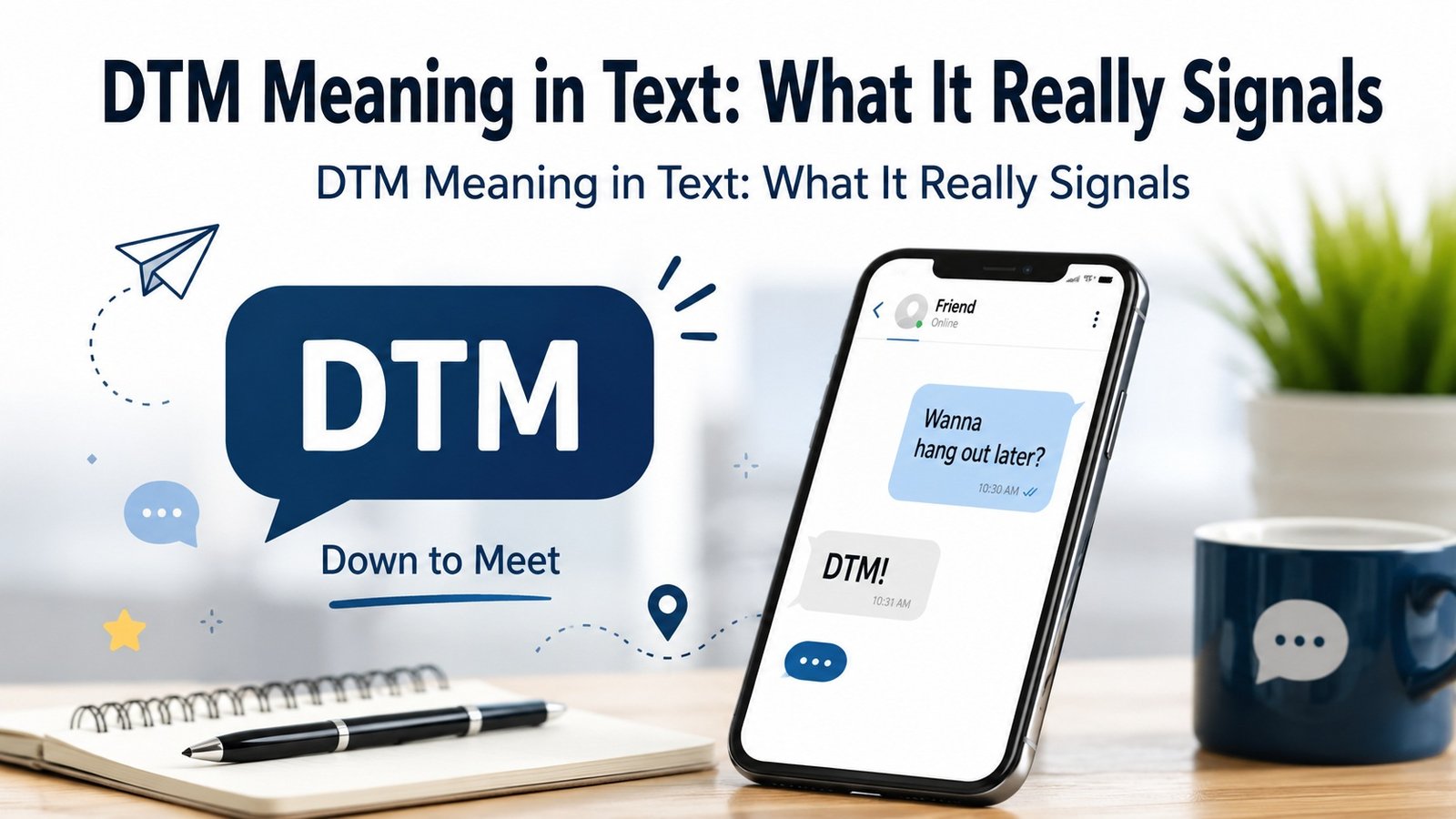
DTM Meaning in Text usually stands for “Doing Too Much.” In the USA, it’s often used to call out someone for overreacting or being extra, while in other contexts, it can also mean “Down To Meet,” depending on tone and situation.
TL;DR
• Most common meaning: “Doing Too Much” (overreacting or exaggerating)
• Sometimes means “Down To Meet” in casual planning texts
• Tone can be playful, teasing, or slightly critical
• Popular in social media, texting, and youth slang
• Meaning depends heavily on context and relationship
What Does DTM Mean in Text?
DTM may look simple, yet it carries layered meaning. In American texting culture, context decides everything.
“Doing Too Much” Explained
This is the most common use in the USA today. It points out behavior that feels excessive or unnecessary.
• Calling out dramatic reactions in a joking way
• Highlighting over-the-top effort or emotion
• Often used between friends, not formal settings
• Can be playful or mildly critical depending on tone
For example, if someone sends ten messages in a row, a friend might reply, “You’re DTM 😄.”
“Down To Meet” as an Alternative Meaning
In contrast, DTM can also signal willingness to meet up.
• Used in casual planning or dating chats
• Common in quick replies or short messages
• Signals openness without long explanations
• Less common than “Doing Too Much” today
Because both meanings exist, tone and context matter a lot.
How DTM Appears in Conversations
DTM isn’t just about meaning. It’s also about how it looks and feels in conversation.
Typical Usage Patterns
You’ll often see DTM in lowercase or uppercase. It blends into casual digital speech.
• Appears in texts, Snapchat, and Instagram messages
• Often paired with emojis for tone clarity
• Used in short, fast replies
• Rarely used in professional communication
Tone and Delivery
Tone shapes how DTM lands.
• Friendly tone: playful teasing
• Neutral tone: casual observation
• Sharp tone: mild criticism or annoyance
• Flirty tone (when “Down To Meet”): open and inviting
Because tone is invisible in text, emojis and context help fill the gap.
The Rise of Text Abbreviations in the USA
To understand DTM, you need to see the bigger picture of digital language in America.
From Early Texting to Social Media
Short forms didn’t appear overnight. They evolved with technology.
• Early SMS limits encouraged shorter words
• Chat rooms and instant messaging sped things up
• Social media normalized slang and abbreviations
• Mobile culture made fast replies the norm
DTM fits right into this fast-moving language style.
Why Americans Use Short Forms
People want speed and personality in communication.
• Saves time when typing quickly
• Adds casual tone to messages
• Builds group identity and shared slang
• Feels more natural than formal writing
Because of this, abbreviations like DTM thrive in everyday chats.
DTM Meaning in American Culture
In the United States, language often reflects personality and social dynamics. DTM is no exception.
Social Signaling
Using DTM says something about how you see behavior.
• Suggests awareness of social norms
• Signals humor and relatability
• Can gently check someone’s behavior
• Builds casual connection between friends
Everyday Contexts
DTM shows up in many situations.
• Group chats among friends
• Dating conversations
• Social media comments
• Light arguments or debates
Because it’s flexible, it adapts to different tones easily.
Read More: FML Meaning in Text: What It Really Signals
Emotional and Psychological Meaning of DTM
DTM isn’t just words. It reflects feelings and reactions.
What It Signals Emotionally
When someone uses DTM, they’re expressing a reaction.
• Mild annoyance at overreaction
• Playful teasing among close friends
• Desire to calm a situation
• Recognition of exaggerated behavior
How It Affects Conversations
It can shift the mood quickly.
• Can lighten tension with humor
• May reduce drama in conversations
• Sometimes comes off as dismissive
• Depends heavily on relationship closeness
Because tone varies, the same word can feel different each time.
DTM in Social Media and Modern Communication
Today, DTM lives mostly online. It thrives in fast, casual spaces.
Where You’ll See It Most
Social platforms drive its popularity.
• Instagram comments and DMs
• TikTok captions and replies
• Snapchat conversations
• Twitter (X) threads and jokes
Why It Works So Well Online
DTM fits digital culture perfectly.
• Short and easy to type
• Matches meme-style humor
• Adds personality without long text
• Easy to understand in context
Because of this, it spreads quickly across platforms.
DTM vs Similar Slang Terms
DTM doesn’t exist alone. It’s part of a larger slang ecosystem.
Comparable Expressions
Here’s how it compares to other phrases:
| Context | Meaning in the USA | Common Associations | Notes |
| DTM | Doing too much | Overreaction, extra behavior | Most common modern meaning |
| Extra | Over-the-top behavior | Drama, exaggeration | Very similar tone |
| Chill | Calm down | Relaxation, control | Opposite intent |
| Try-hard | Excessive effort | Competition, insecurity | Slightly more negative |
Key Differences
• DTM is shorter and more casual
• “Extra” feels more descriptive
• “Try-hard” carries stronger judgment
• “Chill” suggests a solution, not critique
Because of these differences, people choose based on tone.
Cross-Cultural and Global Interpretations
While DTM is common in the USA, it appears elsewhere too.
Outside the United States
Meaning can shift slightly in global use.
• Often still means “Doing Too Much”
• Sometimes confused with other abbreviations
• Less common in formal English-speaking regions
• May be misunderstood without context
Cultural Nuance
Different cultures interpret tone differently.
• Some see it as humorous
• Others may view it as rude
• Context and relationship matter even more
Because slang travels fast, meanings can blur across borders.
Misunderstandings and Double Meanings
DTM can confuse people, especially newcomers.
Common Misinterpretations
People often assume the wrong meaning.
• Thinking it always means “Down To Meet”
• Missing the sarcastic tone
• Taking it too seriously
• Misreading humor as criticism
Why Confusion Happens
Short forms lack context.
• No tone of voice in text
• Cultural differences in slang
• Multiple meanings for one phrase
• Rapid evolution of digital language
Because of this, context is everything.
Is DTM Rude or Offensive?
This is a common concern, especially for new users.
When It Feels Harmless
In friendly settings, it’s usually fine.
• Used among close friends
• Delivered with humor or emojis
• Meant as light teasing
• Shared understanding exists
When It Can Feel Negative
However, tone can shift perception.
• In serious conversations
• Between strangers or coworkers
• Without clear humor cues
• When used repeatedly or harshly
Because of this, it’s best used carefully.
How DTM Has Changed Over Time
Like most slang, DTM hasn’t stayed the same.
Earlier Uses
Originally, meanings were more varied.
• “Down To Meet” was more common
• Less widespread usage overall
• Mostly seen in niche online groups
Modern Shift (2025–2026)
Today, one meaning dominates.
• “Doing Too Much” leads in popularity
• Spread through memes and short videos
• Became part of everyday slang
• More widely understood in the USA
Because trends move fast, meanings can shift again.
When Should You Use DTM?
Knowing when to use DTM helps avoid awkward moments.
Good Situations
• Casual chats with friends
• Playful teasing moments
• Lighthearted group conversations
• Social media comments
Situations to Avoid
• Professional emails or messages
• Serious or emotional discussions
• Conversations with unfamiliar people
• Formal communication settings
Because tone matters, choose wisely.
FAQs
What does DTM mean in texting?
DTM usually means “Doing Too Much.” It points out exaggerated behavior in a casual or humorous way.
Can DTM mean something else?
Yes, it can also mean “Down To Meet.” However, that meaning is less common today in the USA.
Is DTM rude?
It depends on tone. Among friends, it’s often playful. In serious contexts, it can feel dismissive.
How do you respond to DTM?
You can laugh it off, explain yourself, or tone things down. The best response depends on the situation.
Is DTM popular in 2026?
Yes, especially in social media and texting. It’s widely used among younger audiences.
Do adults use DTM?
Some do, but it’s more common among teens and young adults. Older users may prefer clearer language.
Conclusion
Language online moves fast, yet patterns still emerge. DTM Meaning in Text reflects how people react to behavior, emotion, and tone in quick, digital conversations.
In the United States, it mostly signals that someone is overdoing something. However, context can shift its meaning completely. That’s what makes it interesting. It’s not just shorthand, it’s a snapshot of modern communication style.
As digital language keeps evolving, DTM may change again. For now, it remains a simple yet powerful way to say, “Hey, that might be a bit much.”

Alyan Ashraf is a passionate English language writer who simplifies grammar for everyday learners. He focuses on clear explanations, practical examples, and common usage rules to help readers write better, speak confidently, and avoid mistakes in real-world English.