In today’s fast-moving digital world, phrases carry more weight than ever. One expression that sparks curiosity and mixed reactions is Respond Good Girl. At first glance, it might seem simple or playful. However, its meaning often shifts depending on tone, context, and relationship.
People across the United States encounter this phrase in texting, social media, or online communities. Some see it as affectionate. Others interpret it as controlling or outdated. Because of that, understanding its symbolism matters more than ever.
So what does this phrase really signal? And why does it feel so loaded for such a short statement?
Quick Answer
Respond Good Girl usually symbolizes encouragement mixed with authority. In the U.S., it can suggest praise, flirtation, or control depending on context, while broader meanings range from playful approval to problematic power dynamics.
TL;DR
• Signals praise, control, or flirtation depending on tone
• Rooted in older gendered language traditions
• Common in texting, social media, and niche communities
• Can feel affectionate or uncomfortable in modern use
• Meaning shifts based on relationship and intent
What Does “Respond Good Girl” Mean?
This section breaks down the phrase itself and why it carries emotional weight in American culture today.
Literal Meaning
At a basic level, “Respond Good Girl” combines a command with praise. It asks for a reply while framing the recipient as obedient or “good.”
However, language isn’t just literal. Tone changes everything.
Implied Meaning
Depending on context, the phrase may signal:
• Positive reinforcement for replying quickly
• A playful or teasing dynamic between partners
• A subtle power imbalance or expectation of obedience
• An attempt to sound dominant or authoritative
In the U.S., people often read between the lines. So even casual phrases can carry deeper meaning.
Historical Roots of Gendered Praise Language
To understand this phrase, you need to look at older language patterns. These roots still shape how Americans interpret words today.
Early Use of “Good Girl”
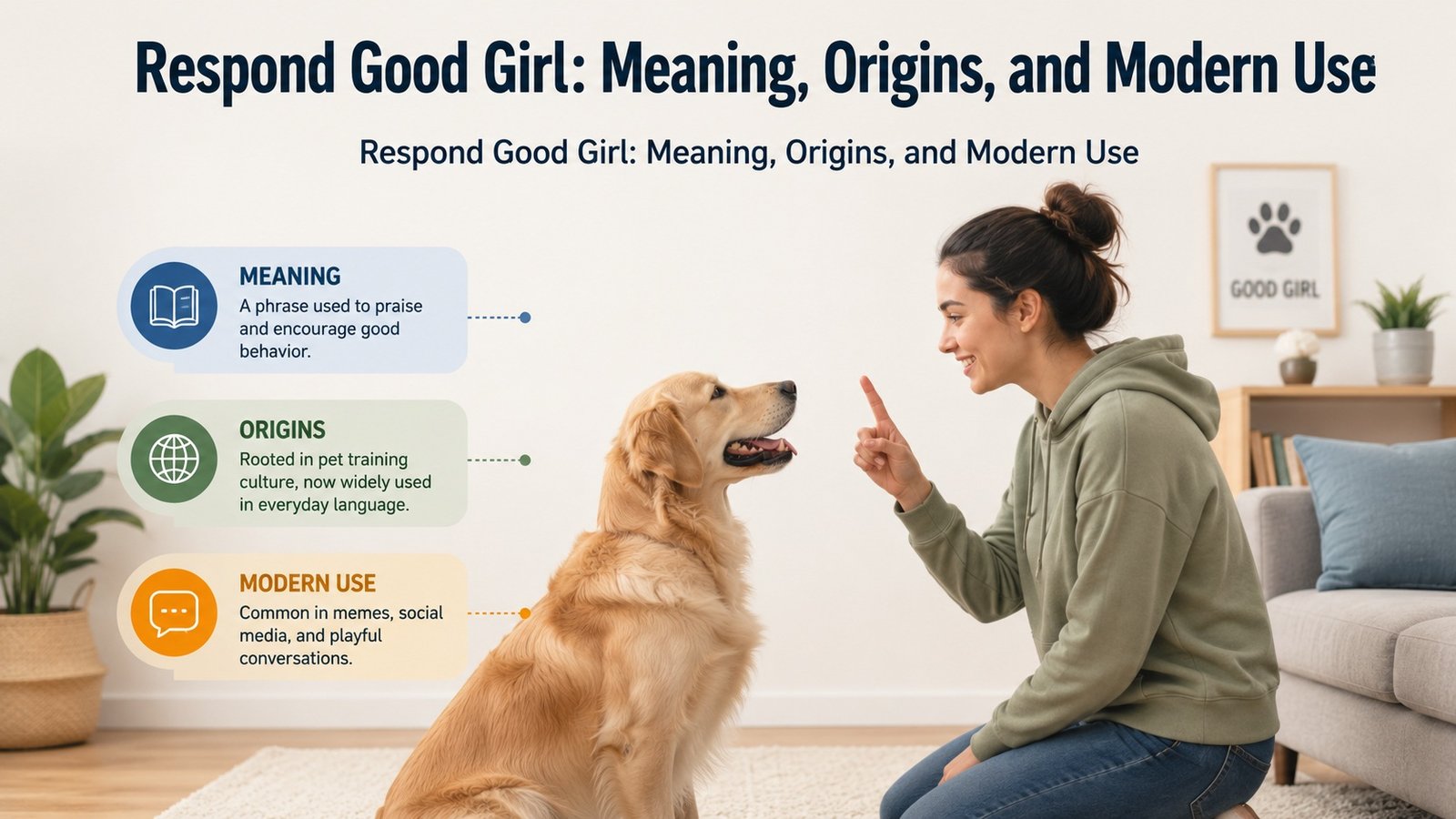
Historically, “good girl” was used to praise children. Parents and teachers used it to reward obedience and proper behavior.
Over time, the phrase expanded beyond childhood.
Cultural Evolution
In the 20th century, gender roles influenced language heavily. Women were often praised for being polite, quiet, or compliant.
Because of that, phrases like this developed associations with:
• Obedience and discipline
• Social expectations for women
• Authority figures rewarding behavior
• Traditional gender norms
Today, those older meanings still linger, even in casual texting.
Symbolism of “Respond Good Girl” in the USA
In modern American culture, this phrase carries layered symbolism. It’s not just about words. It’s about power, identity, and tone.
Core Symbolic Meanings
• Encouragement tied to behavior or response
• Power dynamics in communication
• Gendered expectations, sometimes subtle
• Playful dominance in certain relationships
Why It Matters Today
Americans tend to value equality and personal boundaries. So language that hints at control can feel uncomfortable.
At the same time, context matters. In close relationships, the same phrase may feel harmless or even affectionate.
Emotional and Psychological Associations
Language shapes feelings quickly. This phrase often triggers strong emotional reactions.
Positive Associations
Some people interpret it as:
• Playful teasing between partners
• A sign of attention or affection
• Lighthearted praise
Negative Associations
Others may feel:
• Controlled or talked down to
• Uncomfortable with the tone
• Triggered by power imbalance
• Dismissed or infantilized
Because of this contrast, reactions vary widely across the U.S.
Modern Usage in Texting and Social Media
Today, “Respond Good Girl” appears mostly in digital spaces. Its meaning often depends on where and how it’s used.
Common Contexts
• Private messages between partners
• Roleplay or niche online communities
• Flirty or teasing conversations
• Memes or ironic posts
Tone Matters More Than Words
For example, the same phrase can feel very different:
• Friendly tone: playful and harmless
• Serious tone: controlling or demanding
• Ironic tone: humorous or sarcastic
Because digital text lacks voice cues, misunderstandings happen easily.
“Respond Good Girl” in Relationships
This section explores how the phrase functions in personal dynamics.
Healthy Contexts
When both people understand the tone, it may signal:
• Mutual playfulness
• Agreed communication style
• Trust and shared humor
Risky Contexts
However, problems arise when:
• One person feels pressured to respond
• The phrase is used repeatedly or seriously
• There’s an imbalance of control
• Boundaries aren’t respected
In the U.S., relationship communication increasingly focuses on consent and clarity. That makes context crucial.
Read More: Respond I Guess So: Meaning, Tone, and Hidden Signals
Cross-Cultural and Spiritual Perspectives
Although this phrase is modern, its themes connect to broader human patterns.
Universal Themes
Across cultures, language has long been used to:
• Reward behavior
• Reinforce social roles
• Express authority or care
• Shape identity
Cultural Differences
In some cultures, hierarchical language feels normal. In others, like the U.S., equality is emphasized more strongly.
Because of that, Americans may react more critically to phrases that suggest control.
Misunderstandings and Controversies
Not everyone agrees on what this phrase means. That’s where controversy begins.
Common Misinterpretations
• Assuming it’s always playful
• Ignoring power dynamics
• Overlooking personal boundaries
Why It’s Debated
The phrase sits at the intersection of:
• Gender expectations
• Communication styles
• Personal comfort levels
• Cultural change
Because of this, it can feel harmless to one person and offensive to another.
How Meaning Has Shifted Over Time
Language evolves constantly. This phrase is a clear example of that shift.
Then vs. Now
| Context | Meaning in the USA | Common Associations | Notes |
| Past (pre-2000s) | Simple praise phrase | Obedience, politeness | Mostly used for children |
| Early internet | Emerging playful tone | Flirting, teasing | Began appearing online |
| Modern texting | Context-dependent | Power, humor, control | Meaning varies widely |
| Social media era | Often debated | Identity, boundaries | More awareness of impact |
Key Takeaway
What once felt normal now carries more weight. People question language more than before.
Psychological Meaning: Why Words Like This Stick
Short phrases can shape perception quickly. This one works because it taps into basic human responses.
Core Psychological Signals
• Desire for approval or validation
• Sensitivity to tone and authority
• Reaction to perceived control
• Need for respectful communication
Because these factors are universal, the phrase feels powerful even in casual use.
Similar Phrases and Variations
“Respond Good Girl” doesn’t exist alone. It’s part of a broader pattern.
Related Expressions
• “Good girl”
• “Be a good girl”
• “Answer me nicely”
• “Don’t ignore me”
Each variation shifts tone slightly. However, they all carry some mix of praise and expectation.
When Is It Appropriate to Use?
This question matters most for everyday communication.
Generally Safe Situations
• Mutual joking between close partners
• Clearly playful or ironic contexts
• Spaces where tone is understood
Situations to Avoid
• Professional settings
• New or unclear relationships
• When tone could be misread
• If the other person shows discomfort
In American culture, clear and respectful communication usually works best.
FAQs
What does “Respond Good Girl” mean in texting?
It usually combines a request for a reply with praise. However, tone determines whether it feels playful or controlling.
Is “Respond Good Girl” offensive?
It can be, depending on context. Some people find it harmless, while others feel it implies control or disrespect.
Why do people use this phrase online?
People often use it for humor, flirting, or roleplay. However, not everyone interprets it the same way.
Is it okay to say “good girl” to adults?
It depends on the relationship. In close, mutual contexts it may feel fine, but in others it can seem patronizing.
What are better alternatives?
Clear and neutral phrases like “Please reply” or “Let me know” avoid confusion and feel more respectful.
Does tone matter more than words here?
Yes. Tone, relationship, and intent matter more than the phrase itself in most cases.
Conclusion
“Respond Good Girl” might look simple, but it carries layers of meaning shaped by history, culture, and personal experience. In the United States, it often sits between playful expression and uncomfortable power dynamics.
Because language evolves, people now pay closer attention to how words feel, not just what they say. That’s why this phrase sparks such mixed reactions today.
Ultimately, understanding context is key. When used thoughtfully, it may feel harmless. But without clarity, it can easily send the wrong message.

Alyan Ashraf is a passionate English language writer who simplifies grammar for everyday learners. He focuses on clear explanations, practical examples, and common usage rules to help readers write better, speak confidently, and avoid mistakes in real-world English.