In today’s fast-moving digital world, short expressions carry big emotional weight. One of those is “OML,” a compact phrase that pops up in texts, comments, and social media posts. If you’ve ever seen it and wondered what it really means, you’re not alone.
OML Meaning in Text has grown quickly, especially in the United States, where casual messaging shapes everyday language. People use it to react instantly, often in moments of surprise, frustration, or disbelief.
However, there’s more behind those three letters than a simple reaction. Its meaning connects to older expressions, emotional habits, and even cultural attitudes toward communication. Let’s unpack what OML really signals today.
Quick Answer
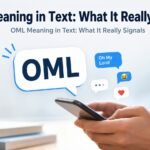
OML Meaning in Text usually stands for “Oh My Lord.” In the USA, it’s a quick emotional reaction showing surprise, shock, or frustration, similar to “OMG,” but often softer or more expressive.
TL;DR
• OML means “Oh My Lord” in most texts
• It expresses surprise, stress, or disbelief
• Popular in American texting and social media
• Often softer than “OMG” in tone
• Used casually across age groups online
What Does OML Mean in Text?
OML is a short expression used in digital conversations. It works like a reaction rather than a full sentence. People type it when emotions hit fast.
Core Meaning
At its heart, OML stands for “Oh My Lord.” However, its tone depends on context.
• Surprise at unexpected news or events
• Frustration during stressful or annoying moments
• Excitement when something shocking happens
• Mild disbelief in awkward or funny situations
How It Appears in Messages
You’ll often see OML in casual chats, not formal writing.
• “OML I can’t believe that just happened”
• “OML this is so stressful”
• “OML that was hilarious”
Because it’s flexible, people use it in both positive and negative moments.
Where Did OML Come From?
To understand OML, you need to look at older expressions. It didn’t appear out of nowhere.
Historical Roots
OML evolved from longer exclamations like “Oh my Lord,” which have been used for centuries. These phrases often showed shock or awe in spoken language.
However, digital culture changed everything. As texting grew, people shortened phrases to save time and space.
Evolution Into Digital Slang
In the early 2000s, abbreviations became common in SMS and online chats.
• “OMG” became widely popular first
• OML followed as a softer variation
• Both reflect emotional reactions, not literal meaning
Today, OML is part of a broader trend of compressed communication.
Why Is OML Popular in the USA?
American texting culture plays a huge role in OML’s spread. Speed and emotional expression matter a lot in daily communication.
Cultural Context
In the United States, casual language often replaces formal speech in digital spaces. That’s where OML fits perfectly.
• Quick reactions match fast-paced conversations
• Emotional shorthand feels more natural online
• Informal tone dominates social platforms
Influence of Social Media
Apps like TikTok, Snapchat, and Instagram helped normalize abbreviations like OML.
• Short captions encourage quick expressions
• Comments rely on emotional reactions
• Trends spread slang rapidly
Because of this, OML feels natural to many American users.
OML vs OMG: What’s the Difference?
OML and OMG look similar, but they don’t always feel the same.
Tone Differences
While both express emotion, OML can feel slightly softer or more dramatic.
• OMG often sounds louder or more intense
• OML can feel calmer or more reflective
• Some use OML to avoid stronger religious phrasing
Situational Use
People may choose one over the other depending on mood.
• OML for mild shock or stress
• OMG for big excitement or surprise
In practice, many people use them interchangeably.
Emotional and Psychological Meaning of OML
OML isn’t just words—it reflects how people process feelings quickly.
Instant Emotional Release
Typing OML helps people react without thinking too much.
• Releases tension during stress
• Shows connection in conversations
• Signals shared understanding
Social Bonding
Using OML can make conversations feel more relatable.
• Creates a casual, friendly tone
• Mirrors spoken reactions
• Builds emotional connection online
In many ways, it acts like a digital sigh or gasp.
Read More: IMK Meaning in Text: What It Really Signals in Chats
How OML Is Used in Daily Conversations
OML shows up in many everyday situations. Its flexibility makes it useful.
Common Scenarios
• Reacting to shocking news from friends
• Responding to funny or awkward moments
• Expressing frustration with work or school
• Sharing excitement about events
Example Messages
• “OML I forgot my keys again”
• “OML that movie ending was wild”
• “OML this traffic is insane”
Because it’s short, it fits almost anywhere.
OML in Social Media and Pop Culture
Social platforms amplify how people use OML.
Digital Trends
OML often appears in captions, memes, and comments.
• Reaction posts during viral moments
• Meme captions expressing disbelief
• Quick replies in comment threads
Influencer and Youth Culture
Younger users especially drive its popularity.
• Short slang feels natural in fast chats
• Influencers normalize casual expressions
• Trends spread across platforms quickly
As a result, OML stays relevant in modern communication.
Cross-Cultural and Spiritual Meanings
Although OML has religious roots, its modern use is mostly casual.
Original Spiritual Context
The phrase “Oh my Lord” historically referred to God. It expressed awe or reverence.
Modern Interpretation
Today, most users don’t intend a religious meaning.
• Used as a general emotional reaction
• Detached from strict spiritual context
• Similar to other softened expressions
However, some people still prefer alternatives depending on personal beliefs.
Misunderstandings and Controversies
Like many abbreviations, OML can be misunderstood.
Common Confusions
• Some think it means “Oh My Life”
• Others confuse it with unrelated acronyms
• Tone can be unclear without context
Sensitivity Around Language
Because of its origin, some people avoid using it.
• Concerns about casual religious references
• Preference for neutral expressions
• Cultural differences in interpretation
Still, most usage today is informal and widely accepted.
How OML Meaning Has Changed Over Time
Language always evolves, and OML is no exception.
Then vs Now
• Originally a spoken phrase with religious tone
• Became shortened for texting convenience
• Now used casually without deep meaning
Current Trend (2025–2026)
OML remains popular but competes with new slang.
• New abbreviations appear constantly
• Older ones fade or shift meaning
• OML stays due to simplicity and familiarity
Its staying power comes from being easy and expressive.
Context Table: OML Meaning in Different Situations
| Context | Meaning in the USA | Common Associations | Notes |
| Text Messaging | Quick emotional reaction | Surprise, frustration | Very casual usage |
| Social Media | Expressive caption or comment | Humor, disbelief | Often paired with emojis |
| Friend Chats | Relatable reaction | Stress, excitement | Builds connection |
| Work Messages | Rare but possible | Mild frustration | Depends on workplace culture |
| Memes & Trends | Dramatic expression | Humor, exaggeration | Often playful tone |
Should You Use OML in Professional Settings?
This depends on context and audience.
When It’s Okay
• Casual team chats with friendly tone
• Informal conversations with coworkers
• Creative or social media roles
When to Avoid It
• Formal emails or reports
• Professional presentations
• Communication with clients
In general, it’s safer to keep OML in casual settings.
FAQs
What does OML stand for in texting?
OML usually stands for “Oh My Lord.” It expresses surprise, stress, or disbelief in casual conversations.
Is OML the same as OMG?
Not exactly. Both show emotion, but OML often feels softer or less intense than OMG.
Is OML offensive or inappropriate?
For most people, it’s harmless. However, some avoid it due to its religious origin.
Do Americans use OML ხშირად?
Yes, especially in casual texting and social media. It’s common among younger users.
Can OML have different meanings?
Sometimes. While “Oh My Lord” is standard, context can slightly change how it feels.
Is OML still popular in 2026?
Yes, though new slang keeps emerging. OML remains widely understood and used.
Conclusion
Language keeps shrinking, but meaning keeps expanding. That’s exactly what you see with OML. What started as a longer expression has turned into a quick emotional signal that fits modern communication perfectly.
OML Meaning in Text reflects how people in the United States express feelings fast, casually, and with minimal effort. It’s not just about words—it’s about connection, reaction, and shared understanding.
As messaging evolves, expressions like OML remind you how powerful even three letters can b