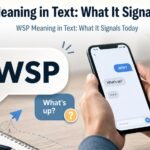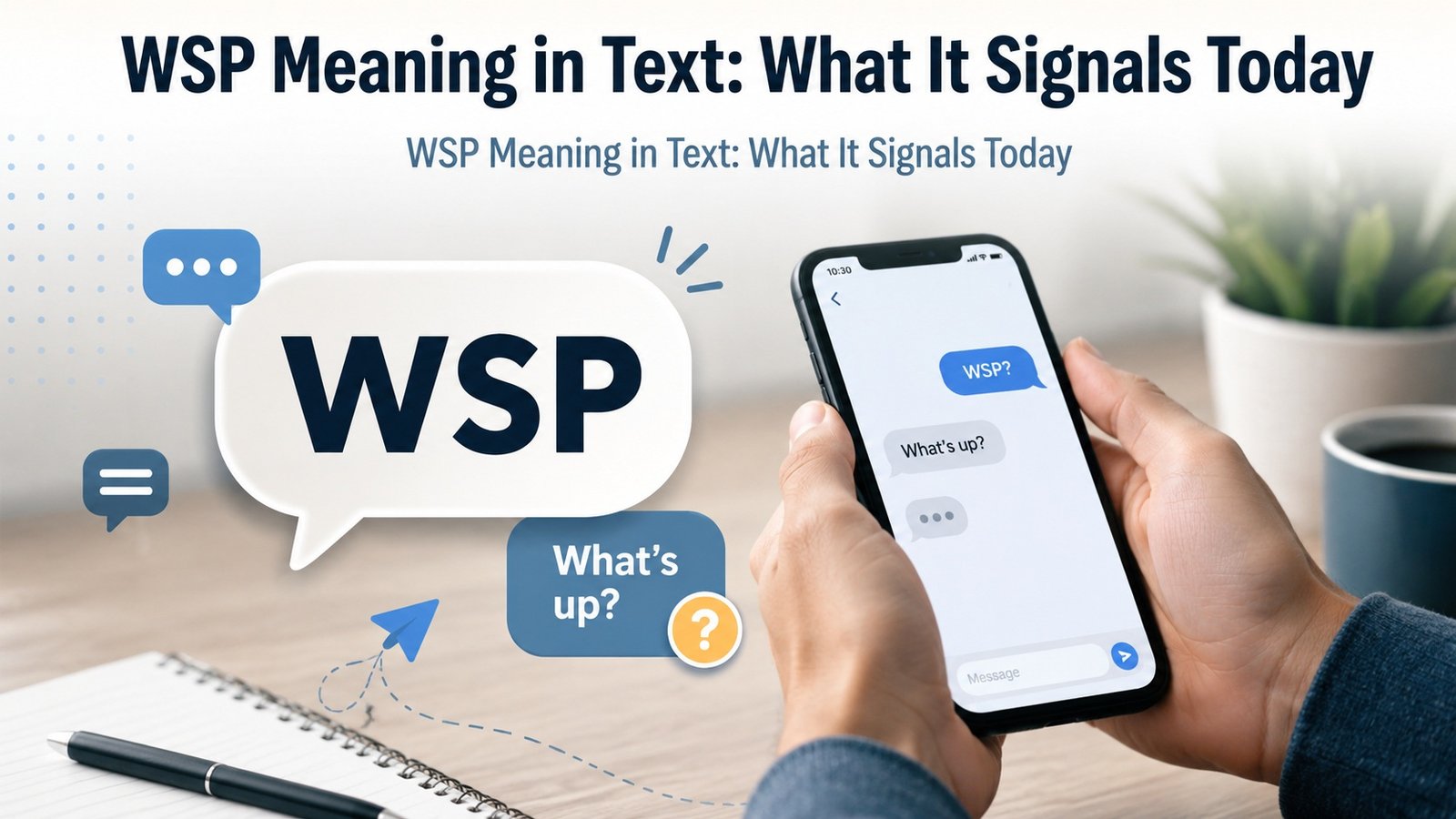
WSP shows up in texts, DMs, and comments every day. At first glance, it looks like just another shortcut. However, it carries more meaning than three simple letters suggest. In modern messaging, especially in the United States, WSP acts as a social signal, not just a question.
WSP Meaning in Text reflects how people communicate faster and more casually online. It blends language, culture, and emotion into a tiny phrase. Because digital conversations move quickly, short forms like this help people stay connected without slowing down.
Today, WSP isn’t just about asking “what’s up.” Instead, it reflects tone, intent, and even identity in digital spaces. Let’s break down what it really means, where it came from, and why it matters.
Quick Answer
WSP Meaning in Text usually stands for “What’s up?” in the USA. It signals a casual greeting, interest in conversation, or checking in with someone. More broadly, it reflects relaxed, fast-paced digital communication.
TL;DR
• WSP means “What’s up?” in most texts
• It signals casual, friendly communication
• Popular in US texting and social media culture
• Often used to start conversations quickly
• Reflects informal tone and digital identity
• Meaning can shift based on context and relationship
What Does WSP Mean in Text?
This section explains the core definition and why it matters in everyday messaging. For many Americans, WSP is more than slang. It’s a social shortcut.
Basic Definition
WSP is a shortened form of “What’s up?” It’s commonly used in texting and online chats. People use it to greet someone or start a conversation.
How It Appears
• Usually typed in lowercase or uppercase: “wsp” or “WSP”
• Found in texts, Snapchat, Instagram, and gaming chats
• Often paired with emojis or follow-up messages
• Used alone or with names like “wsp bro”
The Origins of WSP and Digital Shortcuts
Understanding where WSP comes from helps explain why it feels natural today. Its roots go back to early digital communication trends.
Early Internet and SMS Culture
In the early 2000s, texting had character limits. Because of this, people shortened phrases to save space and time. “What’s up?” became “sup,” then evolved into “wsp.”
Evolution Over Time
• From “what is up” to “what’s up” to “sup”
• Later shortened to “wsp” for speed
• Spread through chat rooms and early messaging apps
• Reinforced by social media and youth culture
Why WSP Became Popular in the USA
In the United States, language often adapts quickly to technology. WSP fits perfectly into this pattern.
Cultural Factors
Americans tend to favor casual, direct communication. WSP reflects that style. It feels friendly without being formal.
Influence of Social Media
• Platforms like Instagram and Snapchat encourage short messages
• Influencers and teens popularized quick slang
• Messaging culture values speed and tone over grammar
• WSP became a standard greeting among younger users
Symbolism of WSP in Modern Communication
WSP may look simple, yet it carries symbolic meaning in digital culture. It reflects how people connect today.
What It Symbolizes
• Informality and ease in conversation
• Openness to interaction
• Social connection without pressure
• A low-effort way to maintain relationships
Tone and Intent
Depending on context, WSP can feel:
• Friendly and welcoming
• Curious or checking in
• Casual with no strong expectations
• Sometimes even lazy or distant
Emotional and Psychological Meaning
Words shape how people feel, even short ones. WSP has subtle emotional layers.
Emotional Signals
• Suggests relaxed communication
• Reduces pressure compared to formal greetings
• Can signal interest without deep commitment
• Helps maintain social bonds effortlessly
Psychological Impact
Because it’s quick and easy, WSP lowers barriers to conversation. However, it can also feel vague if overused.
How WSP Is Used in Everyday Texting
This section shows how WSP functions in real conversations. Context always shapes meaning.
Common Uses
• Starting a chat with friends
• Checking in casually
• Reconnecting after time apart
• Testing if someone is available
Example Situations
• “wsp?” — simple greeting
• “wsp tonight?” — asking about plans
• “wsp bro” — friendly tone
• “wsp, you good?” — checking concern
WSP in Social Media and Pop Culture
WSP thrives in fast-moving digital spaces. It’s especially common in youth culture.
Where You’ll See It
• Instagram DMs and comments
• Snapchat chats
• TikTok captions and replies
• Online gaming chats
Cultural Influence
• Used by influencers and content creators
• Appears in memes and viral posts
• Reflects modern communication trends
• Signals belonging to digital culture
Read More: Respond Good Girl: Meaning, Origins, and Modern Use
Cross-Cultural and Global Interpretations
Although WSP is widely used in the USA, it appears in other regions too. However, meaning may shift slightly.
Global Use
• Recognized in English-speaking countries
• Understood by international social media users
• Sometimes confused by non-native speakers
• Interpreted as informal slang
Cultural Differences
In more formal cultures, WSP may seem too casual. Because of this, context matters when messaging globally.
WSP Compared to Similar Text Slang
WSP is part of a larger group of texting shortcuts. Each has a slightly different tone.
Comparison Table
| Context | Meaning in the USA | Common Associations | Notes |
| WSP | What’s up | Casual greeting | Neutral and widely used |
| SUP | What’s up (shorter) | Friendly tone | Slightly more relaxed |
| WYD | What are you doing | Curiosity | More specific than WSP |
| HBU | How about you | Conversation follow-up | Used after sharing info |
| YO | Hey or attention grabber | Energetic greeting | More expressive |
Misunderstandings and Misuse of WSP
Even simple slang can be misunderstood. WSP is no exception.
Common Confusions
• Some think it’s rude or lazy
• Others misread tone without context
• Can feel dismissive if used repeatedly
• Not always suitable for professional settings
When to Avoid It
• Formal emails or work communication
• Conversations with unfamiliar people
• Serious or sensitive discussions
• Situations needing clarity
How the Meaning of WSP Has Changed Over Time
Language never stays still. WSP has evolved along with digital culture.
Past vs Present
• Originally just a shortened greeting
• Now carries tone and identity signals
• Used as a social “ping” rather than a real question
• Sometimes doesn’t expect a detailed reply
Modern Shift
Today, WSP often means “I’m here” rather than “tell me everything.” That shift reflects faster communication habits.
What WSP Says About Identity and Social Style
The way someone uses WSP can reveal subtle details about them.
Identity Signals
• Younger users tend to use it more
• Suggests comfort with digital slang
• Reflects casual communication style
• Can signal belonging to online communities
Social Meaning
Using WSP shows you value speed and ease. However, overuse might signal low effort in conversations.
FAQs
What does WSP mean in texting?
WSP usually means “What’s up?” It’s a casual way to greet someone or start a conversation.
Is WSP rude or disrespectful?
Not usually. However, it can feel lazy or impersonal in formal or serious contexts.
When should I use WSP?
Use it with friends or in casual chats. Avoid it in professional or unfamiliar settings.
Does WSP always expect a reply?
Not always. Sometimes it’s just a quick check-in without expecting a long answer.
Is WSP used outside the USA?
Yes, especially in online spaces. However, it’s most common in American digital culture.
What’s the difference between WSP and WYD?
WSP is a general greeting. WYD asks specifically what someone is doing.
Conclusion
WSP may look like a tiny piece of text, yet it carries a lot of meaning. It reflects how people in the United States communicate today—fast, casual, and socially aware. More than just “What’s up,” it acts as a signal of connection and openness.
As digital language evolves, WSP Meaning in Text shows how communication adapts to modern life. It’s simple, flexible, and deeply tied to culture. Next time you see it, you’ll know it’s not just a question—it’s a social cue.