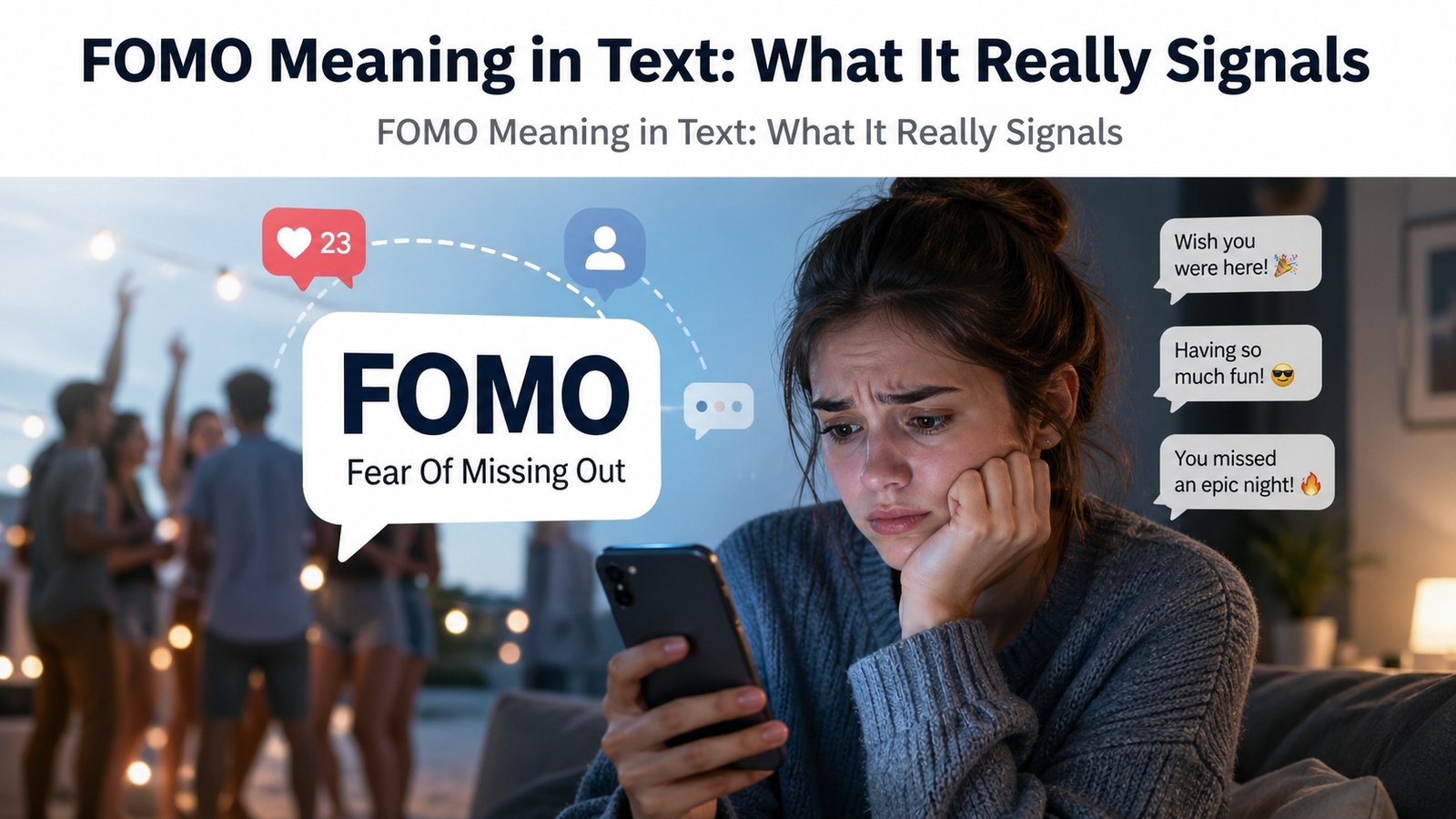
FOMO shows up everywhere today, from group chats to social media captions. You’ve likely seen it in texts, posts, or even heard it in casual talk. At its core, FOMO Meaning in Text reflects a modern emotional signal—one tied to connection, comparison, and the fear of missing out on something better.
In the United States, this idea has grown fast alongside digital culture. People don’t just use FOMO as slang. Instead, they use it to describe a real feeling that shapes decisions, moods, and even identity. It’s short, but it carries weight.
However, FOMO didn’t appear overnight. It has deeper psychological roots and cultural layers that stretch beyond texting. Understanding it reveals a lot about how people live, connect, and sometimes feel left behind.
Quick Answer
FOMO Meaning in Text refers to the fear of missing out on enjoyable or important experiences, especially when others seem to be having them. In the U.S., it often signals social anxiety, curiosity, or a desire to stay included. Broadly, it reflects a human need for belonging and connection.
TL;DR
• FOMO means fear of missing out on experiences
• Popular in U.S. texting and social media culture
• Tied to comparison and social belonging
• Rooted in deeper psychological needs
• Often triggered by digital exposure
• Can influence choices, mood, and identity
What Does FOMO Mean in Text?
FOMO is more than a trendy acronym. In everyday American texting, it acts like a quick emotional shortcut. It tells others you feel left out or worried about missing something fun or important.
Everyday Usage
People use FOMO casually, often in lighthearted ways. However, it can also hint at deeper feelings.
• “I have FOMO seeing your vacation pics”
• “Don’t invite me—I’ll get FOMO”
• “Major FOMO right now 😅”
• “I said yes because of FOMO”
These messages seem simple. Yet, they reflect a mix of curiosity, envy, and connection.
Why It Matters
In the U.S., communication is fast and informal. So, short phrases like FOMO carry emotional meaning quickly. They help people express feelings without long explanations.
Where Did FOMO Come From?
Although it feels modern, the idea behind FOMO is older than texting. Humans have always feared being excluded from important events or social groups.
Early Psychological Roots
Long before smartphones, people worried about missing opportunities. This feeling connects to survival instincts. Being left out once meant losing resources or protection.
The Term’s Rise
The actual term “FOMO” gained popularity in the early 2000s. It spread quickly through college culture and online forums. Later, social media platforms made it explode into everyday language.
Cultural Shift
Today, FOMO reflects a world where people constantly see what others are doing. That visibility changed everything.
• Instant updates increased comparison
• Social media made experiences public
• Digital life blurred real and online moments
• People began measuring their lives against others
Why Is FOMO So Common in the USA?
FOMO feels especially strong in American culture. This is partly due to values like individuality, success, and social visibility.
Cultural Factors
The U.S. often emphasizes “living your best life.” That idea can create pressure to always be doing something exciting.
• Strong focus on personal achievement
• Social media as a lifestyle showcase
• Fast-paced social environments
• High value on experiences and events
Media Influence
Movies, influencers, and ads all highlight exciting lifestyles. As a result, people compare themselves more often.
However, this comparison isn’t always negative. Sometimes, FOMO motivates people to try new things.
Emotional and Psychological Meaning of FOMO
FOMO isn’t just slang. It reflects deeper emotional patterns that shape behavior and identity.
Core Feelings
At its heart, FOMO blends several emotions.
• Anxiety about missing opportunities
• Desire for belonging and connection
• Curiosity about others’ experiences
• Fear of regret later
Psychological Impact
Because of constant exposure, FOMO can affect mental well-being.
• Can lead to stress or overcommitment
• May reduce satisfaction with current moments
• Often increases social comparison
• Sometimes drives impulsive decisions
However, not all effects are negative. FOMO can also encourage social engagement and exploration.
FOMO in Social Media and Digital Life
Today, FOMO thrives online. Platforms amplify it by showing curated highlights of people’s lives.
How It Appears Online
You’ll often see FOMO triggered by:
• Vacation photos and event posts
• Group hangouts you weren’t invited to
• Achievement announcements
• Viral trends and challenges
Why Social Media Intensifies It
Social media doesn’t show the full picture. Instead, it highlights the best moments.
• Creates unrealistic comparisons
• Encourages constant checking
• Blurs reality and perception
• Reinforces the need to stay updated
As a result, FOMO becomes part of daily scrolling habits.
FOMO vs JOMO: A Cultural Shift
Interestingly, a counter-trend has emerged—JOMO, or the joy of missing out. This reflects changing attitudes toward balance and mental health.
Understanding the Contrast
FOMO pushes people outward. JOMO pulls them inward.
• FOMO = anxiety about missing experiences
• JOMO = peace with choosing rest
• FOMO = comparison-driven
• JOMO = self-focused contentment
Why It Matters Today
In the U.S., more people now value boundaries. They recognize that not every event needs attendance.
This shift shows a growing awareness of mental well-being.
Cross-Cultural Perspectives on FOMO
While the term is English-based, the feeling exists worldwide. Different cultures express it in unique ways.
Global Variations
• In collectivist cultures, FOMO may relate to group belonging
• In individualist cultures, it often ties to personal achievement
• Some traditions emphasize contentment over comparison
• Others see missing out as part of life balance
Spiritual Interpretations
In some belief systems, FOMO connects to attachment and desire. Letting go of comparison is often seen as a path to peace.
How FOMO Shows Up in Real Life
FOMO isn’t just digital. It affects everyday choices and behavior.
Common Situations
• Saying yes to events you don’t enjoy
• Checking your phone during gatherings
• Feeling restless when alone
• Overbooking your schedule
Behavioral Patterns
People often act differently because of FOMO.
• Attend more social events than needed
• Spend money to “keep up”
• Compare lifestyles frequently
• Struggle to enjoy the present moment
FOMO in Texting and Communication Style
In texting, FOMO acts as emotional shorthand. It’s quick, relatable, and widely understood.
Why People Use It
• Saves time in conversations
• Expresses feelings casually
• Builds social connection
• Signals awareness of trends
Tone and Context
Depending on context, FOMO can feel playful or serious.
• Light tone: joking about missing a party
• Serious tone: expressing loneliness or exclusion
Understanding the tone helps avoid misinterpretation.
Read More: ETA Meaning in Text: What It Signals Today
Table: FOMO Across Contexts in the USA
| Context | Meaning in the USA | Common Associations | Notes |
| Text Messaging | Fear of missing social plans | Friends, invites, events | Often casual or humorous |
| Social Media | Comparing lifestyles | Travel, success, trends | Highly visual influence |
| Work Culture | Missing career opportunities | Networking, promotions | Can drive ambition |
| Relationships | Fear of exclusion | Friend groups, partners | Tied to belonging |
| Consumer Behavior | Missing deals or trends | Sales, products, experiences | Used in marketing strategies |
Misunderstandings and Misuse of FOMO
Although widely used, FOMO is often misunderstood or exaggerated.
Common Misinterpretations
• Not all curiosity is FOMO
• It’s not always negative
• It doesn’t mean actual exclusion
• Sometimes it’s just humor
Overuse in Marketing
Brands often use FOMO to push urgency.
• “Limited time only” messaging
• Exclusive offers
• Countdown timers
• Social proof tactics
While effective, this can create unnecessary pressure.
How FOMO Has Changed Over Time
FOMO has evolved alongside technology and culture.
Early Stage
Initially, it described social anxiety in small groups or communities.
Digital Expansion
With smartphones, FOMO became constant and visible.
Current Trends (2025–2026)
Today, people are more aware of its effects.
• Growing interest in digital detox
• Rise of mindfulness practices
• Balance between connection and independence
• Acceptance of missing out as normal
This shift shows a more mature understanding of the concept.
FAQs
What does FOMO mean in texting?
FOMO in texting means fear of missing out on experiences others are having. It’s often used casually to express curiosity or mild envy.
Is FOMO a serious psychological issue?
It can be. While often lighthearted, strong FOMO may cause stress or anxiety if it affects daily decisions or mood.
Why do people feel FOMO on social media?
Because social media highlights the best moments of others’ lives. This creates comparison and the illusion of missing out.
Can FOMO be positive?
Yes, sometimes. It can motivate people to try new experiences or stay socially connected.
What is the opposite of FOMO?
The opposite is JOMO, or joy of missing out. It reflects comfort in choosing rest or personal time.
How can I reduce FOMO?
Limit social media use, focus on your own goals, and practice being present in the moment.
Conclusion
FOMO Meaning in Text goes far beyond a simple acronym. It captures a deeply human feeling—the desire to belong, connect, and not be left behind. In the United States, it has become part of everyday language, shaped by fast communication and digital life.
However, understanding FOMO also opens the door to balance. While it can push you to explore and connect, it can also distract from what truly matters. The key lies in awareness.
When you recognize FOMO for what it is, you gain control over it. And sometimes, choosing to miss out might be exactly what you need.

Muhammad Haroon is the voice behind GrammarClubs.com. He creates clear, practical grammar guides that make English easier to understand and use. With a focus on real-life examples and simple explanations, his goal is to help learners write with confidence, accuracy, and clarity.