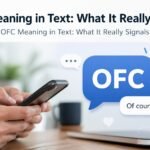
In today’s fast-moving digital world, short expressions carry big meaning. One such example is “OFC,” a tiny abbreviation that shows up in texts, comments, and social posts. While it looks simple, its tone can shift depending on context, mood, and relationship.
OFC Meaning in Text has become a subtle social signal. It tells you how someone feels about a request, a question, or even you. Because Americans rely heavily on casual digital communication, understanding this small phrase can help you read between the lines.
So, what does OFC really mean, and why does it matter? Let’s unpack its meaning, history, emotional tone, and modern use.
Quick Answer
OFC Meaning in Text usually stands for “of course.” In the United States, it signals agreement, reassurance, or something seen as obvious. However, tone can range from warm and friendly to slightly sarcastic depending on context.
TL;DR
• OFC means “of course” in most digital conversations
• It shows agreement, reassurance, or obviousness
• Tone changes based on context and punctuation
• Common in U.S. texting, social media, and gaming
• Can sound warm, neutral, or slightly sarcastic
What Does OFC Mean in Text?
Understanding OFC starts with its basic function. It’s a shorthand expression used to save time while keeping conversations flowing naturally.
Basic Definition
“OFC” is an abbreviation of “of course.” It expresses agreement or confirmation quickly.
Common Uses in Conversation
• Saying yes in a friendly, casual way
• Reassuring someone without long explanations
• Responding quickly in fast chats
• Showing something is obvious or expected
Because texting is fast, people prefer short replies. OFC fits perfectly into that rhythm.
The Origins of OFC in Digital Language
To understand its meaning, it helps to look at where it came from. OFC didn’t appear overnight.
Early Internet and Chat Culture
In the late 1990s and early 2000s, online chats grew popular. People used abbreviations to type faster.
Evolution Into Everyday Use
• Started in chat rooms and forums
• Spread through instant messaging apps
• Became common in texting and social media
• Now widely used across age groups
Today, OFC feels natural in casual American communication.
OFC Meaning in the USA: Why It Feels So Natural
In the United States, communication often leans toward efficiency and friendliness. OFC reflects both.
Cultural Communication Style
Americans tend to prefer quick, clear responses. OFC delivers that without sounding too formal.
Everyday Situations
• “Can you help me later?” → “OFC!”
• “Are you coming tonight?” → “OFC”
• “You remembered, right?” → “OFC I did”
Because of this, OFC feels friendly and cooperative.
Emotional and Psychological Meaning of OFC
Even short words carry emotional weight. OFC is no exception.
Positive Emotional Signals
• Warm agreement or support
• Confidence in the response
• Willingness to help
• Familiarity and closeness
Neutral or Flat Tone
Sometimes, OFC is just efficient. It carries no strong emotion.
Potential Negative Tone
• Can feel dismissive if too short
• May sound sarcastic in certain contexts
• Might seem impatient in serious conversations
Tone depends heavily on punctuation and timing.
When OFC Sounds Friendly vs Sarcastic
This is where things get interesting. The same word can send different signals.
Friendly Use
• “OFC 😊” feels warm and supportive
• “OFC!!” shows enthusiasm
• “OFC, I got you” adds reassurance
Sarcastic or Sharp Use
• “OFC…” may sound annoyed
• “OFC you forgot” can feel critical
• Short “OFC” alone may seem blunt
Because tone isn’t spoken, readers interpret based on context.
How OFC Is Used on Social Media
Social platforms shaped how OFC is understood today.
Common Contexts
• Comment replies
• Quick reactions in threads
• Group chats
• Gaming chats
Social Meaning
• Signals agreement without long replies
• Keeps conversations moving
• Shows casual, relaxed tone
It’s part of a broader trend of shorthand communication.
OFC in Texting vs Other Abbreviations
OFC often appears alongside other abbreviations. Each has a slightly different tone.
Comparison Table
| Context | Meaning in the USA | Common Associations | Notes |
| OFC | Agreement or obviousness | Friendly, casual, quick | Tone depends on context |
| LOL | Amusement or light tone | Humor, easing tension | Not always literal laughter |
| BTW | Introducing extra info | Informative, casual | Keeps flow smooth |
| IDK | Uncertainty or honesty | Casual, informal | Can feel disengaged |
| TTYL | Ending conversation | Friendly goodbye | More common in texting |
This shows how OFC fits into a larger language system.
Cross-Cultural Understanding of OFC
While OFC is common in the U.S., its meaning can shift elsewhere.
Global Interpretation
• Often understood as “of course” in English-speaking regions
• May confuse non-native speakers
• Sometimes mistaken as slang or sarcasm
Cultural Differences
In some cultures, direct responses feel rude. OFC might seem too blunt there.
However, in American culture, it’s generally accepted and friendly.
Modern Usage: Where You’ll See OFC Today
OFC appears in many parts of daily life.
Digital Spaces
• Text messages between friends
• Workplace chats (informal settings)
• Social media comments
• Online gaming conversations
Personal Expression
• Shows confidence in responses
• Reflects casual identity
• Signals familiarity with digital culture
It’s a small word that carries social meaning.
Read More: IDM Meaning in Text: What It Really Signals
Misunderstandings and Misuse of OFC
Despite its simplicity, OFC can cause confusion.
Common Misinterpretations
• Seen as rude if too brief
• Misread as sarcasm
• Feels dismissive in serious topics
Situations to Avoid Using OFC
• Professional emails
• Sensitive conversations
• Formal communication
• When clarity matters more than speed
In these cases, full sentences work better.
How OFC Has Changed Over Time
Language evolves, and OFC is no exception.
Past vs Present
• Early use was purely functional
• Now carries emotional tone
• More widely accepted across ages
• Used in both casual and semi-casual settings
Current Trend (2025–2026)
Today, OFC is part of everyday digital language. However, tone awareness matters more than ever.
OFC Meaning in Relationships and Identity
Interestingly, OFC can reflect relationship dynamics.
What It Signals
• Comfort and familiarity
• Willingness to help
• Shared understanding
In Close Relationships
• Often feels warm and supportive
• Signals trust and ease
In Distant Relationships
• May feel short or impersonal
• Needs context to avoid confusion
So, meaning depends on who says it—and how.
FAQs
What does OFC stand for in texting?
OFC stands for “of course.” It’s a quick way to agree or confirm something in casual conversations.
Is OFC rude or polite?
It depends on tone. It can feel friendly or blunt based on context and punctuation.
When should I use OFC?
Use it in casual texts, chats, or social media. Avoid it in formal communication.
Can OFC be sarcastic?
Yes, it can sound sarcastic if used with certain phrasing or tone.
Is OFC common in the USA?
Yes, it’s widely used in American texting and online communication.
What’s the difference between OFC and “of course”?
“OFC” is informal and quick. “Of course” feels more complete and slightly more polite.
Conclusion
At first glance, OFC seems like a simple shortcut. However, it carries layers of meaning shaped by tone, culture, and context. In the United States, it often signals agreement, ease, and friendliness, though it can shift depending on how it’s used.
Understanding OFC Meaning in Text helps you read digital conversations more clearly. It also helps you respond in ways that match the moment.
In the end, it’s not just what you say—it’s how it feels when someone reads it.

Alyan Ashraf is a passionate English language writer who simplifies grammar for everyday learners. He focuses on clear explanations, practical examples, and common usage rules to help readers write better, speak confidently, and avoid mistakes in real-world English.