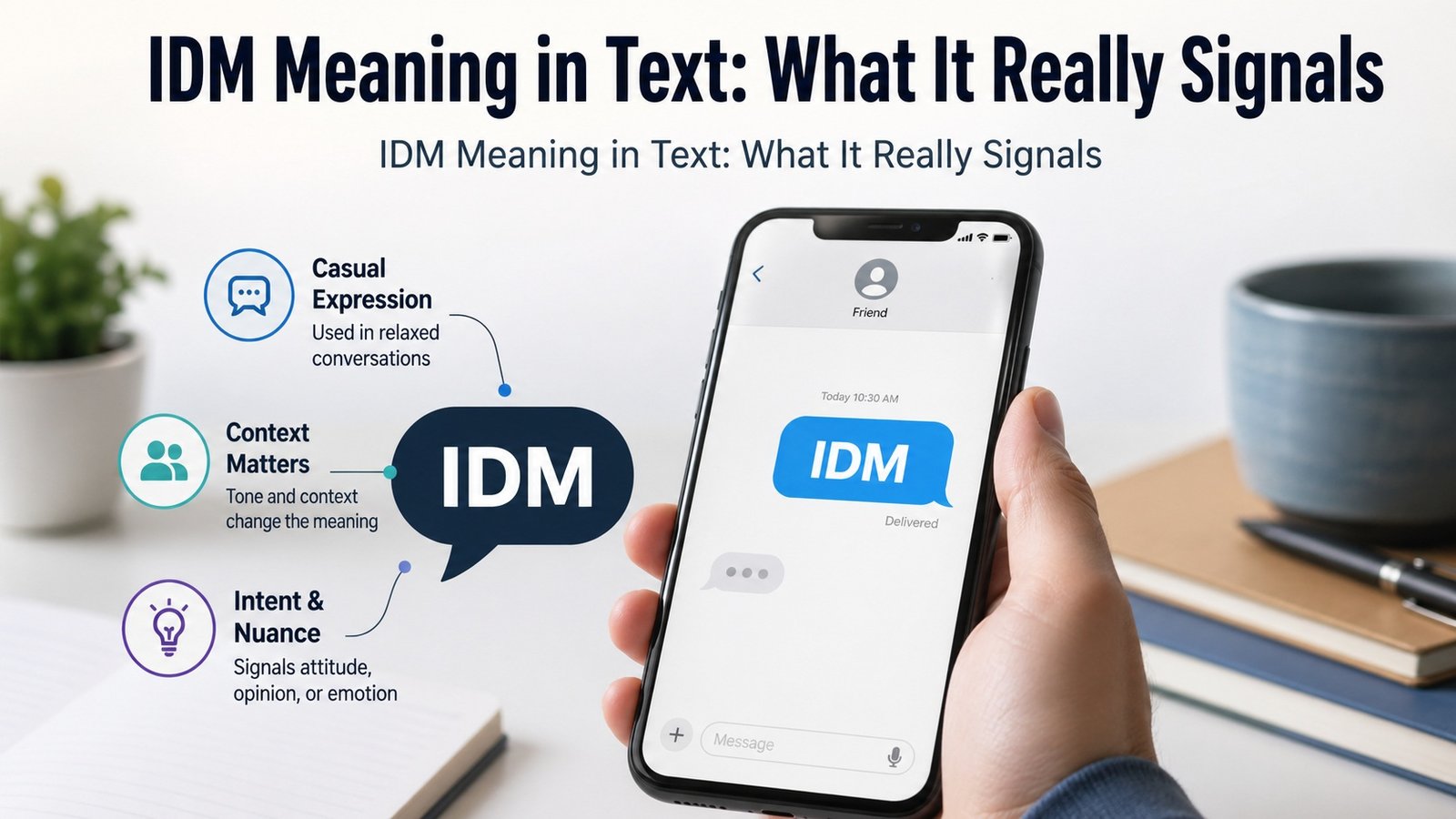
In today’s fast-moving digital world, short phrases carry big meaning. One example is IDM Meaning in Text, a small acronym that pops up in chats, comments, and messages. At first glance, it looks simple. However, its tone and intent can shift depending on how it’s used.
People in the United States use texting shortcuts to save time and express emotion quickly. Because of that, even a three-letter phrase like “IDM” can signal attitude, mood, or social distance. It may sound neutral, yet it often carries subtle emotional weight.
So why does IDM matter? Because understanding it helps you read between the lines. Whether you’re texting friends or scrolling social media, knowing what IDM signals can prevent confusion and improve communication.
Quick Answer
IDM Meaning in Text usually stands for “I Don’t Mind.” In the USA, it signals casual agreement or indifference. However, it can also suggest low enthusiasm or emotional distance depending on context.
TL;DR
• IDM means “I Don’t Mind” in most texts
• Signals agreement, but often without strong interest
• Common in casual American texting culture
• Tone depends on context and relationship
• Can feel neutral, polite, or slightly dismissive
• Widely used in chats, social media, and DMs
What Does IDM Mean in Text?
This section explains the basic meaning of IDM and why it matters in everyday American communication. While simple on the surface, its tone can shift based on context.
Literal Definition
IDM stands for “I Don’t Mind.” It’s a short way to say you’re okay with something.
For example:
“Want pizza or burgers?”
“IDM.”
That reply shows flexibility, not a strong preference.
Everyday Usage in the USA
In American texting culture, IDM fits casual conversations. It’s often used when someone wants to go along with a plan.
• Accepting plans without strong opinion
• Showing flexibility in group decisions
• Avoiding long explanations in quick chats
• Keeping tone relaxed and informal
Emotional Tone Behind IDM
This section explores why IDM isn’t always as neutral as it seems. In the USA, tone matters just as much as words.
Neutral vs. Passive Meaning
At times, IDM feels easygoing. Other times, it can sound detached.
For example, “IDM” might mean:
• “I’m fine with it” (positive neutrality)
• “I don’t care much” (low interest)
• “Do whatever you want” (emotional distance)
Why Tone Shifts
Tone depends on context, relationship, and message style. A close friend may read IDM as relaxed. However, in a formal or tense chat, it might feel cold.
Historical Roots of Text Acronyms
To understand IDM, it helps to look at where texting shortcuts began. This section connects modern slang to its digital origins.
Early Internet Language
Text abbreviations grew during the early internet era. Chat rooms and SMS messages had strict character limits.
Because of that:
• Short forms saved space and time
• Users created quick, shared codes
• Informal language became normalized
Evolution Into Daily Speech
Over time, acronyms like IDM moved from screens into everyday thinking. Today, people often think in shorthand while texting.
IDM Meaning in American Culture
This section focuses on how IDM fits into communication styles in the United States. Culture shapes how words are interpreted.
Casual Communication Style
Americans often prefer relaxed and efficient messaging. IDM reflects that style.
• Keeps conversations short and simple
• Avoids sounding demanding or controlling
• Matches fast-paced digital habits
Social Politeness
Interestingly, IDM can act as a polite response. Instead of rejecting or insisting, it leaves room for others.
Contextual Meanings of IDM
Not all IDM messages mean the same thing. This section breaks down how context changes interpretation.
Different Situations
IDM can shift meaning based on tone and situation.
• Friendly chats: easygoing agreement
• Group planning: flexible participation
• Romantic texts: possible emotional distance
• Work chats: unclear or vague response
Why Context Matters
Without voice tone or facial cues, text relies on interpretation. That’s why IDM can feel different depending on who sends it.
Psychological Signals Behind IDM
Words reveal mindset. This section explores what IDM might suggest emotionally or psychologically.
Hidden Feelings
IDM may reflect:
• Low emotional investment
• Desire to avoid conflict
• Indecisiveness or uncertainty
• Trust in others’ choices
Social Behavior Patterns
People use IDM to maintain harmony. It avoids strong opinions, which can reduce tension in group settings.
Modern Usage on Social Media
IDM isn’t limited to texting. This section shows how it appears across platforms in the USA.
Where You’ll See It
• Direct messages (DMs)
• Comment sections
• Group chats
• Gaming chats
Style and Trends
Today, IDM blends with other casual phrases. It often appears alongside emojis or short replies, shaping a laid-back tone.
IDM in Relationships and Friendships
This section explains how IDM affects personal connections. Tone matters more when emotions are involved.
Positive Use
In close relationships, IDM can feel relaxed and trusting.
Potential Misunderstandings
However, it can also cause confusion.
• May sound uninterested in plans
• Can feel emotionally distant
• Might suggest lack of effort
Read More: ML Meaning in Text: What It Really Signals
Misinterpretations and Common Confusion
This section clears up misunderstandings around IDM.
What People Get Wrong
Some assume IDM always means agreement. That’s not always true.
Clarifying Intent
If unsure, it’s better to ask follow-up questions. Context always matters more than the acronym itself.
Comparison Table: IDM Across Contexts
| Context | Meaning in the USA | Common Associations | Notes |
| Casual Chat | Flexible agreement | Easygoing attitude | Most common usage |
| Group Planning | No strong preference | Cooperation | Avoids conflict |
| Romantic Texting | Possible emotional distance | Low enthusiasm | Tone matters heavily |
| Work Messaging | Neutral acknowledgment | Politeness | May seem vague |
| Social Media | Relaxed participation | Informal tone | Often paired with emojis |
Cross-Cultural Interpretations
While IDM is mainly English-based, its meaning can vary globally.
Outside the USA
In other cultures, indirect responses may carry different weight. Some may see IDM as unclear or non-committal.
Cultural Communication Styles
• Direct cultures may prefer clear answers
• Indirect cultures may use similar soft language
• Interpretation depends on norms and expectations
How IDM Has Changed Over Time
Language evolves quickly online. This section tracks how IDM has shifted.
Earlier Usage
Initially, IDM was purely functional. It simply meant agreement.
Today’s Meaning
Now, it carries emotional nuance. Tone, context, and relationship all shape how it’s understood.
When to Use (and Avoid) IDM
This section gives practical guidance for modern communication.
Best Situations
• Casual chats with friends
• Quick decisions in groups
• Low-stakes conversations
When to Avoid
• Serious discussions
• Emotional conversations
• Professional clarity needed
FAQs
What does IDM stand for in texting?
It usually means “I Don’t Mind.” It shows agreement or lack of preference.
Is IDM rude or polite?
It’s generally polite. However, it can feel distant depending on tone.
Can IDM mean something else?
In rare cases, it may vary. Still, “I Don’t Mind” is the most common meaning.
Is IDM used in professional messages?
Sometimes, but it may sound unclear. Full sentences work better in formal settings.
Why does IDM feel passive?
Because it avoids strong opinions. It can signal low emotional involvement.
How should I respond to IDM?
You can follow up for clarity if needed. Context helps guide your response.
Conclusion
At first glance, IDM seems like a simple shortcut. However, its meaning runs deeper. In American communication, it reflects flexibility, politeness, and sometimes emotional distance.
Understanding IDM Meaning in Text helps you read tone more accurately. It’s not just about what’s said, but how it’s felt. As digital language keeps evolving, small phrases like IDM continue to shape how people connect.
So next time you see IDM, pause for a moment. Think about context, tone, and intent. That’s where the real meaning lives.

Fazal Abbas is an English language writer who focuses on making grammar clear and easy to understand. He explains complex rules in simple terms and uses practical examples to help readers improve their writing, speaking, and overall communication skills.