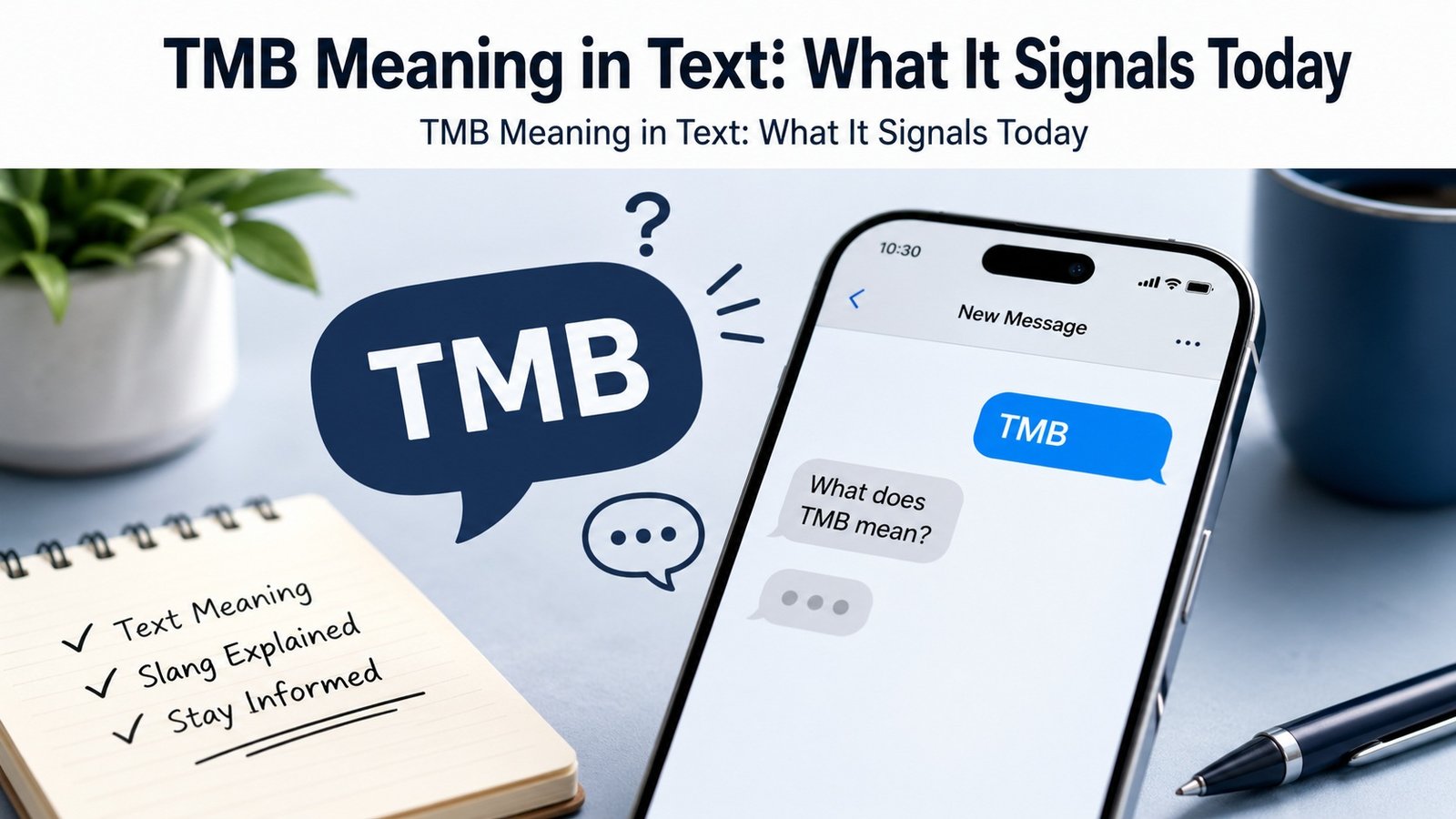
TMB shows up in texts, comments, and chats where speed matters. At first glance, it looks like just another abbreviation. However, it carries tone, intent, and even subtle emotion depending on context. In today’s digital culture, shorthand like this isn’t random. It reflects how people connect, signal feelings, and keep conversations moving.
In the United States, texting language has become a kind of modern symbolism. Each abbreviation acts like a tiny code. Some express humor. Others show distance or closeness. TMB meaning in text fits into this system as a flexible phrase people use in everyday conversations, especially on social media and messaging apps.
Understanding it isn’t just about decoding letters. It’s about reading tone, context, and cultural habits that shape communication today.
Quick Answer
TMB meaning in text usually stands for “Text Me Back” in U.S. messaging culture. It signals a request for response, often with urgency or casual expectation, depending on tone and context.
TL;DR
• TMB commonly means “Text Me Back”
• Used to prompt a reply in conversations
• Tone can feel casual or slightly urgent
• Popular in U.S. texting and social media
• Reflects fast-paced digital communication habits
What Does TMB Mean in Text?
TMB is a short, informal way to ask someone to reply. It appears in chats where people want quick interaction. Because texting is fast, abbreviations like this help save time while still expressing intent.
Common Interpretations
• “Text Me Back” is the most widely accepted meaning
• Sometimes used playfully among friends
• Can feel demanding depending on context
• Often paired with emojis or punctuation for tone
Why It Matters
In the U.S., communication style often values speed and efficiency. TMB fits this pattern perfectly. Instead of typing a full sentence, people rely on shorthand to keep things moving.
Origins of TMB in Digital Language
TMB doesn’t come from ancient symbols or mythology. Instead, it belongs to a newer system—digital shorthand. However, even modern symbols have roots in older communication habits.
Early Messaging Culture
In the early 2000s, texting had strict character limits. Because of this, users created abbreviations like “BRB” and “TTYL.” TMB followed the same logic.
Evolution Over Time
• Early SMS encouraged shorter phrases
• Social media expanded shorthand use
• Messaging apps normalized abbreviations
• Younger users spread slang across platforms
Today, TMB feels natural in conversation. It’s no longer just about saving space. It’s about matching the rhythm of digital communication.
Symbolism of TMB in the United States
In American culture, texting reflects how people manage relationships. TMB symbolizes more than a request. It often represents expectations in communication.
Cultural Meaning
• Signals desire for connection or attention
• Reflects fast-paced communication norms
• Implies responsiveness is valued
• Can hint at closeness or familiarity
Social Expectations
In the U.S., quick replies are often seen as polite. Because of this, TMB can carry subtle pressure. It suggests that a response is expected soon.
Emotional and Psychological Meaning
Even short phrases can carry emotional weight. TMB is a good example of how tone changes meaning.
Emotional Signals
• Urgency: sender wants a quick reply
• Casual friendliness: common among close friends
• Mild frustration: if repeated multiple times
• Dependence: shows desire for interaction
How Tone Changes Meaning
Tone depends on context. For example, “TMB :)” feels light and friendly. However, “TMB ASAP” feels more urgent and serious.
TMB in Social Media and Messaging Apps
TMB appears across many platforms. It adapts to different communication styles while keeping its core meaning.
Where You’ll See It
• Text messages and iMessage
• Social media DMs
• Group chats
• Online gaming chats
Modern Usage Trends
• Often used with emojis to soften tone
• Appears in fast conversations or arguments
• Common among younger users
• Sometimes replaced with full phrases in formal chats
Context Matters: How TMB Is Interpreted
Not all uses of TMB feel the same. Context shapes how people understand it.
Factors That Affect Meaning
• Relationship between sender and receiver
• Timing of the message
• Previous conversation tone
• Use of punctuation or emojis
Example Situations
• Friendly chat: light and casual
• Work message: may feel too informal
• Argument: could sound demanding
• Romantic context: shows interest or need for attention
Table: TMB Meaning Across Contexts
| Context | Meaning in the USA | Common Associations | Notes |
| Casual texting | Request for reply | Friendship, informality | Most common use |
| Social media DM | Prompt engagement | Attention, interaction | Often paired with emojis |
| Arguments | Urgent response needed | Frustration, impatience | Tone can feel demanding |
| Romantic chats | Desire for connection | Interest, closeness | Can signal emotional need |
| Group chats | Keep conversation active | Participation, inclusion | Less intense meaning |
Is TMB Rude or Polite?
TMB itself isn’t rude. However, tone and timing can change how it feels.
When It Feels Polite
• Used casually among friends
• Paired with friendly language
• Sent once without repetition
When It Feels Rude
• Repeated multiple times
• Used in professional settings
• Sent with demanding language
Because of this, understanding context is key.
Cross-Cultural Communication Differences
While TMB is common in the U.S., not all cultures use similar shorthand.
Differences Around the World
• Some cultures prefer full sentences
• Others value slower communication pace
• Direct requests may feel too strong elsewhere
• Tone markers vary across languages
This means TMB may confuse or feel abrupt to non-U.S. audiences.
Read More: OFC Meaning in Text: What It Really Signals
TMB and Digital Identity
How people use abbreviations reflects personality. TMB can signal communication style and preferences.
What It Says About You
• Fast communicator who values quick replies
• Comfortable with informal language
• Engaged in active conversations
• Possibly expressive or direct
In this way, TMB becomes part of digital identity.
Misunderstandings and Misuse
Like many abbreviations, TMB can cause confusion.
Common Misinterpretations
• Some may not recognize the meaning
• Others may read it as rude or demanding
• Tone can be misunderstood without context
• Overuse can annoy recipients
How to Avoid Confusion
• Use it with people who understand slang
• Add context or emojis when needed
• Avoid in formal communication
How TMB Has Changed Over Time
Digital language evolves quickly. TMB is part of this ongoing shift.
Then vs. Now
• Early use focused on saving characters
• Today, it reflects communication habits
• Now carries emotional tone, not just meaning
• Competes with voice notes and reactions
Although its core meaning stays the same, its tone continues to evolve.
Modern Alternatives to TMB
People don’t always use TMB. Many alternatives exist.
Common Alternatives
• “Text me when you can”
• “Let me know”
• “Hit me back”
• “Reply when free”
Each option changes the tone slightly. Some feel softer, while others feel more urgent.
FAQs
What does TMB stand for in texting?
TMB usually means “Text Me Back.” It’s a quick way to ask someone to reply. The tone depends on context.
Is TMB commonly used in the U.S.?
Yes, it’s fairly common in casual conversations. However, it’s less common in formal communication.
Can TMB sound rude?
It can, especially if repeated or used without context. Adding friendly language helps soften it.
Is TMB used on social media?
Yes, it appears in direct messages and chats. It’s part of fast, informal communication styles.
Are there other meanings of TMB?
In rare cases, it may have different meanings. However, “Text Me Back” is the most widely recognized.
Should I use TMB in professional messages?
It’s better to avoid it. Full sentences feel more appropriate in professional settings.
Conclusion
TMB may look simple, but it carries more meaning than three letters suggest. It reflects how people communicate in a fast, digital world where speed and tone matter. In the United States, it symbolizes the expectation of quick replies and ongoing connection.
Understanding TMB meaning in text helps you read between the lines. It shows how language adapts to technology and culture at the same time. As communication keeps evolving, small phrases like this will continue to shape how people connect every day.